
Last updated November 22, 2026
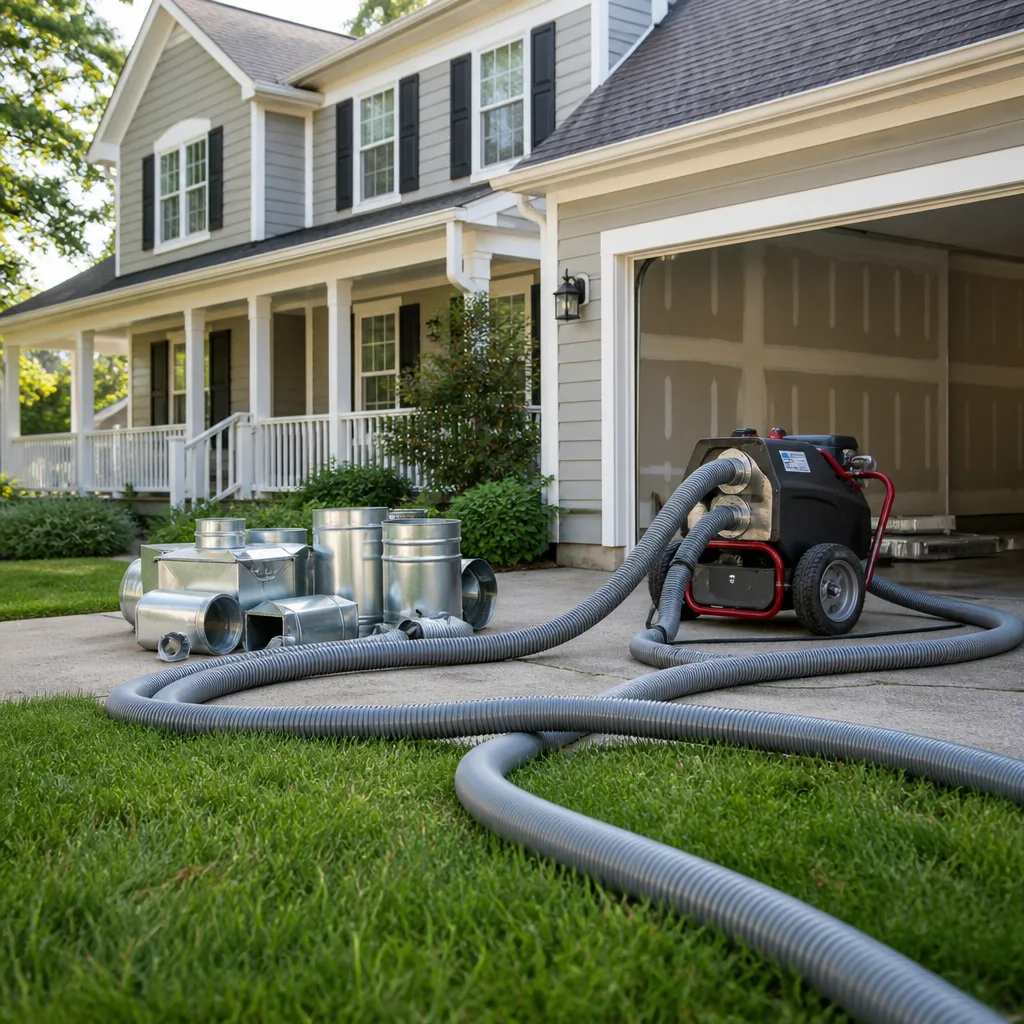 Whole-home duct cleaning
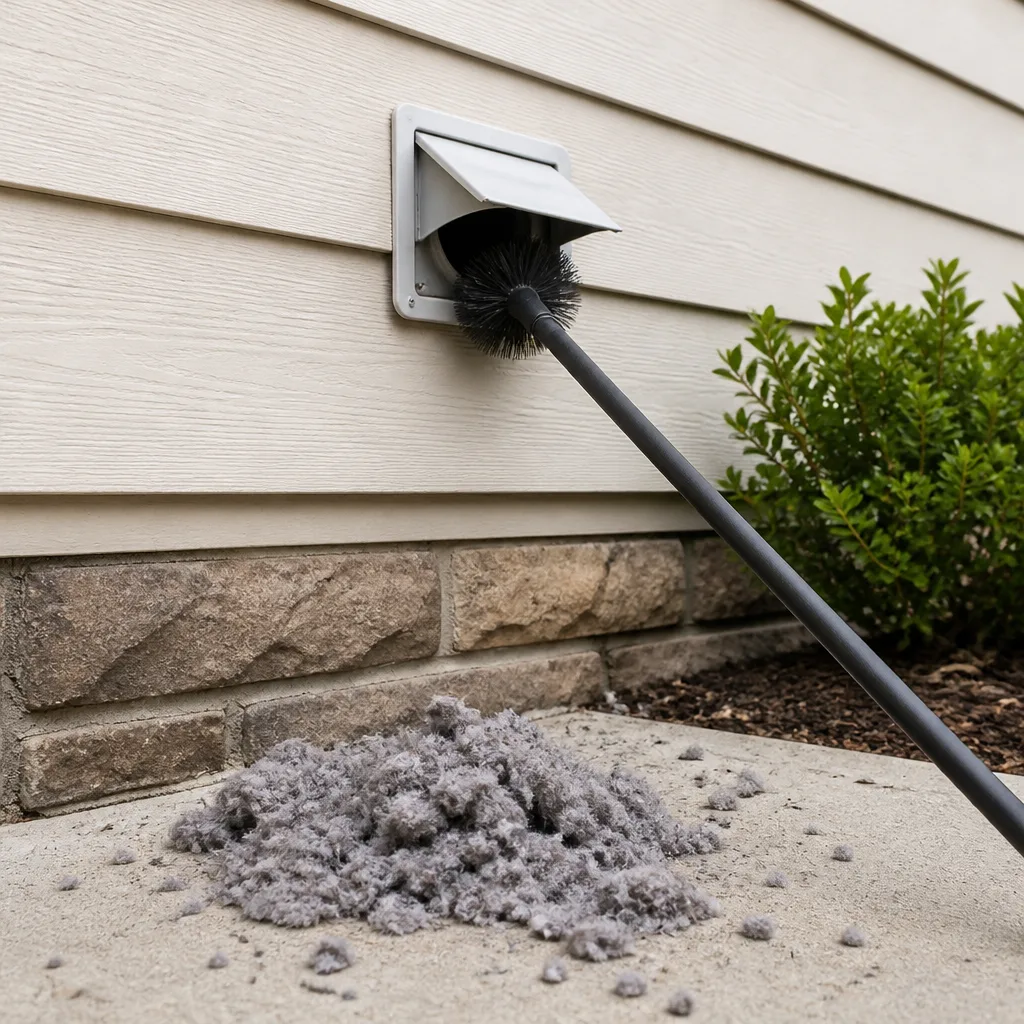 Dryer vent cleaning
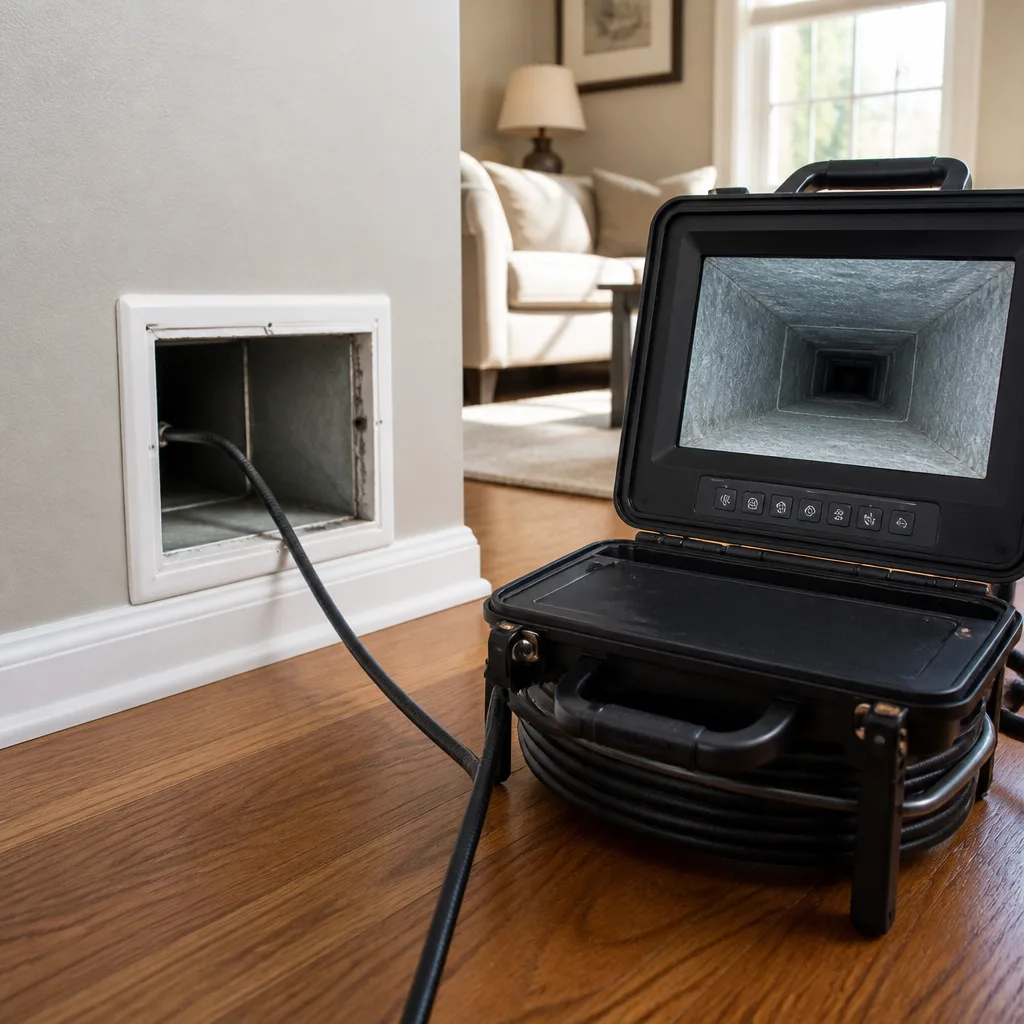 Camera inspection
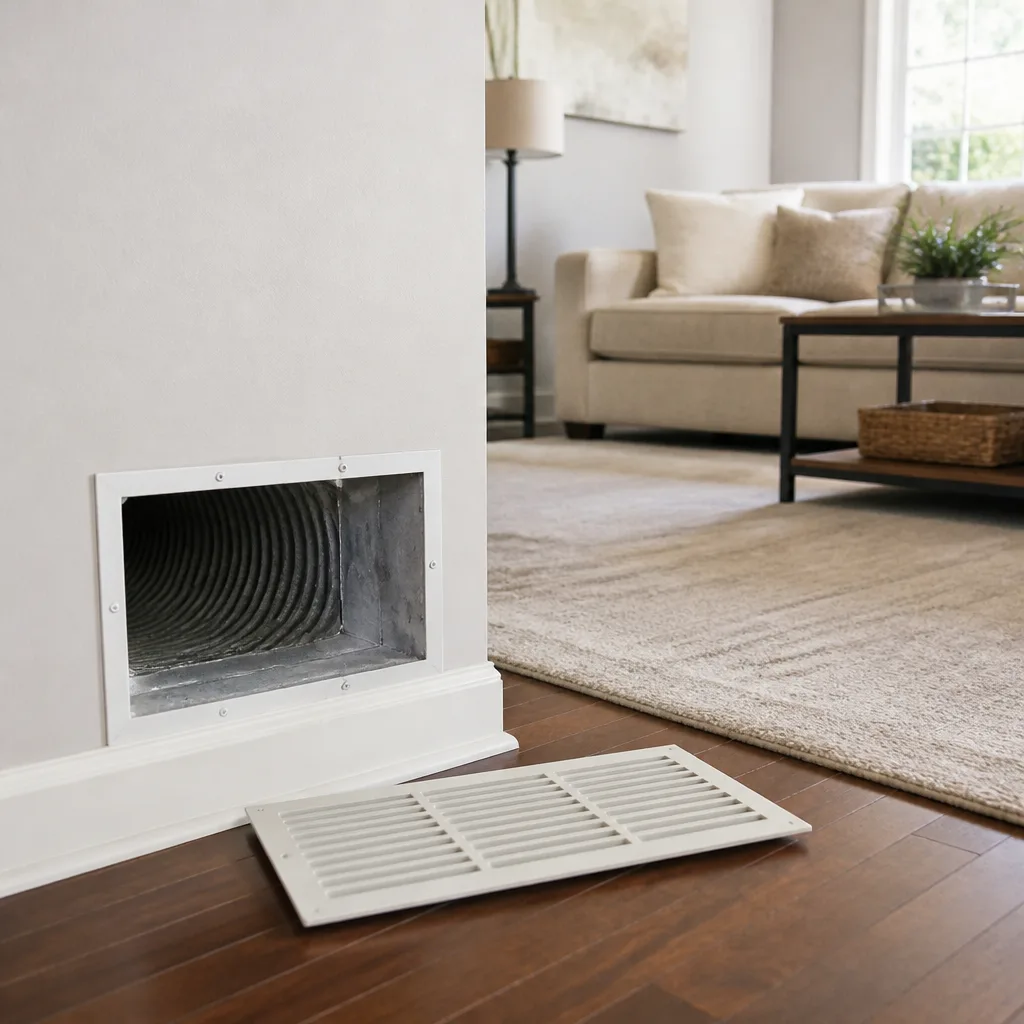 Sanitizing & deodorizing
Whole-system duct and dryer vent check with before-and-after photos - you see exactly what came out of your vents
That "$99 whole-house special" is a bait ad - the real number appears once they are in your hallway, or the "clean" is a shop-vac at the register. We photograph the inside of your ducts before and after instead.
Seasonal Air Duct Cleaning Care for Elmhurst: Year-Round Homeowner’s Guide
Most homeowners in Elmhurst treat duct cleaning as a once-a-year task, usually in spring when the pollen haze rolls back in. That schedule misses the two seasons that actually do the most damage inside your ductwork. Late-summer humidity is when microbial growth gets a foothold in flex duct systems, and the first heat cycle of November is when accumulated debris burns off and fills the house with that smell nobody can place. This guide walks through all four seasons the way each one actually loads your HVAC system, so you can plan maintenance around the real cycle instead of a calendar default.
Quick Answer
Year-round duct care in Elmhurst should follow four seasonal checkpoints rather than one annual cleaning: a spring cooling-startup inspection, a summer humidity and microbial check, a fall heating-startup and dust-reactivation cleaning, and a winter static and debris review. Each season deposits something different in your ducts – pollen, mold-favorable moisture, settled dust, or dry static-charged particulate – and the right maintenance task changes with it. A scheduled professional cleaning once a year, timed to the switchover that hits your system hardest, plus seasonal filter adjustments, covers most Elmhurst homes well.
Styles & brands we work with
- Whole-home duct cleaning
- Dryer vent cleaning
- Camera inspection
- Sanitizing & deodorizing
Table of Contents
- Why Elmhurst ducts face four different stresses, not one
- Spring: pollen and the cooling startup check
- Summer: humidity and microbial growth in flex duct
- Fall: dust reactivation and the heating startup
- Winter: dry static and the burning smell signal
- Seasonal filtration strategy without stalling your blower
- The pre-season switchover checklist
- How often should Elmhurst ducts really be cleaned?
Why Elmhurst ducts face four different stresses, not one
A duct system is not a static box. It’s a moving-air channel that interacts with whatever the outdoor climate supplies each month, and in Elmhurst that supply changes sharply four times a year. Spring brings a heavy pollen load through any open-window period before the cooling season starts. Summer loads the system with humidity that condenses on cold coil surfaces and settles in the cooler runs. Fall pulls in leaf debris and reactivates every particle that settled during the air-conditioning months. Winter dries the air out and turns the blower into a static generator that draws dust toward return grilles.
The common assumption is that one deep cleaning in spring resets the system for the year. In our experience, that’s the least useful timing for a house in the post-war housing stock that makes up much of Elmhurst. Those homes typically have flex duct in the attic and short runs through conditioned space, and flex duct holds moisture in its corrugations far longer than rigid sheet metal. A spring cleaning removes the pollen load but leaves the duct walls clean going into the most humid stretch of the year, when they are most likely to grow something.
The better model is a two-tier schedule: one scheduled professional cleaning per year, timed to the switchover that matters most for your specific system, plus a light seasonal review of filters, grilles, and duct integrity at each change of season. Here’s how each season loads the system, and what to check.
Spring: pollen and the cooling startup check
Spring in Elmhurst is a pollen delivery system. The weeks between the last frost and the first real heat are the same weeks homeowners open windows, run fans, and then switch the thermostat to cooling for the first time. Every one of those open-window hours draws pollen through return grilles and into the supply runs, where it settles in the low points and clings to the return-side filter and the blower housing.
The cooling startup is the moment to catch it. When you switch from heat to cool, the system picks up the whole winter’s dust from the furnace cabinet and pushes it into the same ductwork that just took in spring pollen. Two loads hit the ducts at once. A startup check should include:
- A visual look inside the return plenum and one or two supply runs with a camera or inspection mirror.
- A filter change timed to the switchover, not the calendar.
- A check of the indoor coil for dust matting before the first cooling call.
- A listen for air leaks at flex duct joints, which show up as hissing or whistling at the register.
If the duct runs look heavily coated, spring is a reasonable time for a full cleaning, especially if you noticed allergy symptoms worsening once the AC came on. Our air duct cleaning service uses Rotobrush and Nikro equipment that reaches into flex duct corrugations where a shop vacuum can’t. That matters in Elmhurst’s older homes because the flex runs often turn through tight attic spaces where a consumer vacuum simply can’t reach or agitate the duct wall.
Summer: humidity and microbial growth in flex duct
This is the season most homeowners overlook, and it’s the one that does the most durable damage. Late-summer humidity in Elmhurst climbs high enough that moisture condenses on the cold coil and in the cooler supply runs, especially those routed through unconditioned attic space. Flex duct is the weak point here: its inner liner is corrugated, the corrugations trap condensation, and that trapped moisture sits against organic dust – skin cells, pollen, dust mites – for weeks at a time. That’s the exact recipe for microbial growth.
You won’t smell it from the register the way you’d smell a musty basement. The early signal is usually subtler: a faint damp or earthy odor when the AC first kicks on, or allergy-type symptoms that get worse in August rather than better. By the time you see visible spotting on a supply grille, the growth is usually well-established inside the flex run.
Two summertime tasks make a real difference:
- Keep the humidity in the living space below the mold-favorable threshold. A dehumidifier set to hold indoor humidity in the mid-40s to low-50s percent range keeps the coil and duct runs drier. Running the blower continuously on a low setting also helps evaporate condensation from the coil between cooling cycles.
- Have the duct interior sanitized after cleaning, not instead of cleaning. Cleaning removes dust, pollen, and settled debris. Sanitizing addresses what’s already started growing on the duct wall. We use Honeywell and Abatement Technologies products through our Air Quality & Sanitizing service for exactly this reason – cleaning alone leaves the microbial layer behind.
If a summer odor or allergy pattern has you suspicious, the calendar is not the answer. Get the duct interior inspected. The assessment is the first step and it’s free.
Fall: dust reactivation and the heating startup
Fall is the inverse of spring. You close the windows, the AC stops running most days, and every particle that settled into grilles, return plenum surfaces, and register faces over the summer sits undisturbed until the furnace first fires. Then the blower comes on and relocates all of it at once. That’s why the “dust reactivation” event in an Elmhurst home typically happens in the first week of real heating, not gradually over the season.
The fall heating startup should include a duct system check alongside the furnace burner and blower inspection. Three things are worth confirming before you depend on the system all winter:
- Flex duct joints and seams – gaps at take-offs and collars pull in attic air and let conditioned air escape, which is a common cause of a room that never feels warm.
- Duct integrity – crushed or disconnected runs behind walls and above ceilings quietly steal airflow from the rooms they’re meant to serve.
- Return-side filter fit – a loose or oversized filter lets unfiltered air bypass straight into the blower and ductwork.
The fall switchover is often the best time of year for the one scheduled cleaning, because you get the winter heating months on clean ducts and you catch any summer microbial issue before it goes dormant and gets missed. If the startup inspection turns up crushed or leaking runs, our HVAC cleaning and Duct Repair & Sealing services address it in the same visit. We repair what we find – a cleaning-only visit leaves a leaking system leaking, which means the ducts get dirty again faster than they should.
Winter: dry static and the burning smell signal
Winter in Elmhurst is dry enough that the blower motor effectively becomes a static generator. Every particle that passes through the return builds a charge and sticks to the plastic flex liner and the blower wheel, where it doesn’t blow off. That’s why a home can look spotless all winter and still have heavily coated duct walls by spring. The blower wheel is the most affected part, and a dust-loaded wheel is out of balance, which is a common source of noise and premature motor wear.
Then there’s the signal most homeowners miss: a burning or dusty smell on the first heat cycle of the season. That smell is the debris accumulated in the heat exchanger and the supply plenum since the last cleaning literally burning off. It’s a normal smell on a freshly cleaned system for a few minutes, but it shouldn’t be strong or persistent. If it hangs around past the first cycle, or if it’s accompanied by a visible haze at the registers, the duct and furnace cabinet have loaded up since the last cleaning, and it’s time to schedule the service rather than wait for spring.
One winter safety note worth stating plainly: never open a furnace cabinet or heat exchanger to inspect or clean it yourself. Those components are connected to gas, electricity, and combustion venting, and the people qualified to open them are trained for it. If you smell gas, leave the house and call your utility. For the dusty-burning smell, schedule a professional cleaning and let a technician handle the cabinet and plenum.
Seasonal filtration strategy without stalling your blower
The instinct when pollen or dust gets bad is to install the highest-MERV filter the shelf offers. That’s a mistake more often than not, especially in the post-war housing around Elmhurst where older blower motors were sized for a low-pressure drop across a thin filter. A restrictive filter on a marginal blower pushes reduced airflow through the ducts, which lets dust settle in the duct runs instead of getting carried to the filter, and can shorten the life of the motor.
A workable seasonal approach looks like this:
- Spring and summer: a mid-range pleated filter, changed when the pollen peaks, with a check that the filter frame seals well on all four sides.
- Fall: a slightly higher-efficiency filter for the heating season, when the blower runs longer and the dust load is at its highest.
- Winter: back off if the system shows signs of reduced airflow – weak registers, longer run times, or a blower that sounds labored.
A pressure-drop check done during any professional visit tells you exactly what your blower can tolerate. That’s the kind of specific answer we’d rather give than a generic MERV number that may or may not suit your system. Partner brands like Aprilaire make filter housings and media that are matched to specific airflow rates, which is why working from measured pressure drop beats guessing from a filter label.
The pre-season switchover checklist
This is the practical version of everything above. Run it twice a year – once before the cooling season, once before the heating season – and it covers the tasks that prevent most of the seasonal duct problems in Elmhurst homes.
- Replace the filter and check the seal. A loose fitting filter bypasses dust straight into the blower and ducts.
- Inspect the return grille and the first supply runs. A flashlight and a phone camera get you a look at the first few feet.
- Listen for leaks and feel for weak airflow. Whistling at registers and rooms that never heat or cool evenly point to duct integrity issues.
- Check humidity in summer and keep it in the mid-40s to low-50s percent range in the living space. Dry air in winter is normal – don’t try to humidify the ducts themselves.
- Watch for the first-cycle smell on heating startup. Note whether it clears quickly or lingers. If it lingers, schedule cleaning.
- Schedule the annual professional cleaning around your system’s hardest switchover. Fall works well for most Elmhurst homes, spring for homes with a heavier cooling load.
- Book a Duct Repair & Sealing inspection at least every few years if your home is older. Leaking runs are the quiet cause of chronic dust and uneven temperature in post-war housing.
If you’re not sure which switchover matters most for your home, the assessment visit is the answer – we look at the system, tell you what’s actually going on, and you make the call on timing.
How often should Elmhurst ducts really be cleaned?
Most Elmhurst homes do well on one professional cleaning per year, timed to the switchover that loads the system most for your specific setup. Homes with pets, recent remodeling, allergy concerns, or a history of moisture in the flex duct may benefit from an annual visit plus a mid-year inspection. Homes on the newer side with a well-sealed system can often go two years between cleanings, provided the filters stay on schedule and the duct integrity is intact.
The variable that changes the answer is the system, not the calendar. A home with flex duct through a hot attic triggers microbial risk faster in summer than a home with rigid duct in conditioned space. A home with a chronic leak at a duct collar pulls pollen and attic dust in year-round. A home whose blower runs continuously draws more dust past the filter than a system that cycles. Anyone who quotes a fixed interval without looking at the system is quoting a schedule, not a solution.
What we can say with confidence from the work we do: the cleaning-only companies that come out, run a vacuum, and leave are missing the two things that extend the life of a duct system – sealing the leaks and treating the microbial layer. Our full-system approach covers Elmhurst Air Duct Cleaning, dryer vent cleaning, HVAC cabinet cleaning, duct repair and sealing, and air quality treatment together, because those five services all touch the same air. Customers don’t have to coordinate four different companies to get one system cared for. Our technicians have up to 13 years of experience, and the equipment we bring is Rotobrush and Nikro professional-grade duct cleaning equipment, not consumer vacuums.
One more reason timing matters: the dryer vent. Lint and moisture load up through the same seasonal cycle as the ductwork, and a dryer that takes two cycles to dry a load in the winter is often telling you the vent is restricted by lint and seasonal humidity. If that’s your pattern, include the dryer vent in the same visit rather than making it a separate appointment.
Common Mistakes to Avoid
- Cleaning once a year on a fixed calendar date. A June cleaning in a humid, flex-duct-heavy Elmhurst home misses the moisture window entirely, and a December cleaning leaves the system to grow all spring. Match the timing to the system’s actual stress cycle.
- Skipping the switchover inspection. The spring cooling startup and fall heating startup are when dust loads migrate through the system. Inspecting the return plenum and a few supply runs at those two moments catches problems when they’re still small.
- Reaching for the highest-MERV filter available. A restrictive filter on an older, marginally-sized blower in post-war Elmhurst housing starves the system of airflow, which makes the ducts dirtier, not cleaner. Match the filter to the blower’s real capacity.
- Treating cleaning and sanitizing as the same thing. Cleaning removes dust, pollen, and debris. Sanitizing addresses microbial growth on the duct wall after cleaning. If the smell is musty or earthy, cleaning alone leaves the problem behind.
- Ignoring a duct leak because the cleaning is scheduled. Cleaning a leaking system just means it gets dirty again faster. The leaks at collars, take-offs, and flex joints need to be sealed in the same visit or they’ll undo the cleaning within a season.
- Waiting for visible duct dust to book a cleaning. By the time coating is visible at a supply grille, the return plenum and blower wheel have been running that way for months. The smell on the first heat cycle is the better early signal.
- Assuming summer odor is nothing. A faint damp or earthy smell when the AC first kicks on usually points to moisture in flex duct corrugations. It’s worth an inspection before it turns into a visible problem.
See the difference
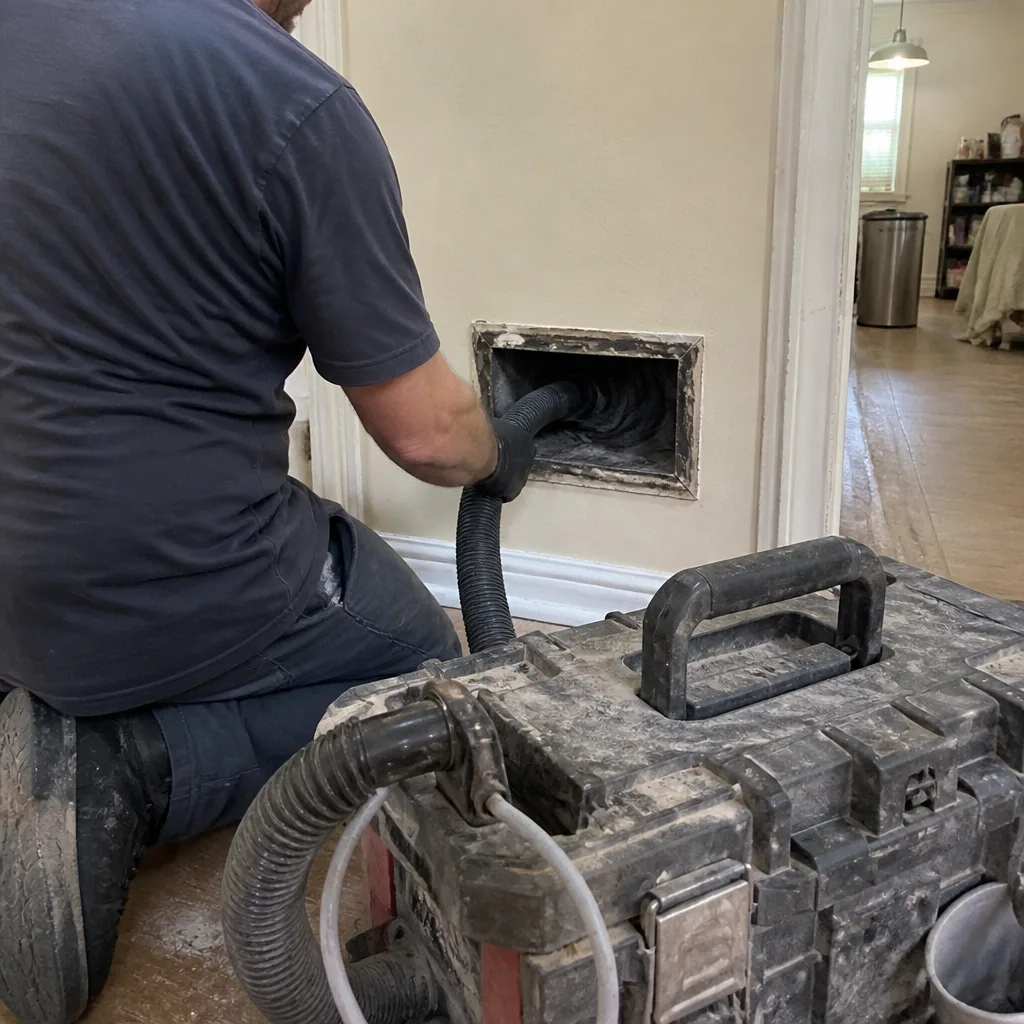 Before
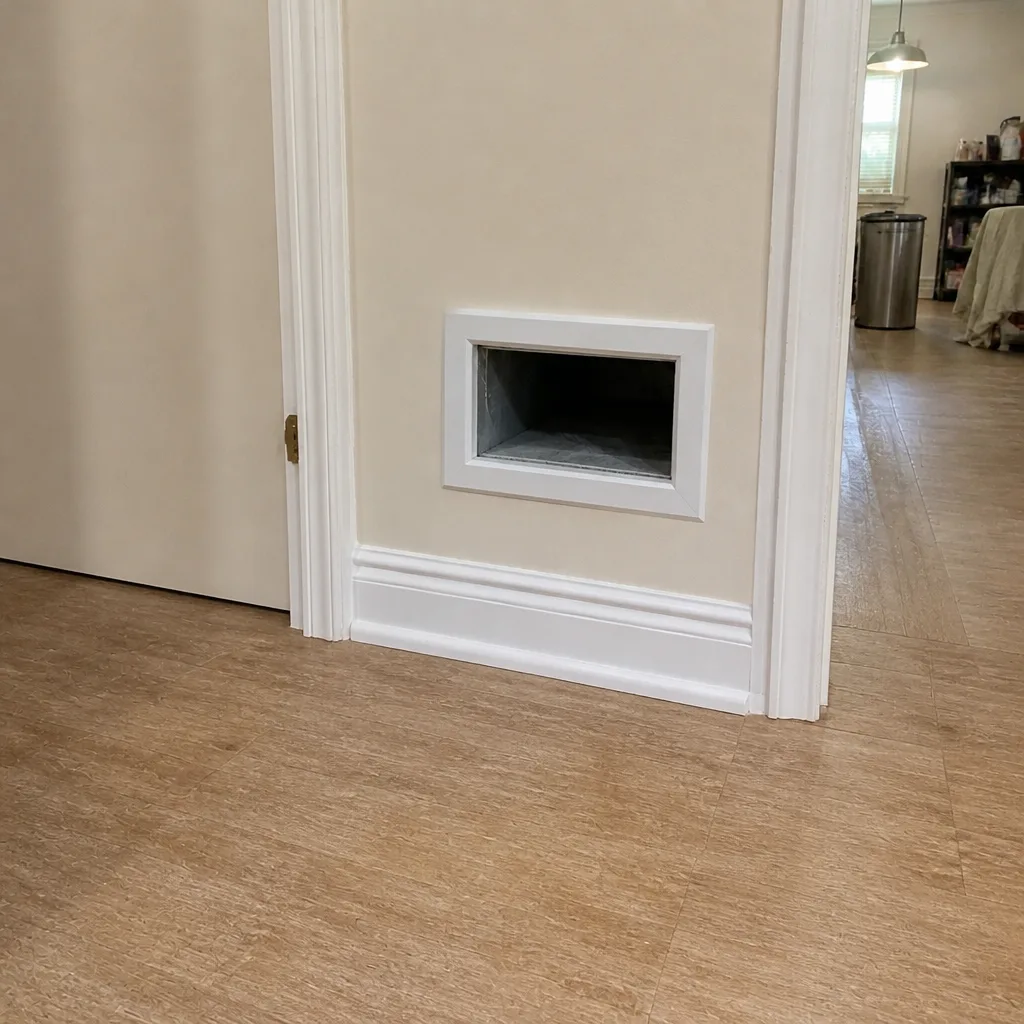 After
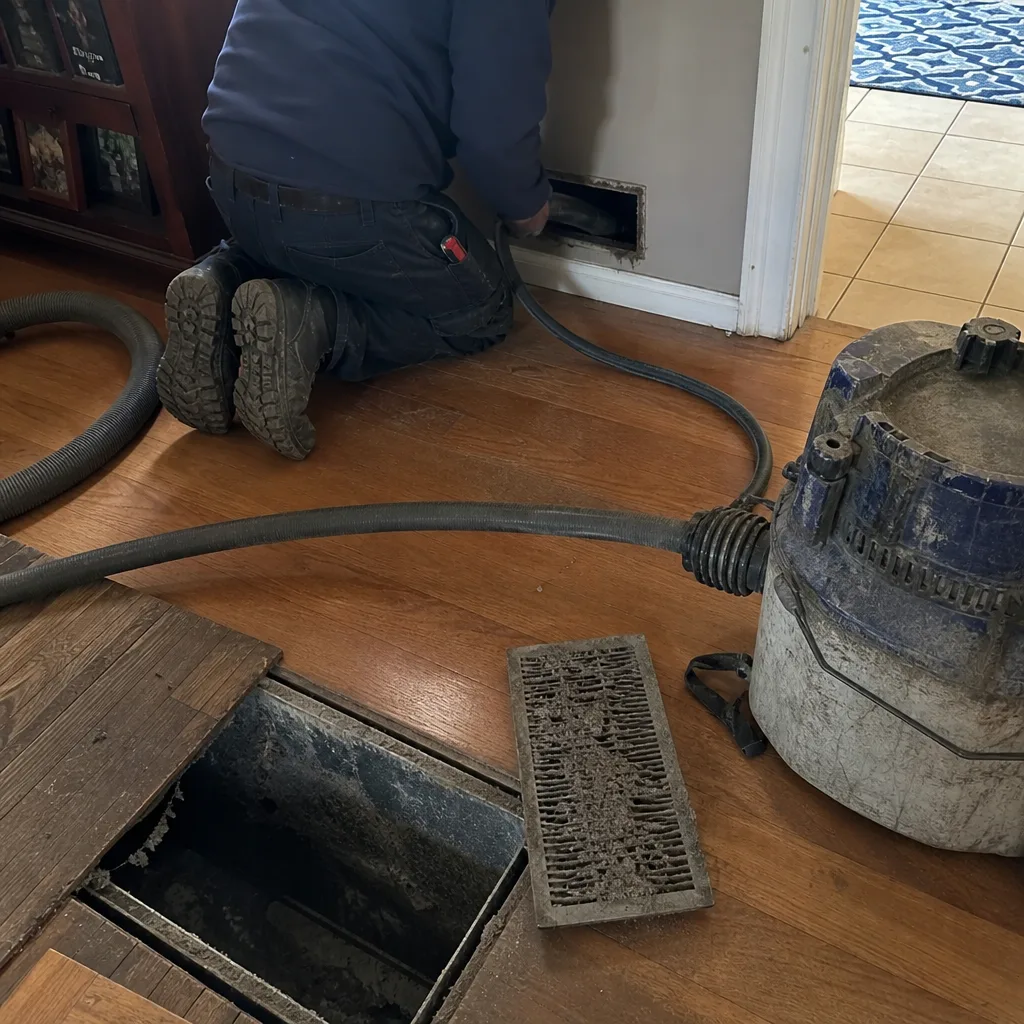 Before
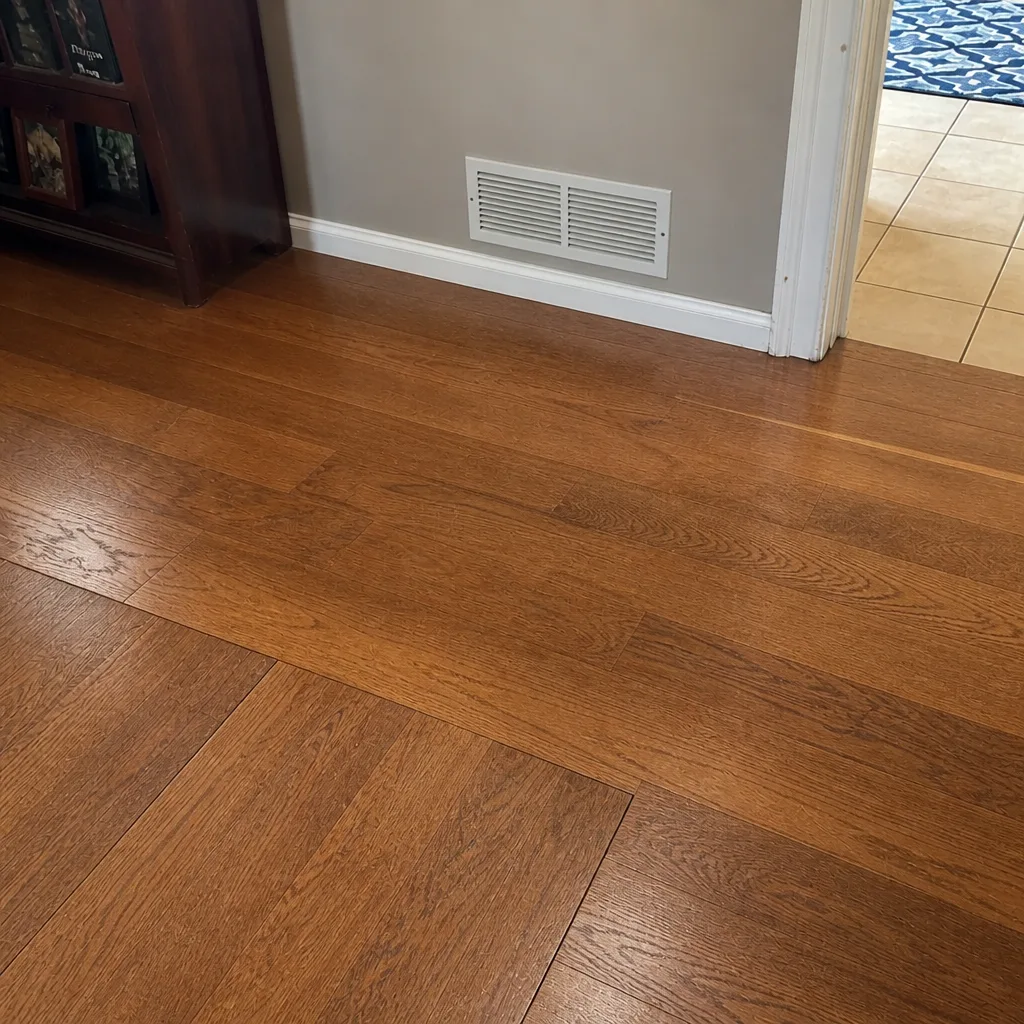 After
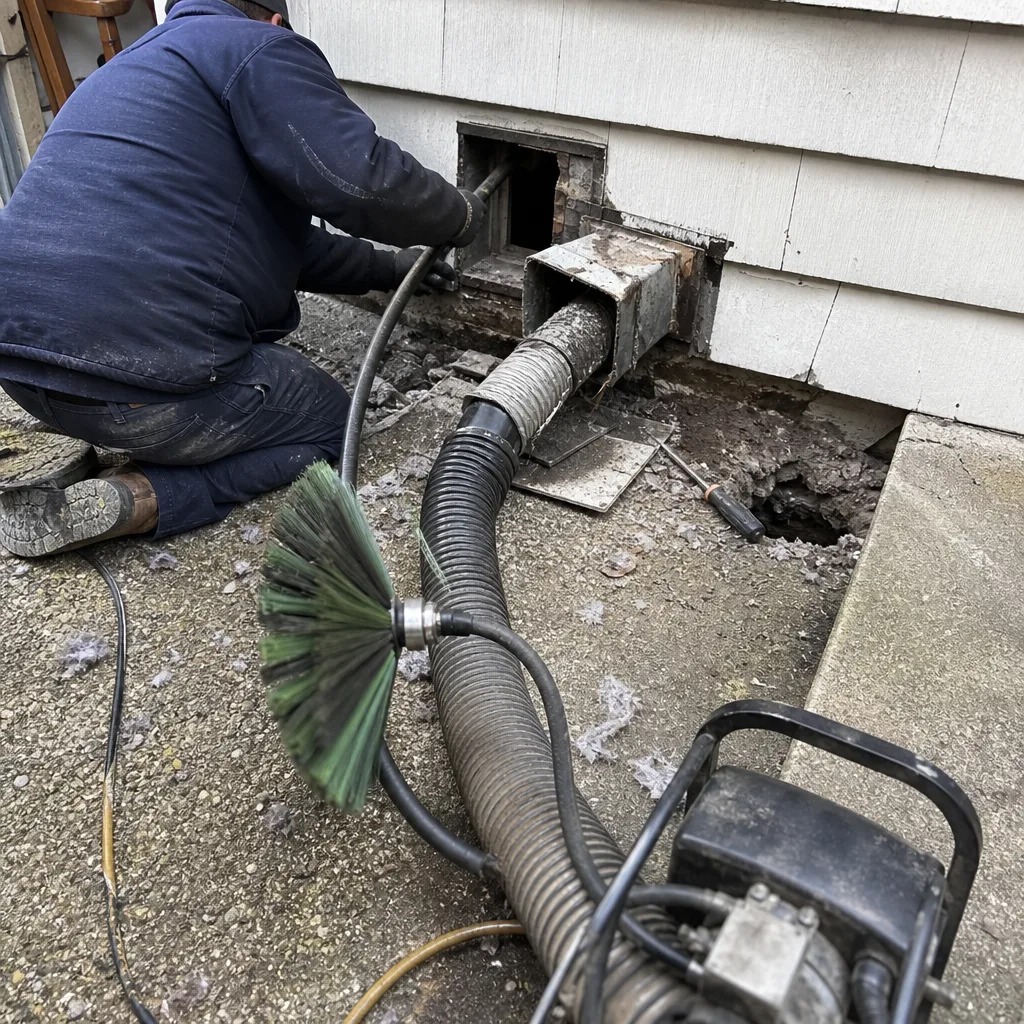 Before
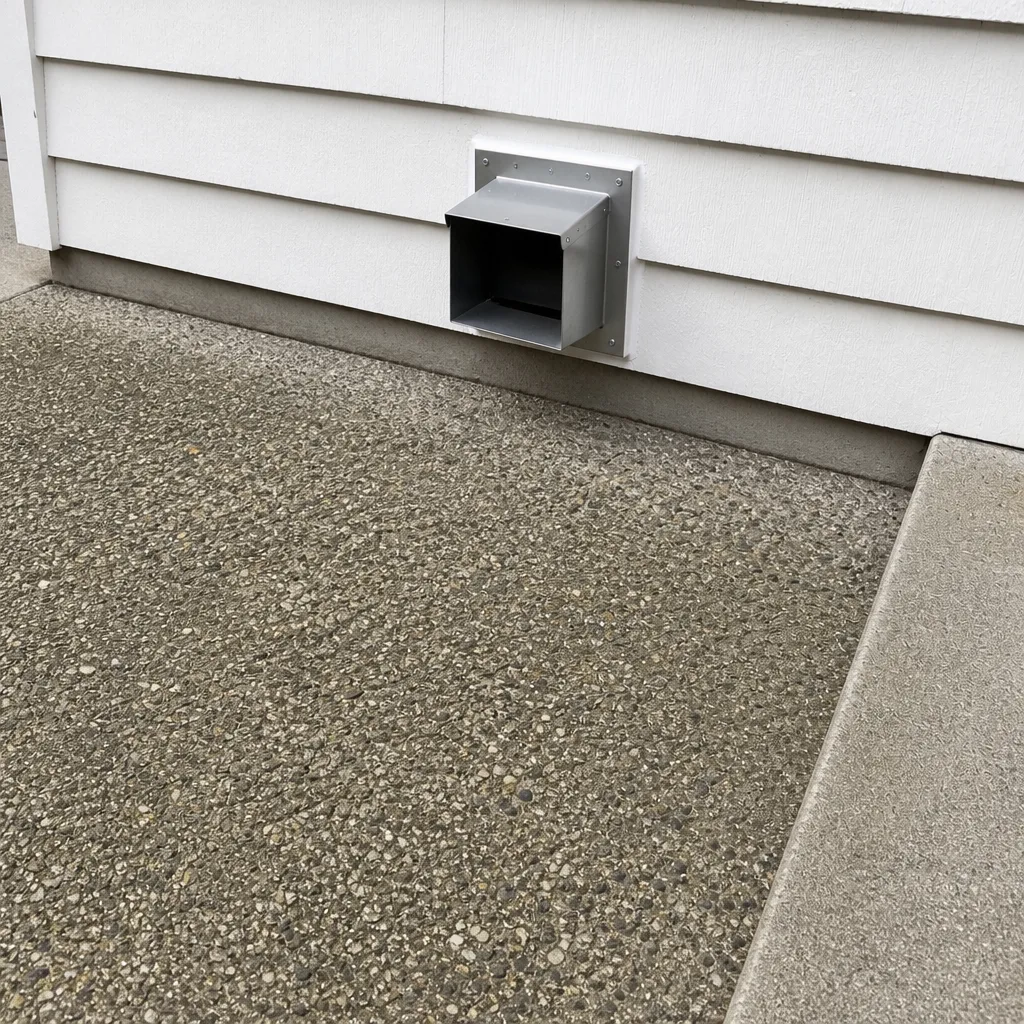 After
When to Call a Professional
Call a professional when the first heating cycle leaves a strong burning or dusty smell that doesn’t clear, when a damp or earthy odor shows up with the cooling cycle, or when allergy symptoms get worse indoors in August rather than better. Call if you see visible dust coating at supply or return grilles, if your energy use has climbed while usage hasn’t changed, or if a dryer now needs two cycles to do what one used to do. Homes with flex duct through an attic, pets, or a recent remodeling project should get an inspection sooner rather than later. Elmhurst Air Duct Cleaning offers free estimates in Elmhurst – call (855) 410-4866. We answer 24/7. Fast dispatch from 7am to 7pm, Sunday through Friday. The estimate is free, the price is set per job by the written estimate agreed before work starts, and the local pro is licensed and insured as their state requires.
Frequently Asked Questions
Most Elmhurst homes should have their ducts professionally cleaned about once a year, timed to the switchover that loads the system hardest – fall for most homes with a heating-dominant system, spring for homes with a heavier cooling load and flex duct in an attic. Homes with pets, recent remodeling, allergy concerns, or a history of summer moisture may want an annual visit plus a mid-season inspection. Homes with well-sealed rigid duct can often go two years between cleanings. Call (855) 410-4866 to book a free assessment and get a schedule built around your system rather than a generic interval.
Every year is a reasonable default for most Elmhurst homes, but it isn’t universal. The variables that drive the answer are duct material, whether the duct runs sit in conditioned space, the blower’s run pattern, and how well the system is sealed. A tight, rigid-duct home in decent shape can honestly go longer. A flex-duct home that runs an attic route and a leaking collar should be on a yearly schedule. A pro who inspects before quoting an interval is the one to trust; a pro who quotes the interval before looking is guessing. Call (855) 410-4866 – the estimate is free and the price is set per job before work begins.
A burning or dusty smell on the first heat cycle is the debris accumulated in the heat exchanger and supply plenum since the last cleaning burning off. It’s normal for the first few minutes on a system that was cleaned recently, but it shouldn’t be strong or persistent. If it lingers, or if there’s a visible haze at the registers, the ducts and cabinet have loaded up and it’s time to schedule cleaning. Never open the furnace cabinet to check yourself – the heat exchanger, gas line, and electrical components should only be handled by a trained technician. Call (855) 410-4866 to schedule a cleaning and inspection.
Cleaning removes physical material – dust, pollen, settled debris, building dust from remodels – from the duct wall and the blower housing. Sanitizing addresses microbial growth that’s already established on the duct surface after cleaning. In a humid Elmhurst summer, flex duct can support that kind of growth in its corrugations, which is why sanitizing matters here more than in drier climates. Our Air Quality & Sanitizing service uses products from Honeywell and Abatement Technologies, applied by specialists after the physical cleaning, not instead of it. Call (855) 410-4866 to discuss whether sanitizing is right for your system.
Often yes, or at least a different filter-change rhythm. Higher-efficiency filters catch more pollen and fine particulate during spring and summer, but a filter that’s too restrictive for the blower’s capacity chokes airflow, especially in older homes with a marginal motor. Fall is the season to go slightly higher-efficiency for the longer heating runs, and winter is the season to back off if the system shows signs of poor airflow. A pressure-drop check during any visit tells you what the blower can actually tolerate. Call (855) 410-4866 – estimates are free.
Cleaning alone usually doesn’t fix uneven temperatures – that points to an airflow problem, and the common culprits are duct leaks, crushed flex runs, or disconnected ducts behind drywall and above ceilings. Cleaning removes the debris those problems produce, but it won’t restore the airflow a sealed system would. Our Duct Repair & Sealing service addresses the leaks and crushed runs directly, and it’s the fix we’d recommend before assuming the furnace is undersized. Call (855) 410-4866 to book an inspection of the duct integrity alongside the cleaning.
The Bottom Line
Elmhurst ducts don’t face one seasonal stress – they face four, and a care plan built around a single annual cleaning misses the two that matter most. Spring’s pollen load and fall’s dust reactivation are the visible ones. Late-summer humidity in flex duct and winter’s dry static loading on the blower are the quiet ones, and they’re harder to catch later. A year-round strategy looks like one scheduled cleaning timed to your system’s hardest switchover, an inspection of duct integrity at both pre-season switchovers, a filter strategy matched to the blower rather than the label, and a humidity plan through the summer. Add dryer vent care to the same visit and you’ve covered the whole system. If any of the seasonal signals above sound familiar, get the assessment first and let the system tell you what it needs.
We’d rather walk the system with you and schedule the right cleaning at the right time of year than sell a service you don’t need yet.
Call (855) 410-4866 for a free estimate. We answer 24/7. Fast dispatch from 7am to 7pm, Sunday through Friday. The price is set per job by the written estimate agreed before work starts, and we can show you before-and-after photos of your own ducts.
Written by the team at Elmhurst Air Duct Cleaning.