
Last updated November 22, 2026
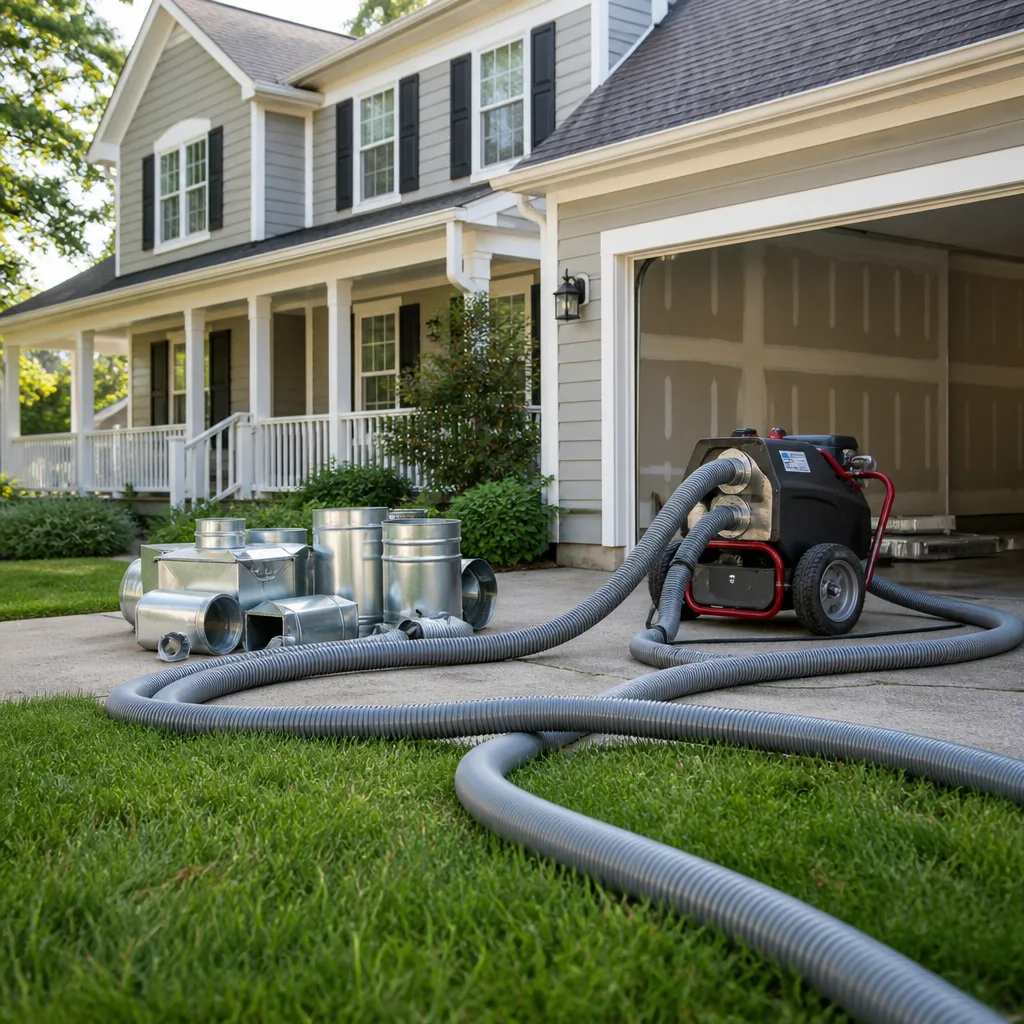 Whole-home duct cleaning
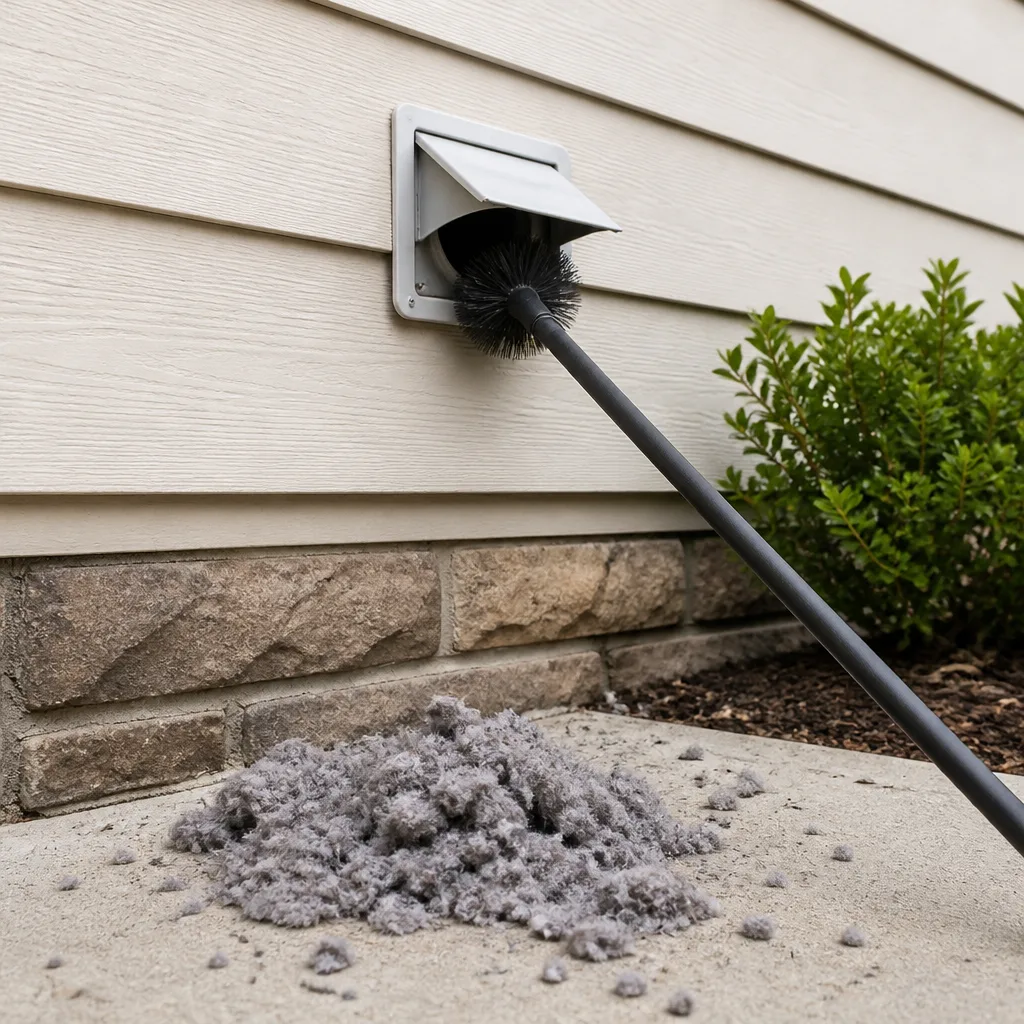 Dryer vent cleaning
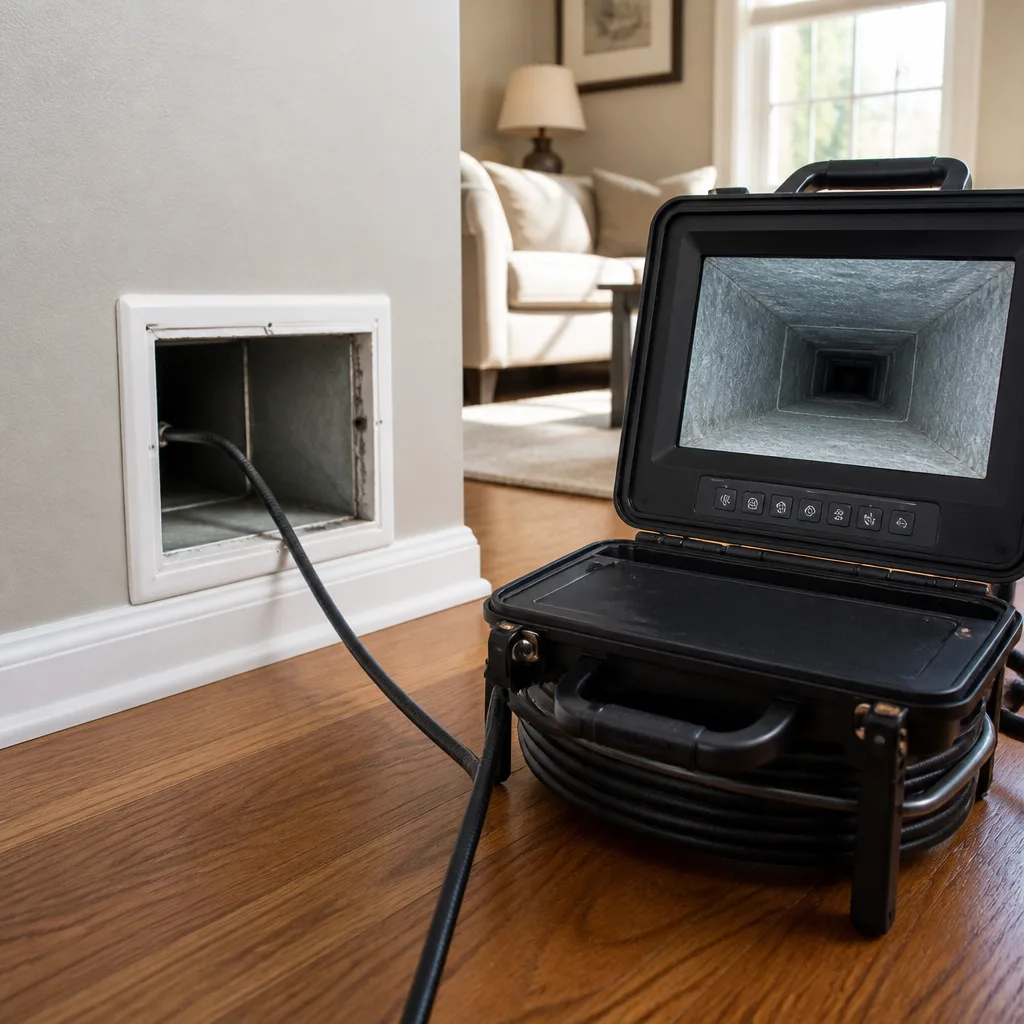 Camera inspection
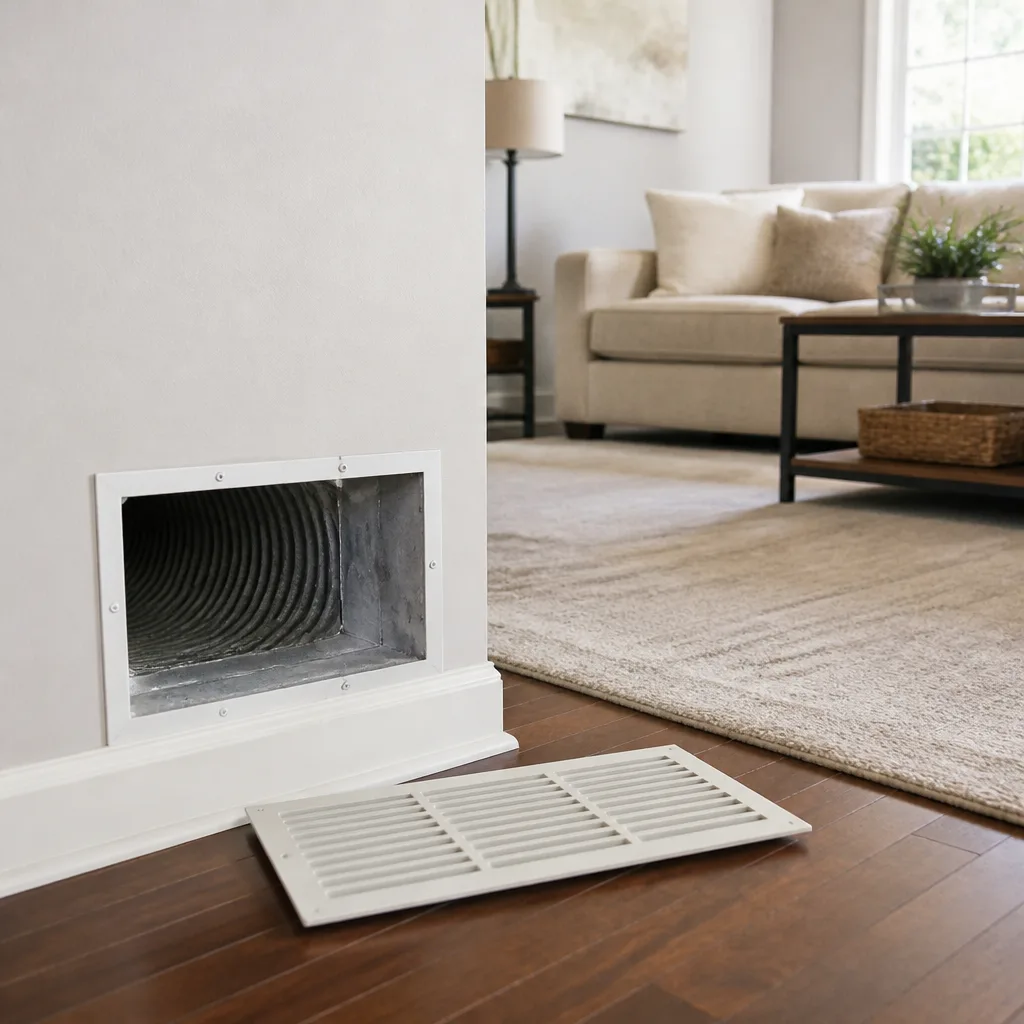 Sanitizing & deodorizing
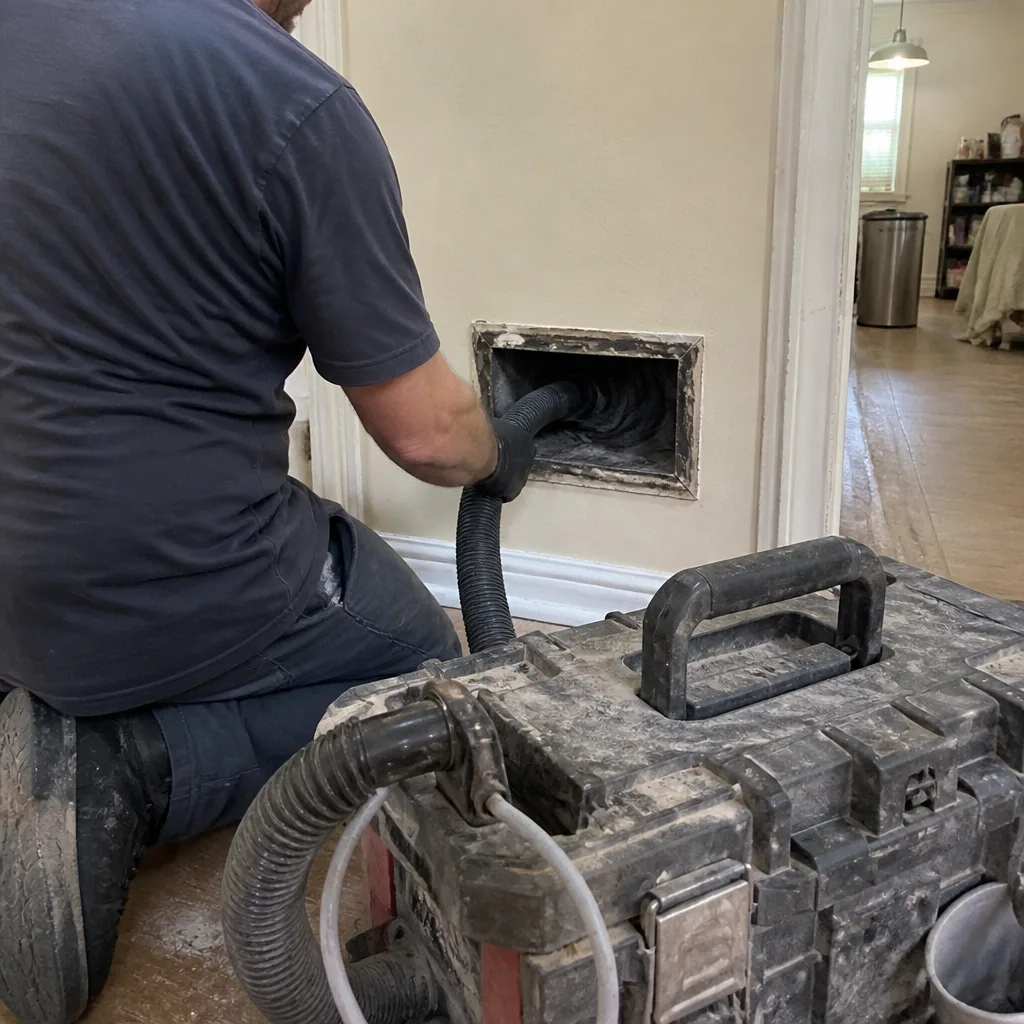
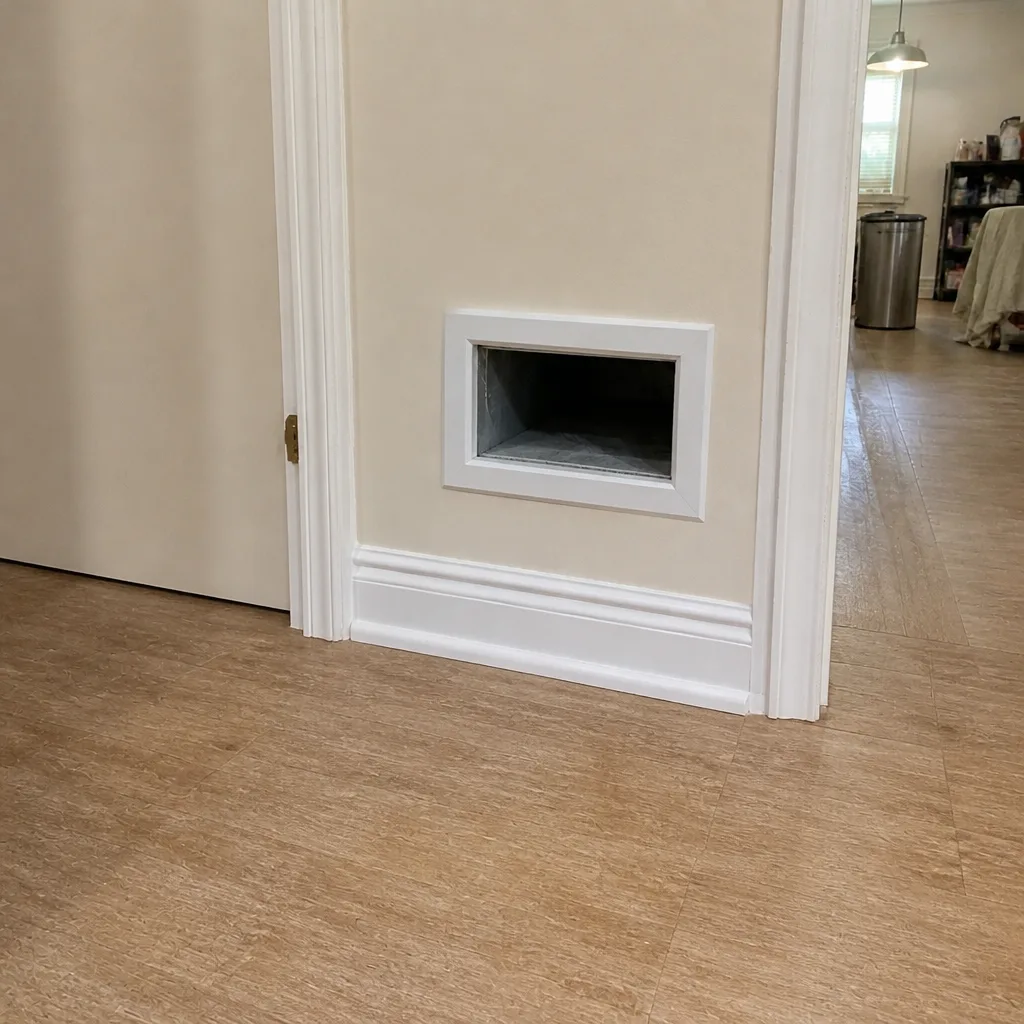
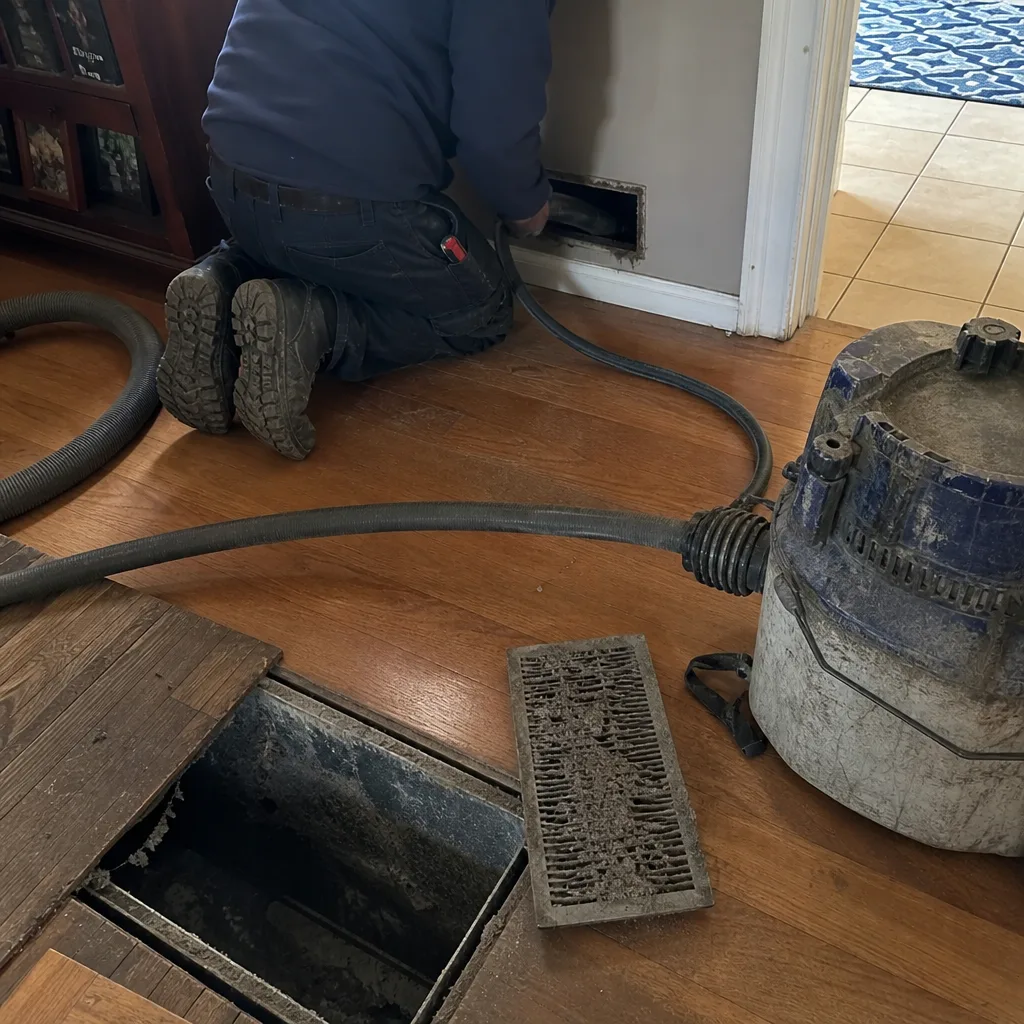
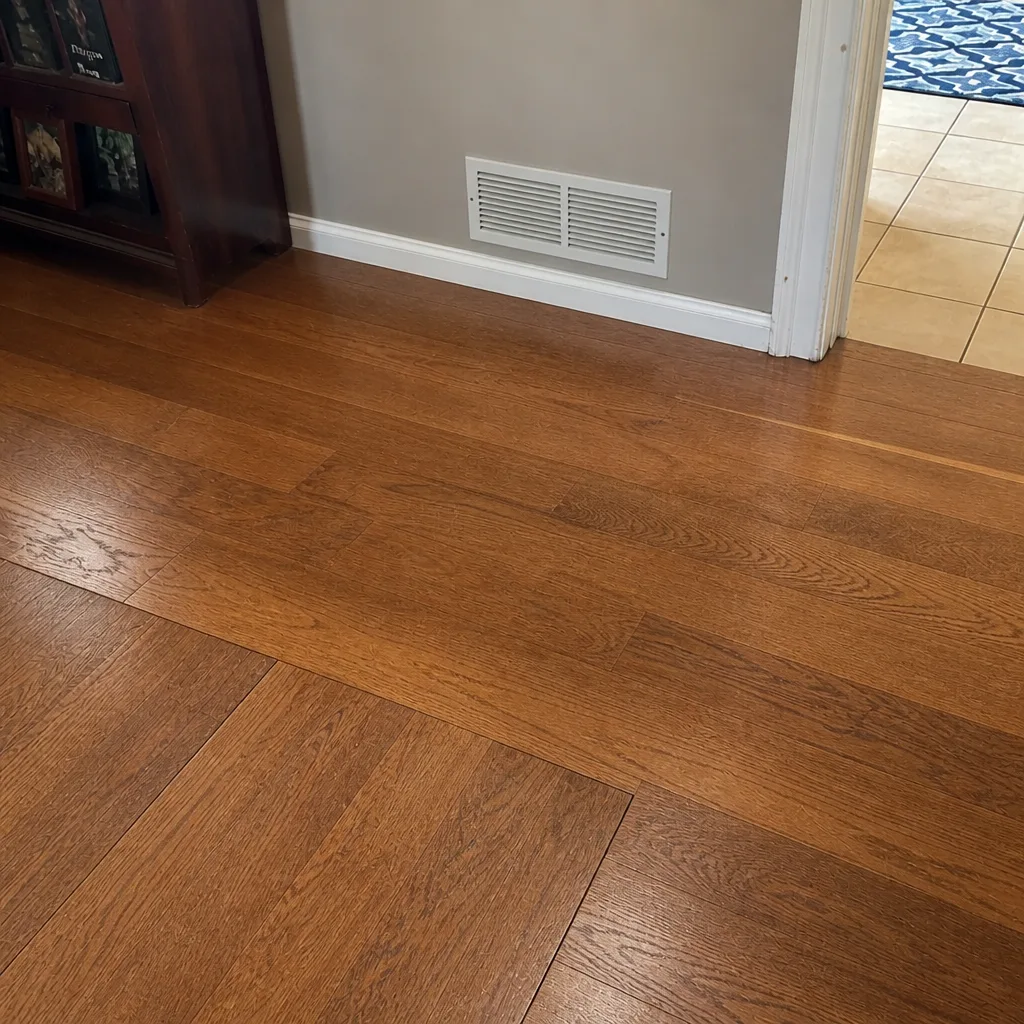
Whole-system duct and dryer vent check with before-and-after photos - you see exactly what came out of your vents
That "$99 whole-house special" is a bait ad - the real number appears once they are in your hallway, or the "clean" is a shop-vac at the register. We photograph the inside of your ducts before and after instead.
DIY vs Professional Air Duct Cleaning: The Elmhurst Homeowner’s Decision Guide
Here’s the part most DIY guides skip: residential ductwork is built to be inaccessible. It snakes through wall cavities, drops into ceiling chases, and doubles back through bends and plenum boxes you can’t see, let alone reach with a shop vac. A vacuum and a dryer vent brush can handle what’s visible at the register. The contamination that actually affects your air quality and system efficiency lives in the sections that were never designed for a homeowner to touch. This guide walks you through what consumer tools physically can’t do, which tasks you can honestly handle yourself, and how to decide when a professional call is the right move for your Elmhurst home.
Quick Answer
Light register cleaning, filter swaps, and brushing a short straight dryer vent run are legitimately DIY tasks. Full system duct cleaning is not, because a shop vac can’t generate the airflow or containment that loosened debris requires. Professional cleaning uses HEPA-rated negative pressure equipment that pulls material out of the system instead of pushing it into your living space. For most Elmhurst homes more than a few years old, a professional assessment is the honest starting point.
Styles & brands we work with
- Whole-home duct cleaning
- Dryer vent cleaning
- Camera inspection
- Sanitizing & deodorizing
Table of Contents
- The equipment gap: what a shop vac can’t do that a Rotobrush can
- Why disturbing duct debris without containment can backfire
- What you can legitimately do yourself
- When the DIY option actually costs more
- Elmhurst-specific concerns: attached homes and shared cavities
- What professional air duct cleaning actually involves
- Why cleaning without repair leaves the problem in place
- A decision framework for Elmhurst homeowners
The equipment gap: what a shop vac can’t do that a Rotobrush can
A shop vac moves air. So does a professional duct cleaning system. The difference is in how much air, how it’s captured, and where the debris ends up.
Consumer vacuums typically move somewhere in the range of a hundred to a few hundred cubic feet per minute (CFM) with no filtration beyond a generic bag or cartridge. Professional-grade systems like the Rotobrush and Nikro platforms we use are built for the demands of a whole-house duct network: sustained negative pressure across long runs, sealed hose connections, and HEPA-rated filtration that captures the fine particulate a shop vac blows back into the room. That last point matters more than most people realize. A shop vac picks up the visible dust and then exhausts the smallest particles, the ones that stay airborne longest, straight back into the space you were trying to clean.
Then there’s the reach problem. A shop vac hose might get two or three feet into a straight floor register. It cannot navigate the transitions where ductwork changes direction, and that’s where debris accumulates. Bends, plenum boxes at the furnace, and return air chases collect the settled material that gets stirred into your supply air every time the system cycles. Professional cleaning uses rotating brushes and air whips on flexible shafts that travel the duct interior and agitate the surface, paired with a negative pressure machine at the main trunk pulling everything toward it.
For more on what a full professional service actually includes, see our air duct cleaning page.
Why disturbing duct debris without containment can backfire
This is the risk almost no DIY article mentions. When you agitate settled debris without a sealed negative pressure system attached, you don’t remove it. You put it into the air.
The physics is straightforward. Duct systems accumulate dust, skin cells, pet hair, and construction residue over time, and that material settles in a stable layer against the duct wall. Once you start brushing or vacuuming from one end, you break that layer loose. Without a containment system pulling air at the other end, the loosened particles have two choices: settle back somewhere nearby or get pulled into the return air and distributed through every supply register in the house.
We’ve seen the result: a homeowner cleans a few registers, feels productive, and then spends the next several days noticing more dust and a mustier smell. The system was working exactly as designed. It moved the disturbed material everywhere the air goes.
Containment is the fix. A proper setup uses negative pressure to keep the working zone at lower pressure than the surrounding rooms, so any released material flows toward the collection equipment instead of escaping. This is standard practice for professional cleaning and it’s the single biggest reason amateur attempts can leave the air worse than it started. If anyone in the home has allergies or a respiratory condition, the stakes for getting this right are higher.
What you can legitimately do yourself
We’re not going to tell you everything requires a professional. Some duct maintenance genuinely benefits from a homeowner who keeps up with it between visits. Here’s the short list of tasks that make sense on your own:
- Register and grille cleaning. Pop off the visible supply and return covers, wash them in warm soapy water, dry thoroughly, and reinstall. This removes the surface dust that gets pulled into supply air and is a real improvement, just a small one.
- Filter changes. Replace your furnace or air handler filter on the manufacturer’s recommended schedule. A clogged filter chokes airflow system-wide and shortens equipment life. This is the highest-value DIY task in the whole system.
- Dryer vent brushing on short, straight runs. If your dryer vent is a short straight shot to an exterior wall with a clean termination, a flexible brush kit is a reasonable tool. Anything with bends, a long run, or a roof termination belongs to a professional.
- Exterior vent inspection. Look at the outside termination of your dryer vent and any fresh-air intakes. If the damper is stuck open or blocked, that’s worth flagging even if the actual work is something you hire out.
- Keeping debris away from return grilles. Furniture, boxes, and pet beds pressed up against return air grilles reduce airflow and pull more dust into the system. This one costs nothing.
What’s not on that list: fishing a vacuum hose into ductwork, spraying anything into the system, or using compressed air on visible dust buildup. Each of those either can’t reach the problem or makes it worse. Our dryer vent cleaning service handles the runs that are too long or too bent for a homeowner brush kit.
When the DIY option actually costs more
The DIY pitch usually assumes your time is free and your equipment is sufficient. Neither assumption holds up well once you run the numbers honestly.
The realistic cost of a serious DIY attempt includes:
- Equipment rental or purchase. A shop vac capable of meaningful suction and a HEPA filter for it runs into real money. A flexible duct brush kit adds more. A HEPA-rated negative pressure machine is not available at typical rental counters.
- Time. Register cleaning, filter swaps, and vent brushing take an afternoon. Doing them all properly, then finding the ducts still look dirty on a scope inspection, means that afternoon bought you a marginal improvement.
- Incomplete results that need professional follow-up anyway. This is the hidden cost. If the underlying contamination is in the plenum and trunk lines, a professional visit is still needed, and now you’ve paid for equipment you’ll use once.
- Risk of disturbing the system. Without containment, you may create a temporary indoor air quality problem that costs more to address than the original cleaning would have.
- Missed repair needs. A homeowner cleaning registers won’t see a disconnected flex joint behind a wall cavity or a failed mastic seal at a trunk transition. Those are the problems that quietly cost efficiency every heating and cooling season.
For the equipment we bring to an Elmhurst home, see our HVAC cleaning page. The professional visit is priced as one flat price per system agreed before work starts, not per vent, so the comparison is a full system against a partial job.
Elmhurst-specific concerns: attached homes and shared cavities
Elmhurst has a meaningful stock of attached homes, rowhouses, and multi-family buildings. That changes the DIY calculus in ways that don’t apply to a detached single-family house.
Ductwork in attached homes often runs through shared wall cavities, and those cavities are fire-stopped. Poking a vacuum hose or brush into a shared cavity wall from a register can disturb the fire-stopping material that’s supposed to seal the penetration between units. That’s not a cosmetic issue. Fire-stop assemblies exist for a reason, and once they’re compromised, restoring them is a code-level repair, not a cleaning task.
Attached homes also share penetrations through party walls and floors, which means duct runs can pass through openings that serve adjacent units. Brushing a duct in one unit while the neighbor’s system is running can pull loosened debris into their supply air. Professional cleaning plans for this: the technician knows to work with negative pressure, to verify that fire-stops aren’t in the working path, and to seal the system so disturbance stays contained.
For property managers in Elmhurst running a multi-family building, the calculation is even clearer. Scheduling one professional cleaning across multiple units keeps the work coordinated, avoids the fire-stop risk, and gives tenants a documented result. Doing it unit-by-unit with DIY tools risks voiding the building’s fire-stop integrity and creates a nuisance problem for neighbors.
If you need a starting point, our Elmhurst Air Duct Cleaning main page covers the full system approach.
What professional air duct cleaning actually involves
Understanding the professional process is the best way to know what you’re comparing a DIY effort against. A proper whole-system clean follows a documented sequence.
- System assessment. The technician inspects the duct network: supply and return runs, the plenum, the air handler, register conditions, and any signs of moisture, pest activity, or disconnected sections. This is also when repair needs get identified.
- Containment setup. Negative pressure is established with HEPA-rated equipment at the main trunk, sealed at the working end and filtered at the exhaust. The system is now under controlled vacuum, so anything loosened flows toward the collection equipment.
- Mechanical agitation. Rotating brushes and air whips travel the duct interior on flexible shafts, agitating the material stuck to the walls so it can be captured. The Rotobrush and Nikro platforms we use are built for this.
- Component cleaning. The blower wheel, evaporator coil, and drain pan get the same treatment. A clean duct system connected to a dirty air handler recirculates the same contaminants. That’s why we treat HVAC cleaning as part of the same job.
- Sanitizing. Where microbial contamination, musty odors, or allergy concerns exist, professional-grade sanitizing products are applied. We work with Honeywell, Aprilaire, and Abatement Technologies air quality products, which are designed for professional application, not over-the-counter spraying.
- Repair and sealing. Disconnected joints, failed mastic seals, and leaking trunk connections get addressed. This is the step cleaning-only services skip.
- Verification. Before-and-after photos of your ducts document what was actually removed. This is your evidence that the work was done.
That full-system sequence is the difference between cleaning the system and cleaning what you can see.
Why cleaning without repair leaves the problem in place
Here’s a common scenario we want to name directly: you hire a cleaning company, they clean the ducts, and six months later the dust is back. That’s not a cleaning failure. It’s a repair failure that a cleaning-only service can’t address.
Duct systems have joints. Some are mechanically fastened and sealed with mastic at installation. Over years of thermal cycling, vibration, and settling, those seals crack and flexible connections pull apart. Once a duct run has a leak, it pulls attic or wall cavity air into the supply side. That air carries dust, insulation fibers, and whatever else is in the surrounding space.
Clean the ducts and leave the leak in place, and the leak puts the contaminants right back. Our Duct Repair & Sealing service exists because cleaning alone doesn’t fix this. The technician identifies disconnected joints, failed seals, and duct sections with poor integrity, then repairs and reseals them. That closes the pathway so the next cleaning visit actually holds.
For Elmhurst homes with older ductwork, this repair step is often the most valuable part of the job. Older flex duct in particular is prone to connection failure and internal liner deterioration. Cleaning a deteriorated flex duct without repair just stirs up the liner material.
A decision framework for Elmhurst homeowners
If you’re on the fence, work through these questions in order. The first “no” that points toward a professional call is your answer.
- Do you see visible dust, debris, or discoloration at supply or return registers beyond a light film? If yes, the contamination extends beyond the register surface and into the duct run.
- Have you noticed musty odors when the system runs, or a persistent dust problem despite regular filter changes? Odors and recurring dust point to source contamination the system is recirculating.
- Does anyone in the household have allergies, asthma, or other respiratory sensitivity? Containment and professional sanitizing are worth prioritizing when air quality is a health consideration.
- Is the home more than a few years old, or have you recently renovated? Construction residue and settled debris are common in homes that have been through a major project.
- Is your dryer taking noticeably longer to dry loads? That’s a sign of lint accumulation beyond what a brush kit reaches.
- Is your home an attached unit or multi-family building? Shared cavities and fire-stop risk make the professional call the safer move.
Any single “yes” is a reasonable reason to schedule an assessment. Multiple yeses make it fairly clear.
Common Mistakes to Avoid
- Using a shop vac without HEPA filtration. The exhaust blows fine particulate back into the room, which is the opposite of what you’re trying to accomplish. Have a vacuum running near the area you’re working? Run it with HEPA-rated equipment or not at all.
- Disturbing duct debris with no negative pressure. Loosening settled material without containment sends it through the whole system. If you can’t contain it, don’t agitate it.
- Brushing a shared cavity in an attached Elmhurst home. The fire-stop materials that separate units can be damaged by a vacuum hose or brush. This is a safety issue, not a cleaning one.
- Attacking a long or bent dryer vent with a homeowner brush kit. The brush gets stuck, the run stays unclogged, and the lint stays where it is. Long or bent runs need professional equipment.
- Skipping the filter schedule. A clogged filter is the most common cause of dust buildup and airflow problems in an otherwise clean system. Check it monthly, replace it on schedule.
- Hiring a cleaning company without a repair scope. If the service cleans and leaves leaking joints and failed seals behind, you’ll be paying for a second visit before long. Ask whether repair and sealing are part of the job.
- Judging the result by the register, not by the ducts. A clean register hides a dirty duct run. Ask for before-and-after photos of the actual duct interior, not just the finished register.
See the difference
 Before
 After
 Before
 After
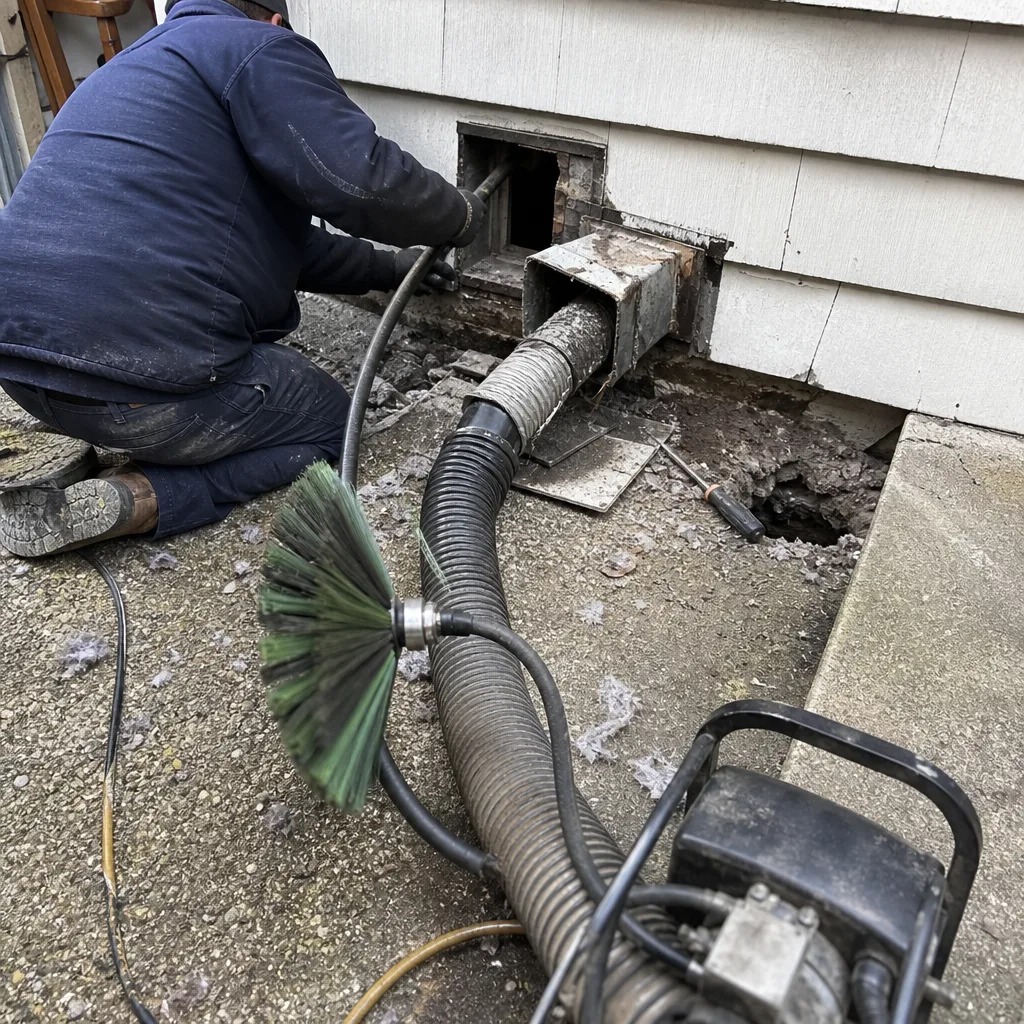 Before
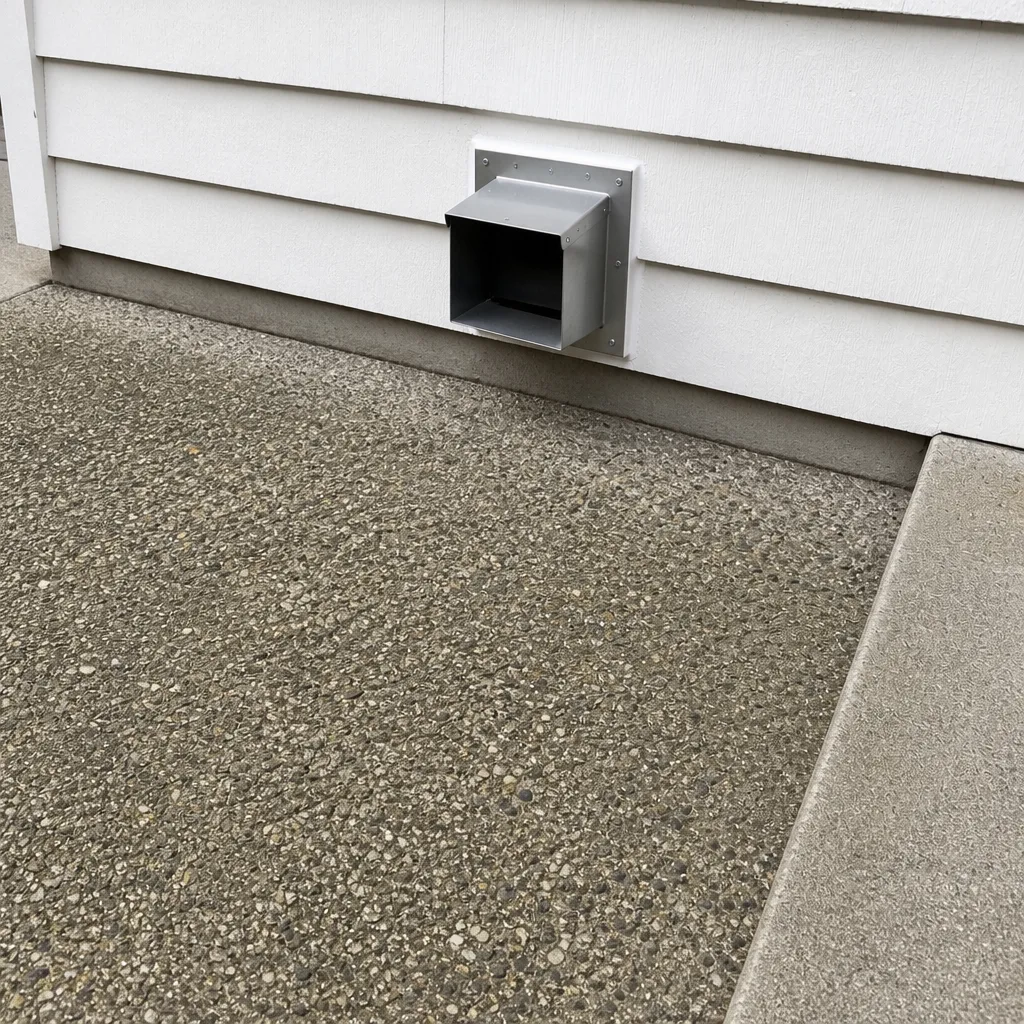 After
When to Call a Professional
Call a professional when the task beyond your reach is the one that matters. That includes visible dust and debris well inside the duct runs, musty odors when the system cycles, a dryer that takes two cycles to dry a load, any signs of moisture or pest activity in the ducts, or a home that’s an attached unit or multi-family building. It also includes any system more than a few years old that hasn’t had a documented cleaning, and any home where someone has allergies or respiratory sensitivity. Our technicians have up to 13 years of experience, and Elmhurst Air Duct Cleaning offers free estimates in Elmhurst. Call (855) 410-4866. We answer 24/7. Fast dispatch from 7am to 7pm, Sunday through Friday. One flat price per system is agreed before work starts, and you’ll have before-and-after photos of your own ducts to confirm the work was done.
Frequently Asked Questions
No, a shop vac cannot properly clean a residential duct system. The problem isn’t skill, it’s access and equipment: a shop vac can’t reach the bends, plenum, and return boxes where most contamination collects, and without HEPA-rated negative pressure containment, it exhausts fine particulate back into the room. Call (855) 410-4866 for an exact quote. Estimates are free.
Cheap quotes usually describe a partial service, not a full one. A per-vent price or a low headline figure often comes with no full-system containment, no HEPA equipment, no repair and sealing scope, and no documentation. You’re comparing two different jobs. Ask what equipment is being used, whether repair and sealing are included, and whether you’ll get before-and-after photos. Call (855) 410-4866 for an exact quote on a full-system job. Estimates are free.
Pricing is set per system, not per vent, and the written estimate is what determines the final price. The number of supply and return runs, the condition of the ductwork, whether repair and sealing are needed, and whether HVAC cleaning and sanitizing are part of the job all factor in. Call (855) 410-4866 for an exact quote. Estimates are free.
Most homes benefit from a professional assessment every few years, with the actual cleaning schedule depending on household factors: pets, allergies, recent renovations, smoking, and the condition of the ductwork. A home with pets, allergy sufferers, or recent construction may need attention sooner. Call (855) 410-4866 for an exact quote. Estimates are free.
Ask for before-and-after photos of the duct interior. A professional service documents what was cleaned, not just the visible registers. That record is your proof. We also scope repair findings and seal any leaking joints so the cleaning holds. Call (855) 410-4866 for an exact quote. Estimates are free.
Yes. Ductwork in attached homes often runs through shared wall cavities that contain fire-stop assemblies. Poking a vacuum hose or brush into a shared cavity can damage those fire-stops, which is a code-level repair that goes beyond cleaning. Professional cleaning plans for this and keeps disturbance contained. Call (855) 410-4866 for an exact quote. Estimates are free.
Only on a short, straight run with a clean exterior termination. Any run with bends, a long path to the exterior, or a roof termination needs professional equipment to reach the lint properly. If your dryer takes noticeably longer to dry a load, that’s the sign to stop DIY-ing it. Call (855) 410-4866 for an exact quote. Estimates are free.
The Bottom Line
The DIY vs. professional question for duct cleaning comes down to equipment and access, not effort. You can genuinely improve your air quality with register cleaning, filter changes, and short dryer vent runs. What you can’t do with consumer tools is remove contamination from the bends, plenums, and return boxes that no shop vac reaches, and disturbing that material without containment can make things worse rather than better. For Elmhurst homes, especially attached units and multi-family buildings, the safer and more effective path is a professional assessment. The estimate is free.
Call Elmhurst Air Duct Cleaning at (855) 410-4866 for a free estimate on professional air duct cleaning in Elmhurst. We answer 24/7. Fast dispatch from 7am to 7pm, Sunday through Friday. Our technicians have up to 13 years of experience, we use Rotobrush and Nikro professional-grade equipment, and we work with air quality products from Honeywell, Aprilaire, and Abatement Technologies. When we find leaking joints or damaged ductwork, we repair and seal it as part of the job.
Written by the team at Elmhurst Air Duct Cleaning.