
Last updated November 22, 2026
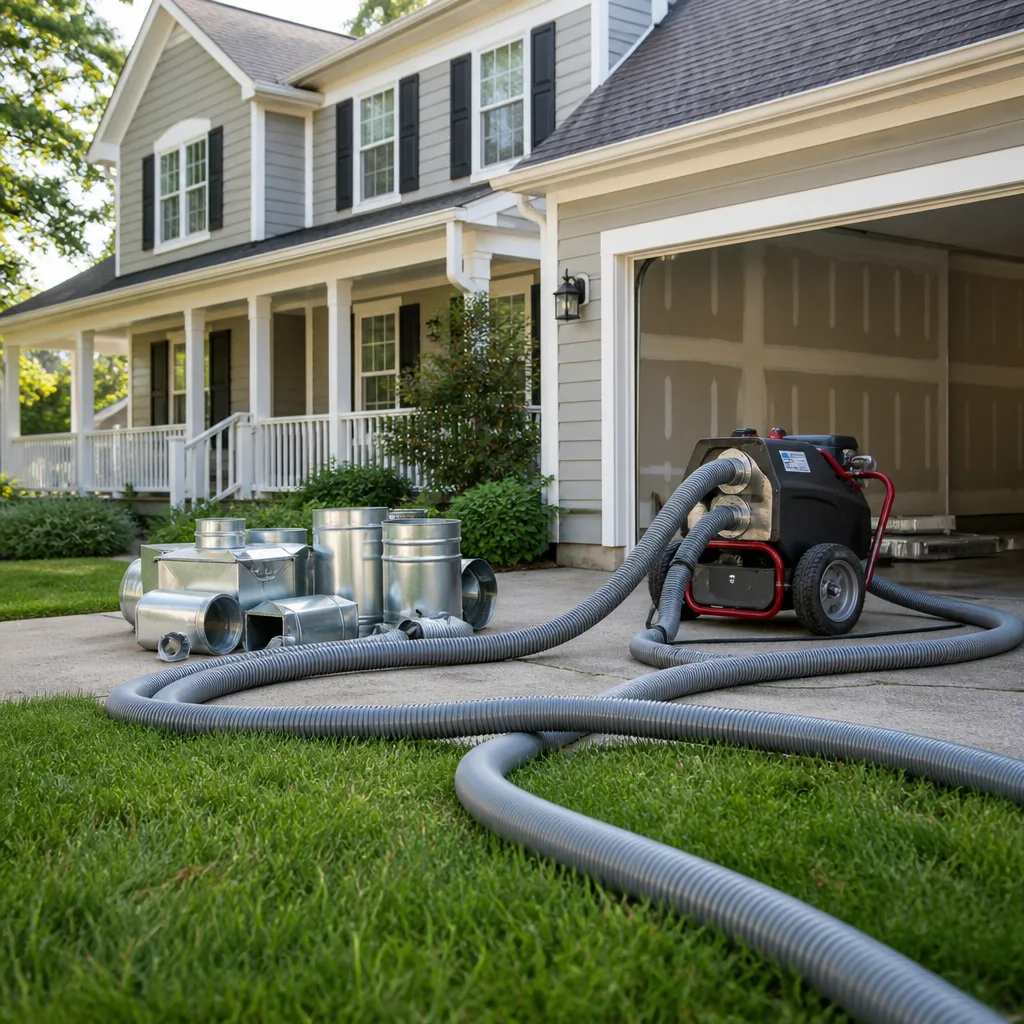 Whole-home duct cleaning
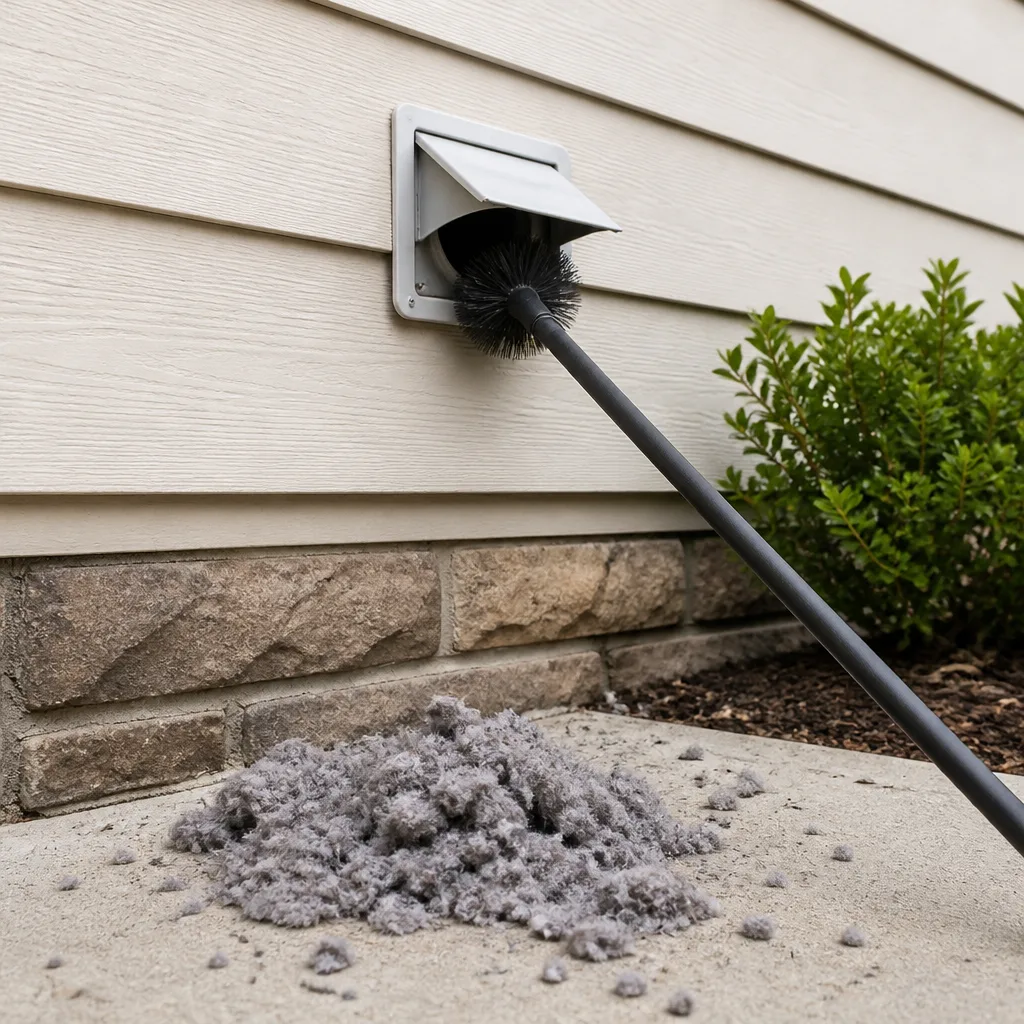 Dryer vent cleaning
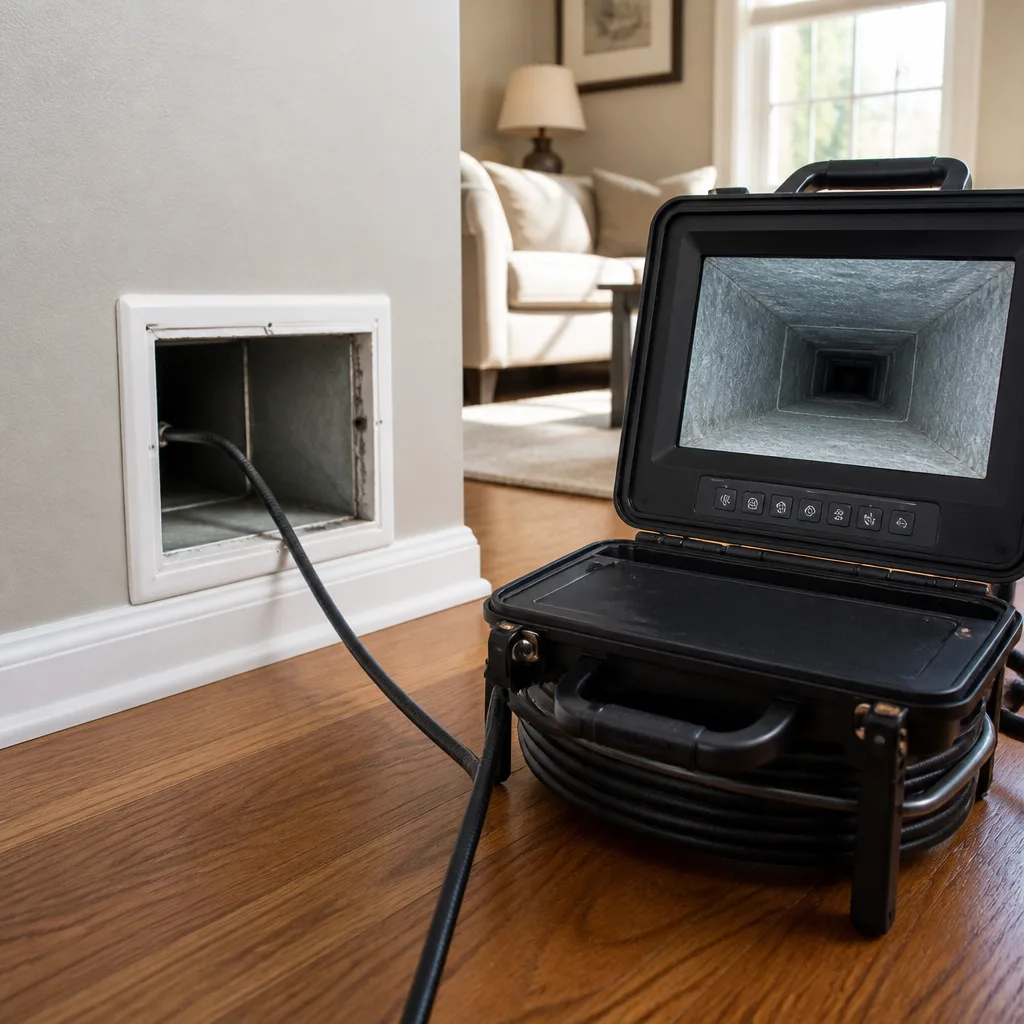 Camera inspection
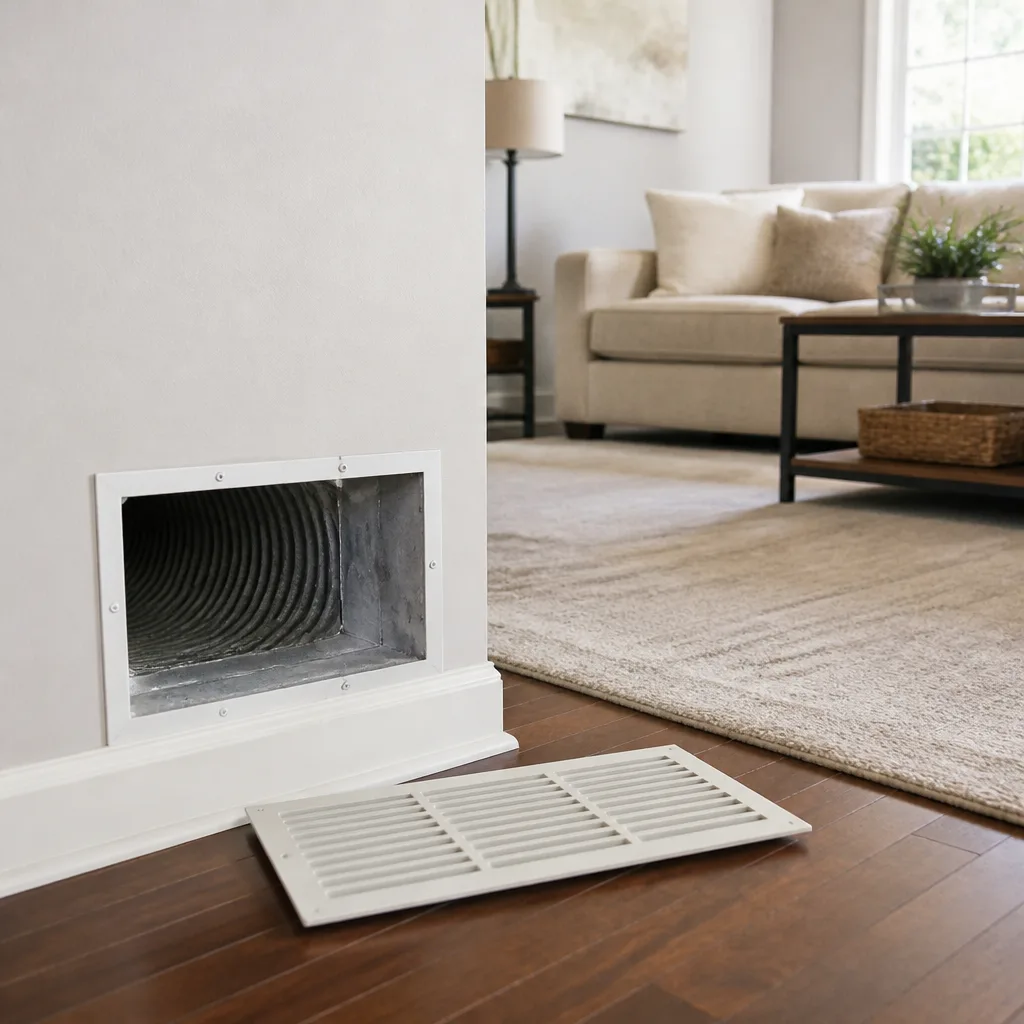 Sanitizing & deodorizing
Whole-system duct and dryer vent check with before-and-after photos - you see exactly what came out of your vents
That "$99 whole-house special" is a bait ad - the real number appears once they are in your hallway, or the "clean" is a shop-vac at the register. We photograph the inside of your ducts before and after instead.
Air Duct Cleaning Permits, Codes & Inspections in Elmhurst, NY: What You Need to Know
Most homeowners in Elmhurst ask us the same question first: “Do I need a permit to get my ducts cleaned?” That’s the wrong question, and it’s the one that gets people into trouble. The smarter question is whether any part of the job touches work that New York City’s Mechanical Code already regulates. Plain cleaning usually doesn’t. But seal a joint, swap a section of flex, alter a dryer exhaust run, or install a booster fan, and you’ve stepped from maintenance into territory where filing, licensing, and inspection questions start to matter. This guide walks through where that line sits for Elmhurst homes and apartment buildings, what the code actually covers, and how to check that whoever shows up is operating legally before work begins.
Quick Answer
Routine air duct cleaning in Elmhurst, NY does not require a permit – it’s maintenance, and the NYC Mechanical Code doesn’t treat it as construction. Permits and Department of Buildings filing become relevant when the job involves altering ductwork: replacing duct sections, installing new exhaust runs, adding a booster fan, or doing liner work in a multi-family building. Separately, any contractor doing home improvement work in New York City must hold a Home Improvement Contractor (HIC) license, which is a licensing question, not a permit question, and it applies to the cleaning visit too.
Styles & brands we work with
- Whole-home duct cleaning
- Dryer vent cleaning
- Camera inspection
- Sanitizing & deodorizing
Table of Contents
- What the NYC Mechanical Code Covers: Maintenance vs. Modification
- When Does Duct Work Cross Into a Permit-Required Alteration?
- Dryer Vent Rules in Elmhurst: Length Limits, Booster Fans, and NYC’s Separate Requirements
- CO Detector Triggers When HVAC Work Touches Older Elmhurst Homes
- How to Verify an NYC Home Improvement Contractor License Before Work Starts
- What an Inspection Actually Looks Like After Duct Work
- Multi-Family Buildings in Queens: Why the Rules Change Above Two Units
- A Step-by-Step Pre-Job Checklist for Elmhurst Homeowners
What the NYC Mechanical Code Covers: Maintenance vs. Modification
The NYC Mechanical Code regulates the installation, alteration, repair, and maintenance of mechanical systems, which includes HVAC ductwork. The word that matters most in that sentence is “alteration.” Cleaning a duct system is maintenance. Changing its shape, layout, materials, or capacity is an alteration. Those two things live under different rules, and the confusion between them is where most of the permit questions in Elmhurst come from.
Here’s how we explain the split to homeowners before we start a job:
- Maintenance (usually no permit): removing debris from duct interiors, cleaning registers and grilles, sanitizing surfaces, cleaning the air handler and coil, cleaning a dryer vent run without changing it.
- Repair (permit depends on scope): taping or mastic-sealing a leaking joint, reconnecting a disconnected boot, replacing a short damaged section with the same material and size.
- Alteration (permit likely required): adding or removing supply or return ducts, resizing a run, changing duct material type, installing a new exhaust fan and duct run, adding a booster fan to an existing dryer or bath exhaust, installing duct liner in a system that didn’t have it.
Elmhurst has a lot of pre-war and mid-century housing stock where ducts were added, patched, or rerouted over the decades, sometimes without documentation. When we open a ceiling and find a run that doesn’t match what’s on any plan, that’s the moment to slow down and ask whether the original work was ever filed. We use professional-grade equipment like Rotobrush and Nikro to clean and inspect interiors, but no machine tells you whether a previous contractor pulled the right paperwork. That takes a records check.
When Does Duct Work Cross Into a Permit-Required Alteration?
Duct work in New York City generally requires a permit when it meets the code’s definition of an alteration to a mechanical system, which means a change to the configuration, capacity, or materials of the system – not a cleaning or a like-for-like repair. If you’re replacing a failed section of duct with the same gauge and size, most situations read as a repair. If you’re adding a run, changing the duct’s dimensions, converting from flex to rigid, or installing new equipment that the ductwork has to serve, expect the job to need filing.
For a multi-family building in Elmhurst – and there are plenty of them along Broadway and Grand Avenue – the calculation shifts again. Sealing leaks in a shared duct system that serves multiple apartments can affect the pressure balance between units, and that’s the kind of change a building owner or managing agent typically wants reviewed before work begins. Liner work inside existing duct shafts falls into the same category: it changes the interior surface and airflow characteristics of a system that serves other people.
A practical way to sort your own situation:
- Identify what the contractor is actually proposing. Cleaning only? Repair of damaged material? New ducts or new equipment?
- If it’s cleaning, no permit. Move on to the license check in the section below.
- If it’s repair, ask the contractor to state in writing whether the scope changes system capacity or configuration. If it doesn’t, it’s typically a repair.
- If it’s alteration, ask for the DOB filing status and the name of the licensed professional of record before signing anything.
- If you’re a tenant or in a co-op or condo, loop in the managing agent early – building rules on duct access usually outrun city rules.
We handle plenty of jobs where the honest answer is “this part needs a filing and this part doesn’t.” We’d rather tell you that up front than discover it halfway through. Our air duct cleaning work is maintenance and doesn’t need any filing, but when we find a duct run that needs replacing, we flag it and let you and your building decide how to proceed.
Dryer Vent Rules in Elmhurst: Length Limits, Booster Fans, and NYC’s Separate Requirements
Dryer exhaust is where the code conversation gets specific, and where Elmhurst’s housing stock makes it more complicated than most homeowners expect. The Mechanical Code limits the developed length of a dryer exhaust duct, requires smooth rigid metal duct rather than the flexible foil or plastic stuff that shows up in older buildings, and puts a cap on how many elbows a run can have. Every 90-degree turn counts against you. In the apartment buildings and narrow rowhouses common around Elmhurst, dryer runs are often long, twisting, and full of turns because the machines sit far from an exterior wall.
That’s why booster fans come up. A booster fan installed in a dryer exhaust run is an alteration to the mechanical system, and a job that starts as dryer vent cleaning can turn into something that needs review if the run is too long and the fan is the fix. The fan itself is also an electrical device sitting in a lint-filled duct, so installation has to be done correctly to be safe.
What we check on a dryer vent visit:
- Total developed length of the run and the number of elbows
- Duct material – smooth metal is the standard; foil flex is a problem
- Whether the run terminates outdoors with a proper backdraft damper, not into an attic, crawl space, or garage
- Whether screws or fasteners protrude into the duct and catch lint
- Whether a booster fan exists, whether it’s wired and functioning, and whether it was installed as part of a permitted alteration
Blocked or restricted dryer exhaust is a fire hazard, which is why we treat a restricted run as a same-day concern rather than something to schedule around. If your dryer is taking two cycles to dry a load, that’s the signal. Call (855) 410-4866. We answer 24/7. Fast dispatch from 7am to 7pm, Sunday through Friday.
CO Detector Triggers When HVAC Work Touches Older Elmhurst Homes
New York City requires carbon monoxide detectors in homes that contain a combustion appliance or an attached garage, and when HVAC work is performed in a dwelling, that requirement is one of the things a knowledgeable contractor will check before calling the job done. Elmhurst has a large number of older homes and apartment buildings heated by gas-fired furnaces, boilers, and water heaters. Any of those appliances is a potential CO source if a flue is blocked, backdrafting occurs, or a heat exchanger fails.
Here’s the part most people don’t connect: cleaning and inspection work on the HVAC system is often the first time anyone looks closely at the flue and heat exchanger since the last service visit. If we find corrosion, blockage, or a flue that’s pulling the wrong way, we stop and flag it. That’s not a duct cleaning issue anymore – it’s a life-safety issue, and it belongs with a licensed heating professional who can evaluate the combustion side of the system.
A few things to verify in your own home, without touching any gas equipment:
- Do you have a working CO detector on every level of the home and near sleeping areas?
- Is it within its replacement window? Detectors have a service life printed on the label.
- Is the detector plugged in or battery-fresh, and does it pass a test cycle?
- Do you know where your combustion appliances vent, and is that vent clear of obstruction?
We check the CO detector situation as part of a full-system assessment, but we never recommend that a homeowner pull a flue apart or open up a heat exchanger to look inside. That’s genuinely dangerous work, and a trained professional with the right instruments should be the one doing it. Our HVAC cleaning service covers the air side of the system – the ducts, the coil, the blower – and we tell you clearly when something we found belongs with a different trade.
How to Verify an NYC Home Improvement Contractor License Before Work Starts
New York City requires contractors performing home improvement work to hold a Home Improvement Contractor (HIC) license issued by the Department of Consumer and Worker Protection. This applies to the cleaning visit itself, not just the bigger jobs. Before anyone walks into your Elmhurst home with equipment, you have the right to ask for the license number and to look it up.
The verification process is straightforward:
- Ask the contractor for their HIC license number in writing – on the estimate, not just on request.
- Look the number up on the DCWP’s online license lookup. It takes a minute and it’s the only step that actually proves the number is real.
- Confirm the name on the license matches the company on the estimate and the name on the truck and paperwork.
- Ask for a certificate of insurance showing general liability coverage and, where required, workers’ compensation for anyone who will be in your home.
- For any job involving alteration work, ask separately for the licensed plumber, electrician, or other trade professional of record whose license covers that scope.
- Get the scope and the price in writing before work starts. Any licensed contractor will do this without hesitation.
The bait-and-switch reputation this industry carries exists for a reason: a low advertised price that grows into a much bigger invoice once the technician is on site. The way to close that door is a flat price per system, agreed before anyone touches a duct, and before-and-after photos of your own system when the job is done. That’s what we commit to, and the local licensed professional we connect you with is licensed and insured as their state requires, with the HIC credential on top for NYC work.
What an Inspection Actually Looks Like After Duct Work
An inspection after duct work is not a guy shining a flashlight into a register. It has a defined scope, and knowing what it covers helps you ask the right questions whether or not a permit was involved.
In our experience, a thorough post-work verification for an Elmhurst home includes:
- Visual check of every supply and return the contractor had access to, with photos of the interior before and after
- Confirmation that all access points were properly sealed and that no duct was left open to a wall cavity or attic
- Verification that flex duct is supported and not kinked, and that rigid duct connections are sealed with mastic rather than tape alone
- Airflow check at registers compared to before the work
- For dryer vents, confirmation of exhaust airflow at the exterior termination
- For permitted alterations, a DOB inspection by the appropriate licensed professional, plus sign-off on the filed application
The DOB side of that list only applies when a permit was actually pulled. For a cleaning job, the practical version is documentation: before-and-after photos, a written summary of what was found and what was done, and a record of any issues flagged for future work. We provide that as standard. A contractor who can’t show you photos of your own system has no way to demonstrate the work happened, and neither do you.
For more on the equipment and process we use, our team can walk you through what a full-system visit involves. You can see how we approach the broader service on our Elmhurst Air Duct Cleaning page.
Multi-Family Buildings in Queens: Why the Rules Change Above Two Units
Elmhurst is a neighborhood of apartment buildings. That single fact changes almost every answer in this guide, because the code treats a two-family home differently from a large multi-unit building, and because building management usually has requirements that go beyond what the city asks for.
In a building with a shared or semi-shared HVAC system, duct sealing and liner work affect other residents. The pressure balance in one apartment changes when a leak in the run serving it gets sealed. That’s why we recommend that any alteration-level work in a multi-family Elmhurst building get the managing agent involved before a crew arrives, not after. Access to duct chases, roof-mounted equipment, and mechanical rooms is a building-management decision first.
What typically requires coordination in a multi-family setting:
- Duct sealing in a shared run: manage down the scope with the building so pressure effects on other units are understood.
- Liner installation: treated as an alteration, and worth filing correctly.
- Dryer vent runs serving multiple units: these are the highest-stakes runs to inspect, because one tenant’s lint is everyone’s fire risk.
- New exhaust fans or booster fans: alteration-level electrical and mechanical work, and typically needs a filing.
We work with property managers on multi-unit buildings across Elmhurst and handle the assessment, cleaning, repair, and air quality treatment through one point of contact, so a manager isn’t coordinating three vendors across four floors. The professional-grade equipment matters here too. Rotobrush and Nikro systems handle long, complex runs and commercial-scale air handlers that a shop vac can’t touch. When it’s time to tackle a building, call (855) 410-4866. We answer 24/7. Fast dispatch from 7am to 7pm, Sunday through Friday.
A Step-by-Step Pre-Job Checklist for Elmhurst Homeowners
If you’re about to schedule duct work and you want to close off every permitting and licensing question before anyone arrives, work through this list in order. It takes about fifteen minutes and it will save you a month of friction if something turns out to be an alteration instead of a cleaning.
- Write down what you want done. “Clean the ducts” and “fix the ducts” are different jobs with different rules.
- Ask the contractor whether your scope is maintenance, repair, or alteration. A good answer will be specific, not hedged.
- Get the HIC license number in writing and verify it on the DCWP lookup before you schedule.
- Request a certificate of insurance. Check that it covers general liability and workers who will be in your home.
- If you’re in a co-op or condo, check building rules on duct access and work hours. These are usually stricter than the city’s.
- For any alteration-level scope, ask who the licensed professional of record will be and whether a DOB filing is being submitted.
- Confirm your CO detector is working if any combustion appliance shares the system.
- Agree on a flat price per system in writing before the job starts, and confirm that before-and-after photos will be taken.
One note on that last item: “per system” is the phrase that protects you. Per-vent pricing is the way a reasonable quote turns into a much larger invoice, because a house has more vents than anyone counted on the phone. Per-system pricing, agreed in writing, is the version where the number on the estimate is the number on the invoice.
Common Mistakes to Avoid
- Assuming every duct job is automatically permit-free. Cleaning usually is, but alterations aren’t. Get the scope in writing so you can tell the two apart before signing.
- Hiring on price alone. A quote that’s a fraction of the others usually leaves something out: the license, the insurance, or the actual work. Verify credentials before you compare dollars.
- Skipping the HIC license lookup. The number is easy to ask for and easy to fake. A minute on the DCWP website is the difference between a real credential and a claim.
- Letting dryer vent runs go uninspected in older Elmhurst buildings. Foil flex duct and long, twisting runs are common in the pre-war stock here, and they’re the biggest fire risk in the system.
- Not looping in the managing agent early. In a multi-family building, building rules on access, work hours, and roof equipment can stall a job that was otherwise ready to go.
- Treating the CO detector as an afterthought. Any work that touches a system with a combustion appliance in it should include a check that the detector is present and working.
- Accepting a job without before-and-after photos. Photos of your own system are the only evidence that a thorough cleaning happened rather than a quick pass with a shop vac.
See the difference
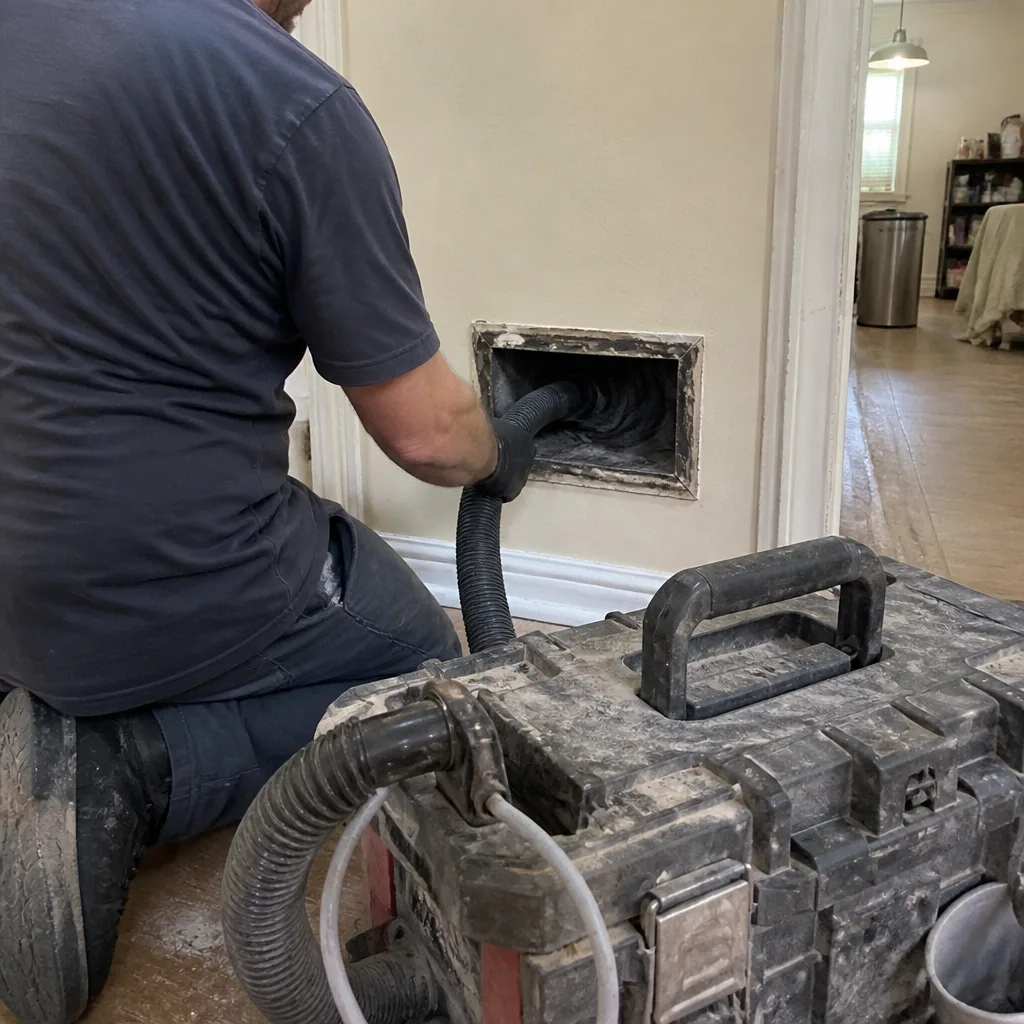 Before
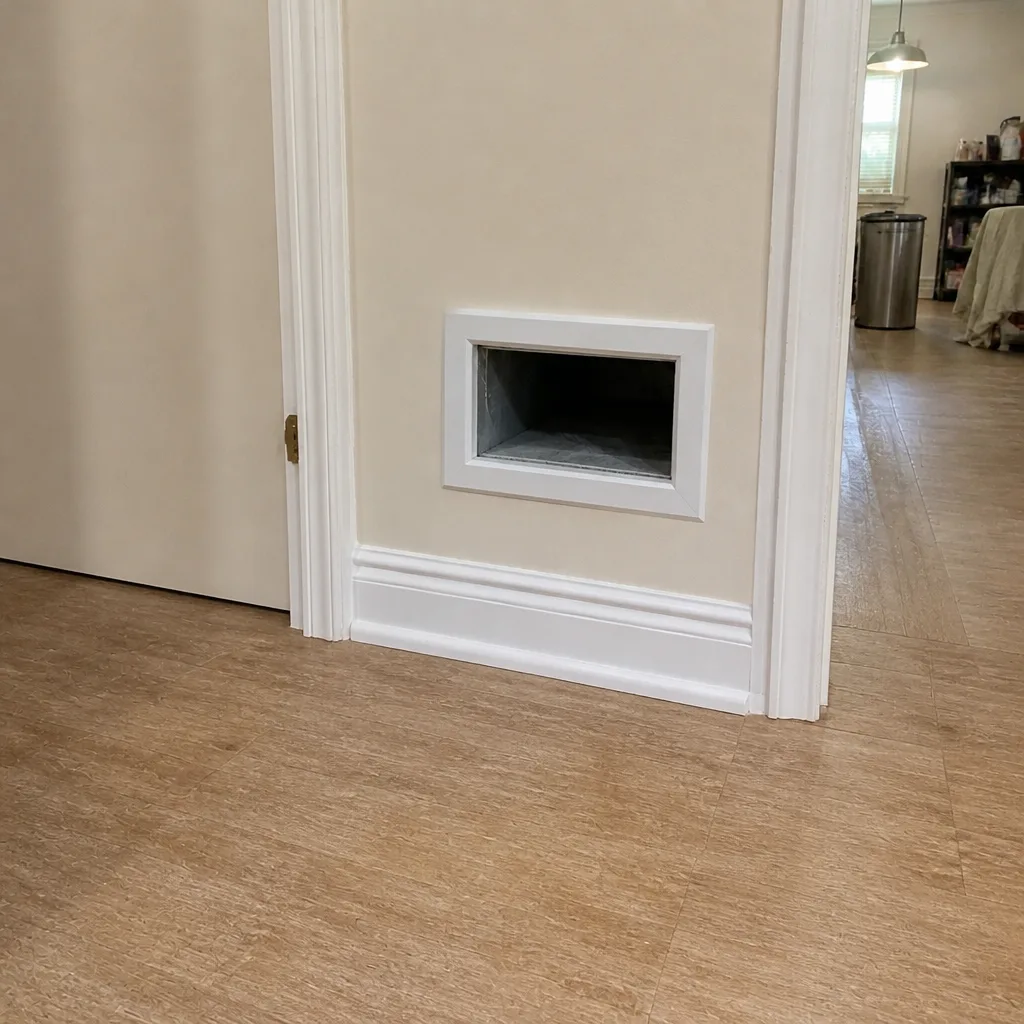 After
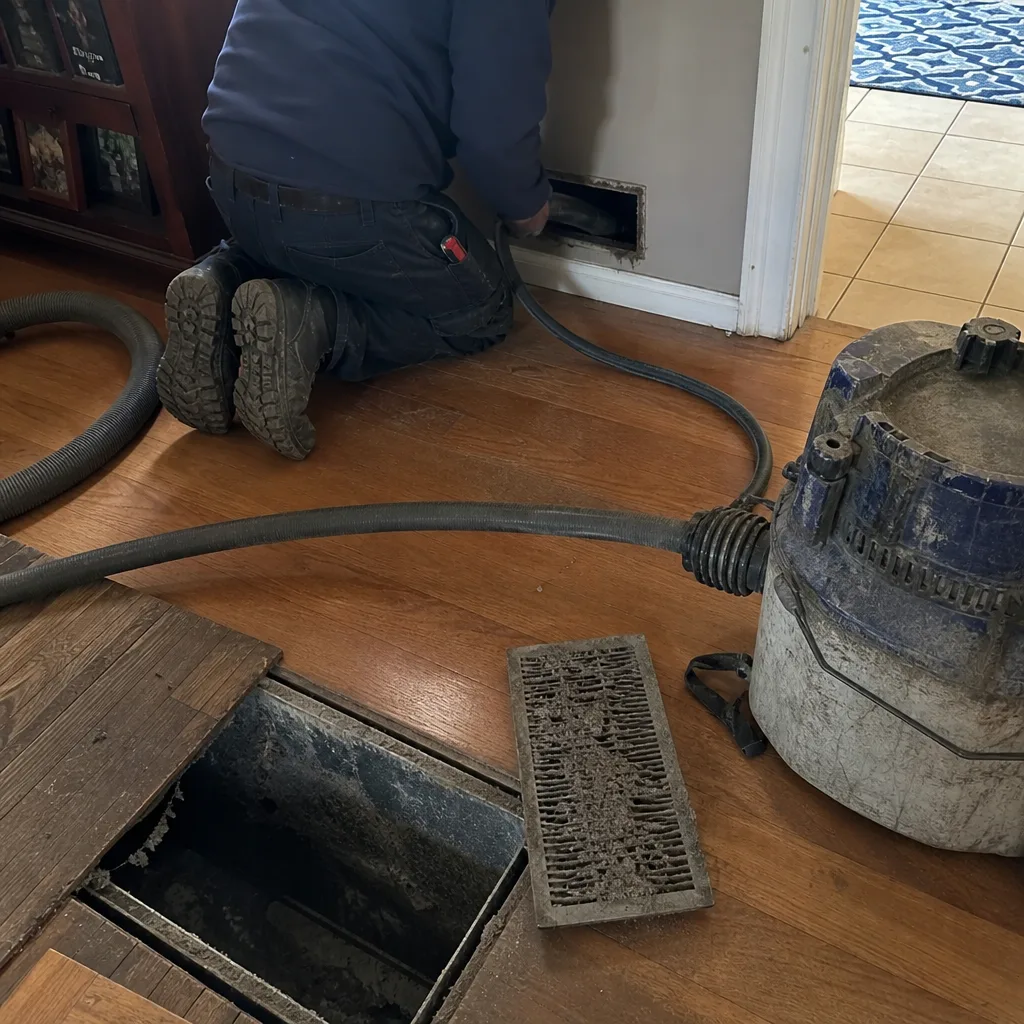 Before
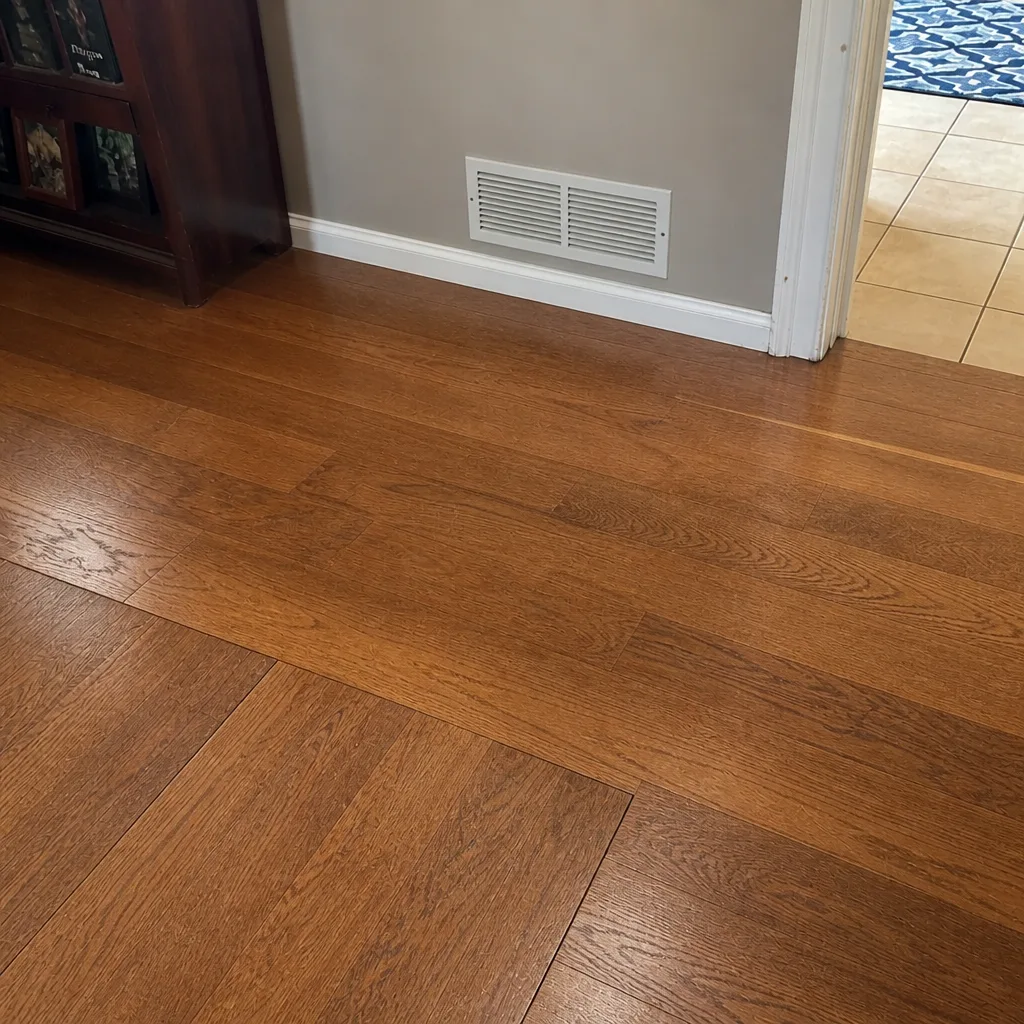 After
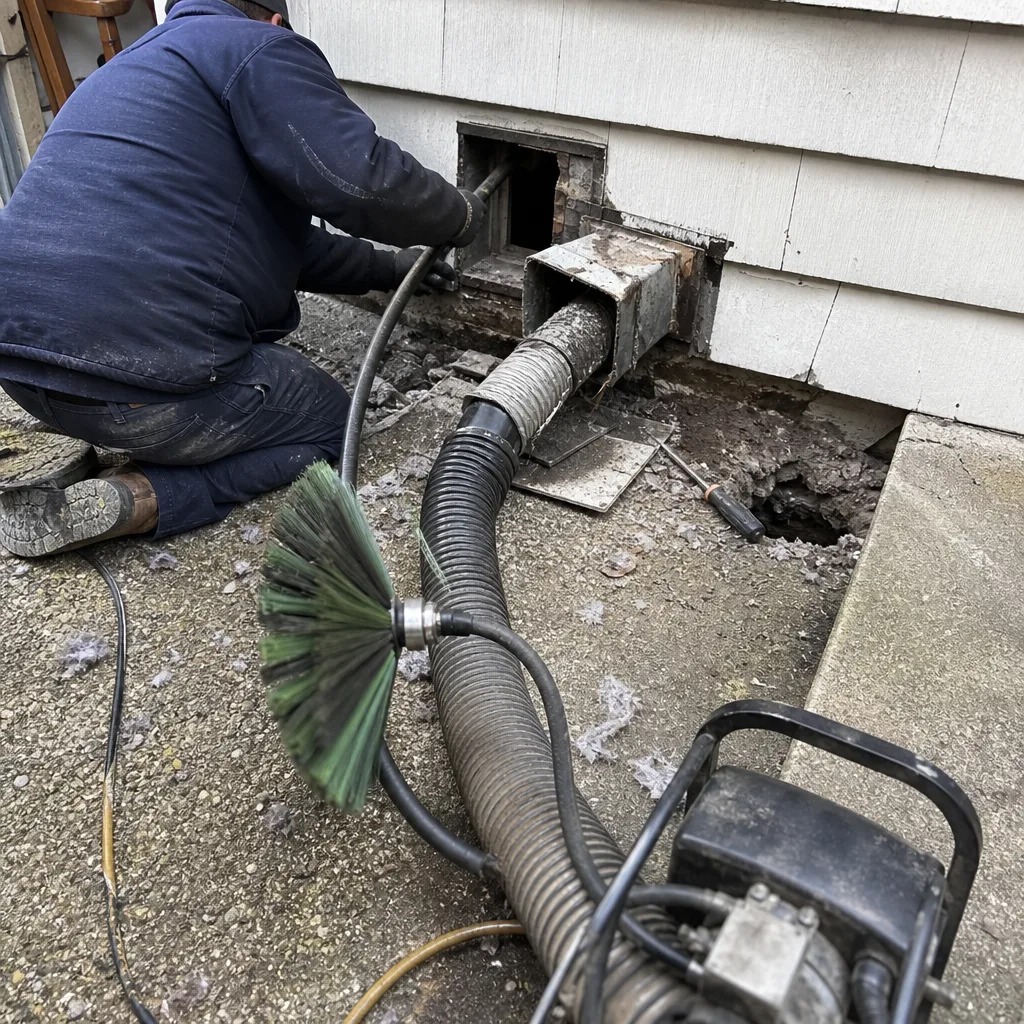 Before
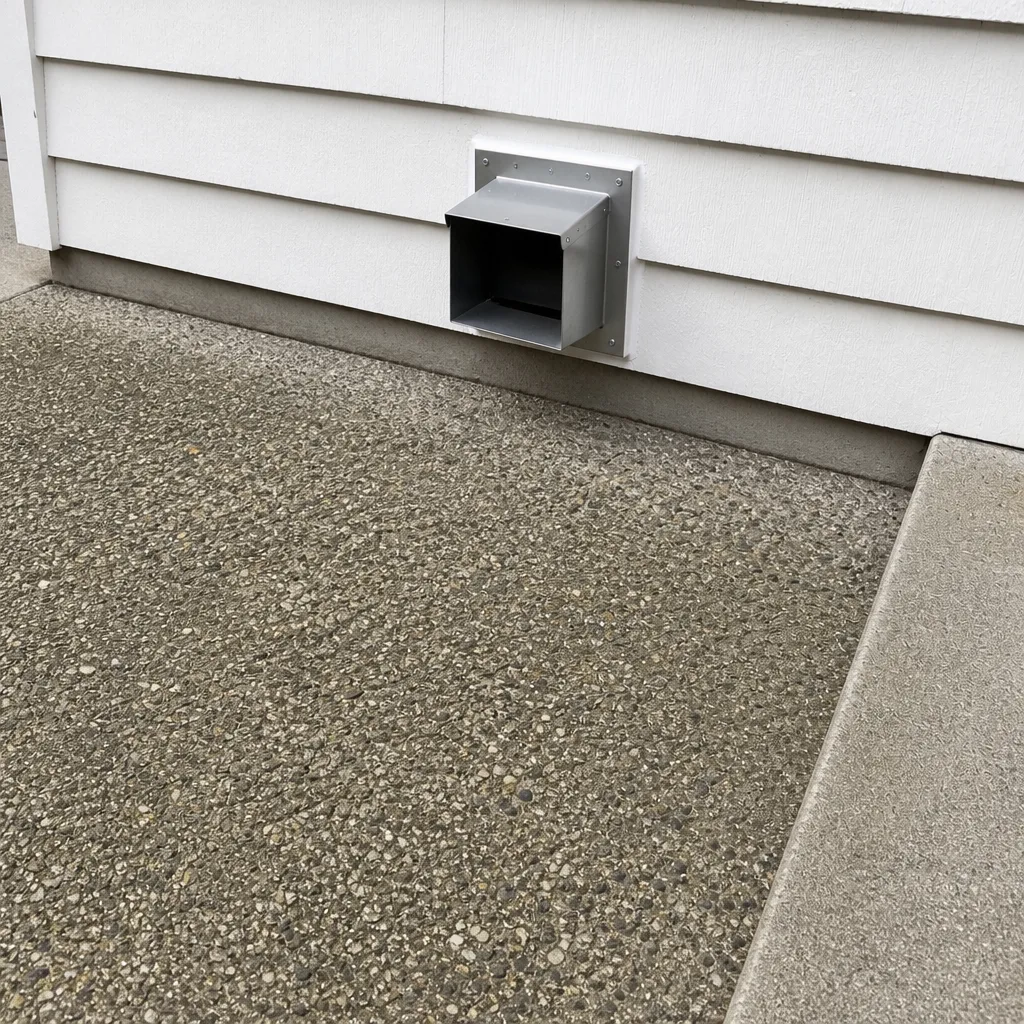 After
When to Call a Professional
Some duct situations don’t need a permit discussion so much as they need a professional to look at the system. Call us if your dryer takes two cycles to dry a load, if you notice musty odors when the system kicks on, if you see visible dust streaks around registers after a recent cleaning, if you’ve had water damage that touched ductwork, or if a contractor tells you a run needs to come out but can’t explain what the code requires. We also want to hear from you if you’re a property manager facing a full-building scope and you need a straight assessment of what’s cleaning, what’s repair, and what needs a filing. Elmhurst Air Duct Cleaning offers free estimates in Elmhurst – call (855) 410-4866. We answer 24/7. Fast dispatch from 7am to 7pm, Sunday through Friday. The estimate is free, and the price we set is per job, in writing, before work starts. Our technicians have up to 13 years of experience, and the local licensed professional we connect you with is licensed and insured as their state requires.
Frequently Asked Questions
No. Routine air duct cleaning is maintenance under the NYC Mechanical Code and does not require a permit or a DOB filing. A permit becomes relevant only when the job includes an alteration – new duct runs, resized ducts, liner installation, or new booster fans. Call (855) 410-4866 for a free estimate and we’ll tell you honestly which category your job falls into.
Yes. Contractors performing home improvement work in New York City, including duct cleaning, must hold a Home Improvement Contractor (HIC) license from the Department of Consumer and Worker Protection. Ask for the number in writing and verify it on the DCWP’s online lookup before scheduling. The local licensed professional we connect you with is licensed and insured as their state requires, with the HIC credential on top for NYC work.
The NYC Mechanical Code limits the total developed length of a dryer exhaust duct and puts a cap on elbows, with smooth rigid metal required as the duct material. Long, twisting runs in Elmhurst apartment buildings frequently exceed those limits unless a booster fan is installed. A booster fan is an alteration, so installation has to be done correctly and filed as part of the mechanical work. Call (855) 410-4866 for an assessment – estimates are free.
You don’t need to check it yourself, but you have every right to ask your managing agent for the contractor’s name and HIC number before work begins in your unit. A building that manages its own vendor list well will have that information readily available. If something looks off, ask.
Nothing directly – the cleaning isn’t the risk. The connection is that any HVAC work in a home with a combustion furnace, boiler, or water heater gives a trained professional a chance to notice a flue or heat exchanger problem that would otherwise go unseen. In older Elmhurst homes, that check is worth doing. Never open a flue or heat exchanger yourself; that’s a job for a licensed heating professional.
You get before-and-after photos of your own ducts, a written summary of what was found and cleaned, and confirmation of what was flagged for follow-up. Ask for all three before the crew leaves. If a contractor can’t provide photos of your specific system, you have no way to verify the work. Call (855) 410-4866 for a free estimate – and yes, we take the photos as standard.
The Bottom Line
Permits are rarely the issue with air duct cleaning itself, but the code questions around sealing, liner work, dryer vent alterations, and booster fans catch a lot of Elmhurst homeowners off guard – especially in multi-family buildings where the work affects more than one unit. Two things protect you. First, know whether your scope is maintenance, repair, or alteration, and get it in writing. Second, verify the HIC license and insurance before anyone walks into your home. Add a working CO detector and before-and-after photos of your own system, and you’ve closed every gap this guide covers. Our dryer vent cleaning work is maintenance and doesn’t need any filing, but a booster fan does. Cleaning a shared riser doesn’t need one either, but liner work does. That distinction is the whole guide in one line: clean is clean, but alter is code. Call (855) 410-4866 for a free estimate, and we’ll tell you which one your job is.
Written by the team at Elmhurst Air Duct Cleaning.