
Last updated November 22, 2026
 Whole-home duct cleaning
 Dryer vent cleaning
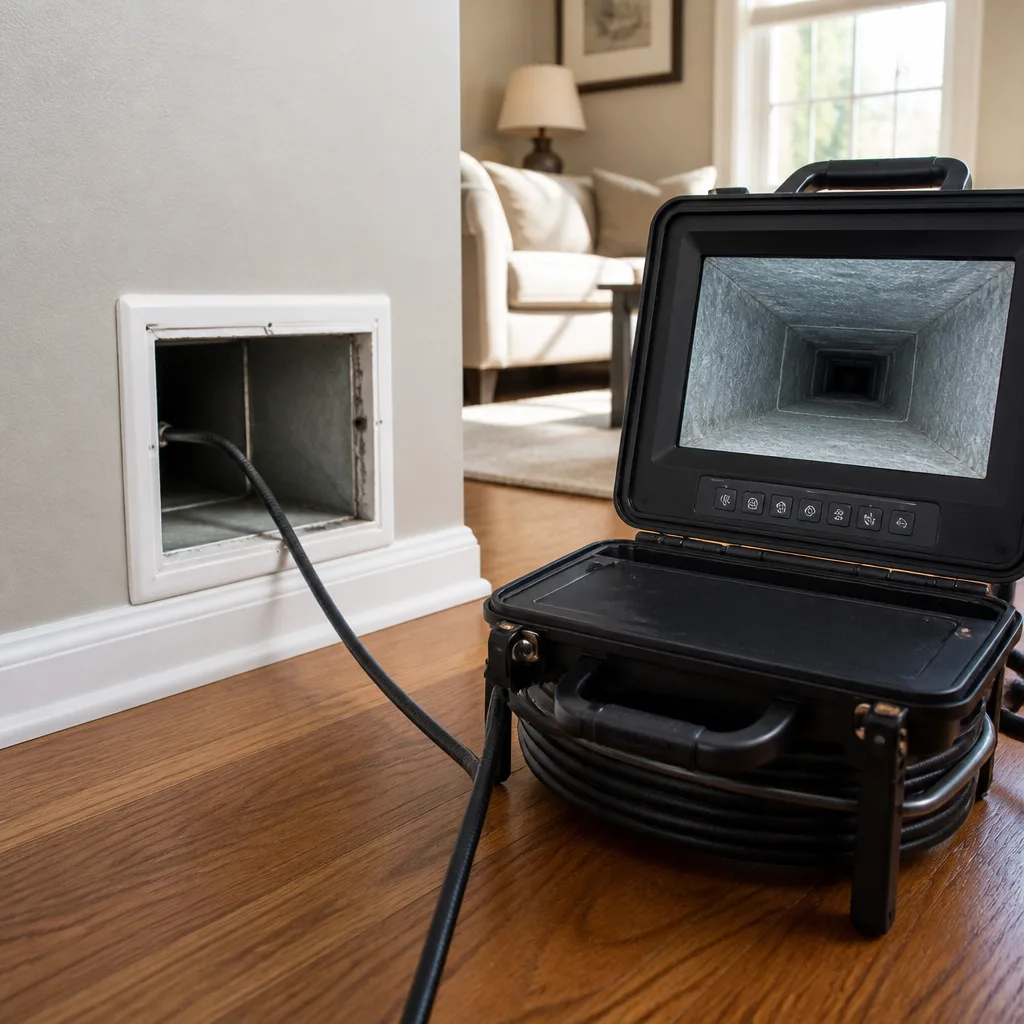 Camera inspection
 Sanitizing & deodorizing
Whole-system duct and dryer vent check with before-and-after photos - you see exactly what came out of your vents
That "$99 whole-house special" is a bait ad - the real number appears once they are in your hallway, or the "clean" is a shop-vac at the register. We photograph the inside of your ducts before and after instead.
Air Duct Cleaning Maintenance Checklist for Elmhurst Homeowners
Most people treat duct cleaning as a reaction. Airflow drops, allergy season hits harder than usual, a musty smell shows up in the hallway, and only then does anyone think about the ducts. But those are lagging indicators. By the time you notice them, the problem has usually been building for months. A maintenance checklist flips that around. Instead of waiting for a symptom, you build a small monitoring routine that tells you what’s changing inside your HVAC system before it gets expensive. This guide is built around the conditions Elmhurst homes actually face, from summer humidity swings to winter dryness, and it walks you through what to check monthly, quarterly, and yearly, and how to document what you find so it means something.
Quick Answer
A practical air duct maintenance checklist for Elmhurst homeowners covers three rhythms: a monthly check of filters, registers, and airflow; a quarterly inspection of duct joints, tape, and visible liner; and an annual full assessment of the HVAC system, dryer vent, and ductwork integrity. The point isn’t to clean constantly. It’s to track what’s changing so you can tell a real problem from a normal seasonal shift, and call a professional when the trend points somewhere.
Styles & brands we work with
- Whole-home duct cleaning
- Dryer vent cleaning
- Camera inspection
- Sanitizing & deodorizing
Table of Contents
- The Monthly Check: Filters, Registers, and Airflow
- Tracking Filter Loading Rate as a Health Signal
- The Quarterly Inspection: Joints, Tape, and Liner
- What Elmhurst Humidity Swings Do to Ductwork
- Register and Grille Checklist: Catching Airflow Imbalance
- The Annual Full-System Assessment
- Documenting Findings So a Technician Can Read Trends
- The Dryer Vent: The Part of the Checklist Most People Skip
The Monthly Check: Filters, Registers, and Airflow
Once a month, spend fifteen minutes on the parts of your system you can see and feel without tools. The goal is consistency, not depth. A quick look every month builds a baseline you can compare against, which is far more useful than a single deep inspection once a year. Elmhurst homes run their heat and air conditioning hard through the seasonal swings, so the small signals show up fast if you’re watching for them.
Here’s what to run through each month:
- Filter condition. Hold the filter up to a light. If you can’t see light through it, it’s loaded. Note whether it’s uniformly gray or dirty on one side only, since uneven loading points to a duct or airflow problem rather than simple dust.
- Register airflow. Hold your hand a few inches from each supply register. Every register should feel roughly comparable. A weak one isn’t automatically a problem, but a change from last month is worth writing down.
- Return grille dust. Look at the return grille. A light film is normal. A visible mat of dust building within a few weeks of cleaning is a sign the system is pulling more debris than it should.
- Smell test. Stand near a running register and take a breath. Musty, sweet, or smoky notes are worth tracking over time. A brief smell after a seasonal switch-over is common. A smell that persists or grows is not.
- Sound check. Listen at the air handler. New whistling at a register or a rattle at the unit can point to a loose joint or a restriction.
None of these steps requires opening a panel or touching anything electrical. They’re all observation. And they’re the fastest way to notice a change while it’s still cheap to fix.
Tracking Filter Loading Rate as a Health Signal
Filter loading rate is one of the most useful things you can track, and almost nobody does. Here’s the idea: don’t just note whether the filter is dirty. Note how long it took to get that way. Write the date on the filter frame when you install it, then check it on a set schedule and record the date you replace it. Over two or three cycles you’ll have a rate, and that rate tells you a lot about the system behind it.
Three patterns are worth knowing:
- Steady, predictable loading. The filter loads at roughly the same rate each cycle. This is the normal picture and the easiest to live with.
- Accelerating loading. Each filter loads faster than the last. That trend usually points to a new source of debris entering the system, a developing leak in the return side, or ductwork that’s shedding material internally.
- Uneven loading across the filter face. A filter that’s dark on one half and clean on the other suggests air is bypassing part of it, often because of a gap at the filter housing or a collapsed section of return duct.
This is where a professional-grade inspection earns its keep. Machines like the Rotobrush and Nikro systems we use let a technician see inside the ducts and compare what they find against your notes. If your filter loading rate has doubled over six months, that’s a concrete question to bring to an assessment instead of a vague “my air feels dusty.”
The Quarterly Inspection: Joints, Tape, and Liner
Every three months, look at the parts of the duct system that are exposed, which usually means the runs in a basement, attic, garage, or utility closet. You’re checking three things: the joints where duct sections meet, the tape and mastic sealing those joints, and the interior liner if your ducts have it. Elmhurst homes see enough variation in humidity through the year that these materials get worked in a way that a steady climate wouldn’t cause.
What to look for:
- Tape that’s peeling or brittle. Cloth and foil tapes dry out and lose adhesion over time. A joint that was sealed is now a gap.
- Visible gaps at seams. Even a small gap on a supply run means conditioned air is escaping into a basement or attic instead of reaching a room.
- Sagging or detached liner. If your ducts are internally lined, a liner that’s pulling away from the metal can restrict airflow and trap debris.
- Condensation or staining. Moisture marks on ductwork point to a humidity or insulation problem that needs attention before mold becomes a concern.
- Crushed or disconnected flex duct. Flex runs are easy to kink or pull loose, especially in tight spaces.
This is the step where Elmhurst Air Duct Cleaning tends to see the gap between cleaning-only outfits and full-system work. Cleaning a duct that’s leaking or damaged just moves debris through a system that won’t hold pressure anyway. Our duct repair and sealing service exists because we repair what we find, so a cleaning visit doesn’t leave a problem behind.
What Elmhurst Humidity Swings Do to Ductwork
Elmhurst gets both sides of the humidity story. Summer brings stretches of heavy, moist air. Winter brings indoor air dried out by heating. That back-and-forth is harder on ductwork than a steady climate, and understanding why helps you interpret what you see during your quarterly inspections.
In the humid months, moisture is the enemy of every seal in the system. Duct tape and mastic don’t fail all at once. They soften, lift at the edges, and let humid air into places it shouldn’t be. Moisture inside a duct system can condense on cooler metal, and that moisture feeds the conditions that lead to musty odors and microbial growth. This is part of why sanitizing matters as a separate step from cleaning. Cleaning removes the debris; sanitizing addresses the microbial side. Our air quality and sanitizing work uses product lines from brands like Abatement Technologies and Guardsman for exactly that reason.
In the dry winter months, the story shifts. Indoor humidity drops, and materials that were slightly swollen in summer shrink back. Joints that were sealed tight in July can open up in January. Liner can pull away from metal as it dries. And the static that builds in very dry air makes dust cling to register surfaces more than usual, which is a cosmetic signal of a real shift, not just dirt.
The practical takeaway is to inspect seals in both seasons, not just one. A joint that looks fine in summer is worth checking again in mid-winter.
Register and Grille Checklist: Catching Airflow Imbalance
Airflow imbalance is the quiet problem. A system that’s slightly out of balance doesn’t fail. It works harder than it should, and that added strain lands on the blower motor and the whole air handler. Catching an imbalance early is one of the best things your monthly register check can do. Here’s what to track:
- Feel each supply register and note whether airflow is strong, moderate, or weak. Do this at the same time each month so your notes are comparable.
- Compare rooms. A room that’s always weak might be a design issue. A room that became weak is a change worth investigating.
- Check the return grilles. Restricted returns starve the system and force the blower to work against resistance.
- Look at the grille face. Dust collecting on the fins is normal. Dust streaks radiating outward can indicate air escaping around the grille rather than through it.
- Note temperature differences. A register that blows noticeably cooler or warmer than the rest can point to a duct that’s leaking or disconnected.
When a technician does a full assessment, these notes become the map. They point to which runs need attention, whether a sealing job would help, and whether the imbalance is a duct problem or a system-level one.
The Annual Full-System Assessment
Once a year, the whole system deserves a proper look. This is the step where a qualified professional should be involved, because it involves opening the air handler, inspecting the interior of the ductwork, and looking for problems you can’t see from the outside. Plan it for a shoulder season when the system isn’t running at full load, so the inspection doesn’t compete with heating or cooling demand.
A proper annual assessment should cover:
- Interior duct inspection with professional-grade equipment, since surface views don’t show what’s accumulated inside a run.
- Air handler and coil condition, which is what HVAC cleaning addresses, since a dirty coil undercuts everything else.
- Duct integrity, including seals, joints, and liner, with repair and sealing done where needed.
- The dryer vent, which is a separate system and a separate fire-safety concern.
- Air quality devices, including filters, humidifiers, and any media or UV components, checked for function and replaced as needed.
This is where the full-system scope matters. Filters and humidifiers from brands like Honeywell and Aprilaire work best when they’re matched to the system and installed correctly. An assessment that treats each piece in isolation misses the point. The ducts, the HVAC unit, the dryer vent, and the air quality devices are one connected system, and the annual check should treat them that way.
Documenting Findings So a Technician Can Read Trends
Notes are only as good as their format. A shoebox of scribbled dates doesn’t help anyone. A simple log does. The goal is to give a technician a trend line rather than a snapshot, so the assessment starts from data instead of guesswork. Our technicians have up to 13 years of experience reading these patterns, and the difference between a vague complaint and a clear record is significant.
What a useful log should include:
- Filter dates. Install date and replacement date for every cycle, plus a note on loading appearance.
- Monthly register notes. Strong, moderate, or weak for each room, recorded on the same day each month.
- Smell observations. What it smelled like, where, and whether it was brief or persistent.
- Quarterly inspection notes. Which joints, tapes, or liner sections looked questionable, and how they changed between visits.
- Photos. A phone photo of each register and each exposed duct joint at the same angle each time. The comparison is what matters.
- Weather notes. Rough humidity and temperature conditions when you took the reading, so seasonal shifts don’t get mistaken for problems.
Bring that log to an assessment. It gives a technician a story to interpret, and it makes the recommendation more precise.
The Dryer Vent: The Part of the Checklist Most People Skip
Your dryer vent cleaning belongs on the checklist even though it isn’t part of the ductwork that heats and cools the house. A clogged dryer vent is a fire concern and an efficiency problem at the same time, and it’s easy to forget because it’s out of sight. Treat it as an annual item, and add these quick checks to your monthly routine:
- Drying time. If a load that used to finish in one cycle now takes two, the vent is a likely suspect.
- Heat and moisture. A dryer that feels unusually hot or leaves the laundry room humid is telling you airflow is restricted.
- Lint at the exterior vent. Check the outside flap occasionally. If lint is collecting around it, the run needs attention.
- The flexible connector behind the dryer. A crushed or kinked connector is a common cause of restriction.
For a deeper step-by-step of what a professional dryer vent service covers, see our air duct cleaning guide, which walks through how the full-system cleaning process works.
Common Mistakes to Avoid
- Cleaning when you should be inspecting. A cleaning schedule that runs on autopilot misses the point of a maintenance routine. The goal is monitoring, and cleaning is what you do when the monitoring says it’s time.
- Ignoring the return side. Most homeowners focus on supply registers and never check returns. A restricted return is just as damaging to the system’s efficiency.
- Assuming a musty smell is seasonal. A brief smell after switching from heat to AC is common. A smell that persists or grows is a sign of moisture or microbial growth worth investigating.
- Skipping the dryer vent. It’s the part of the system most often overlooked, and it carries real safety weight.
- Replacing filters without recording dates. Without a record, you can’t tell whether the loading rate is normal or accelerating.
- Letting a cleaning-only crew leave a leaking system behind. A duct that’s cleaned but still leaking just keeps pulling debris in. Sealing is part of the job, not an optional add-on.
- Taking photos only once. A single photo can’t show change. The comparison over months is what makes documentation useful.
See the difference
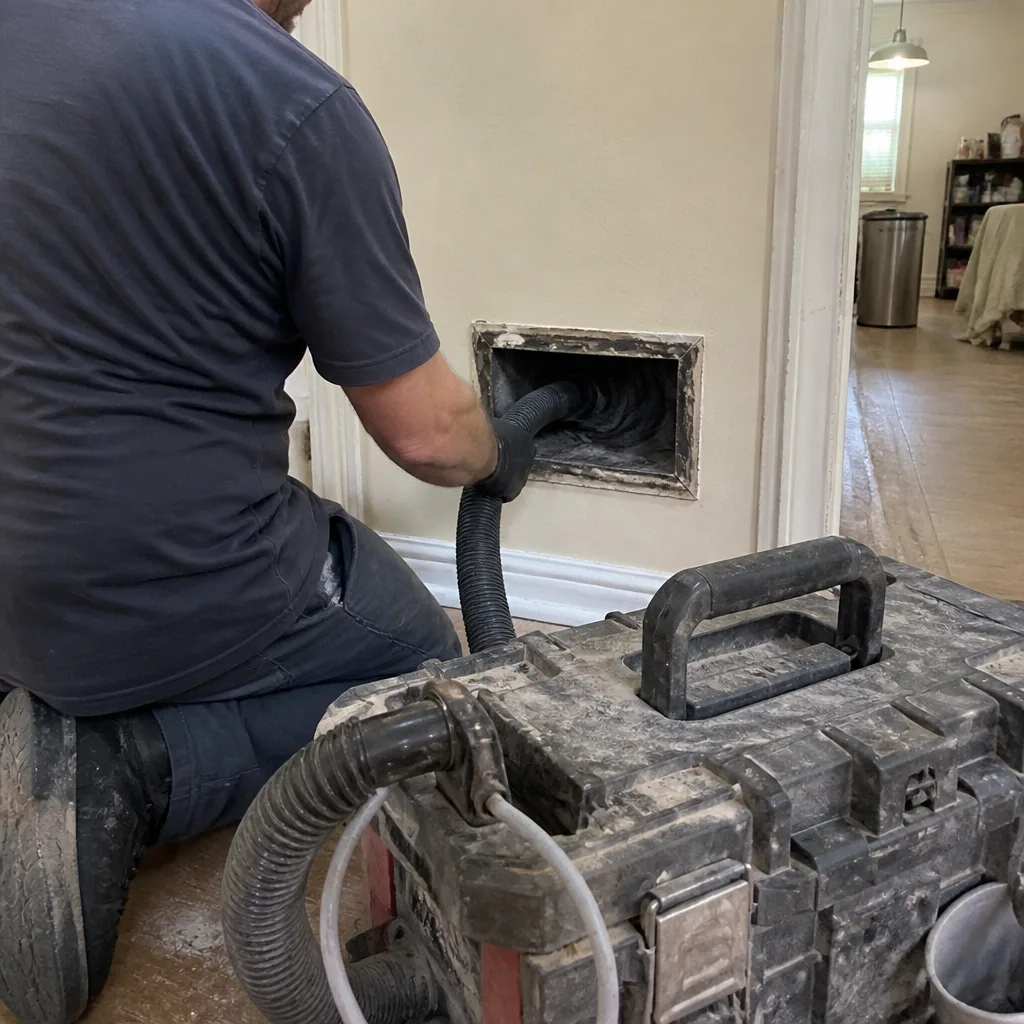 Before
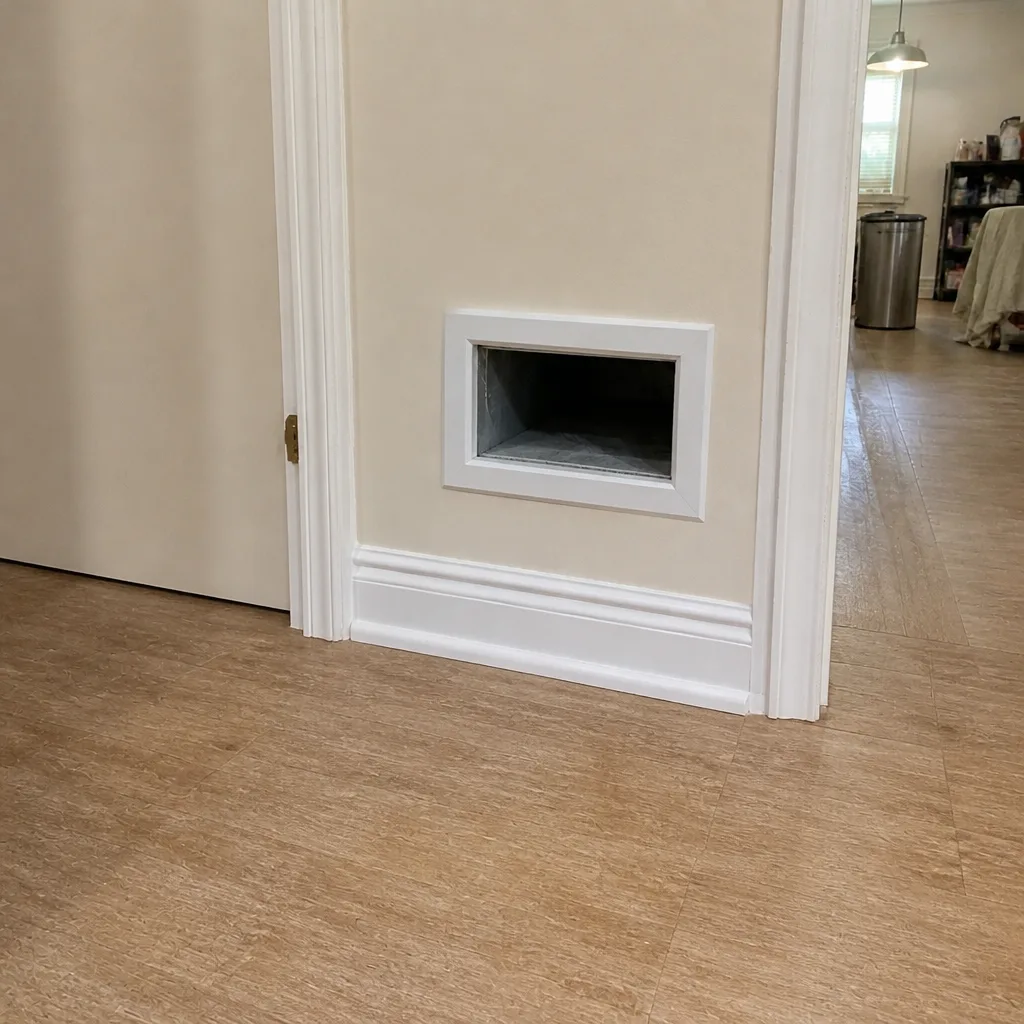 After
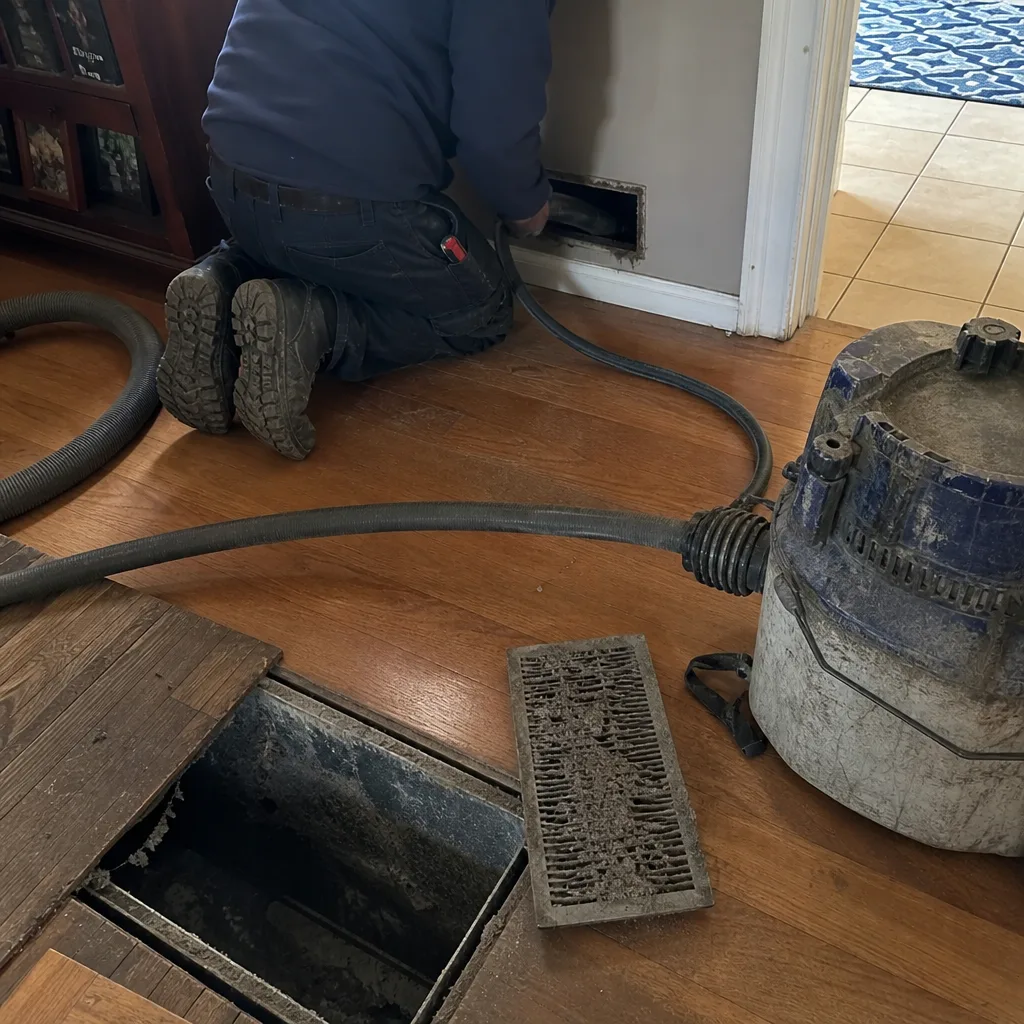 Before
 After
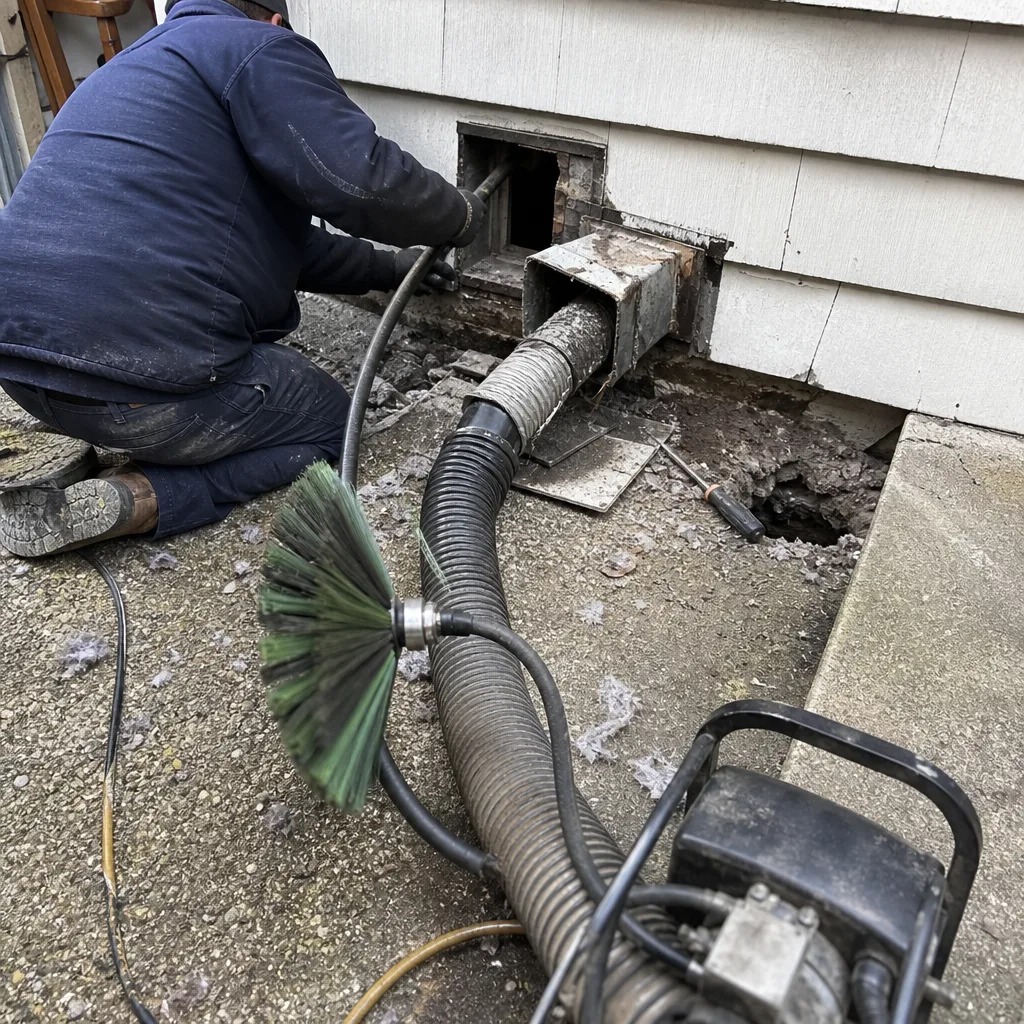 Before
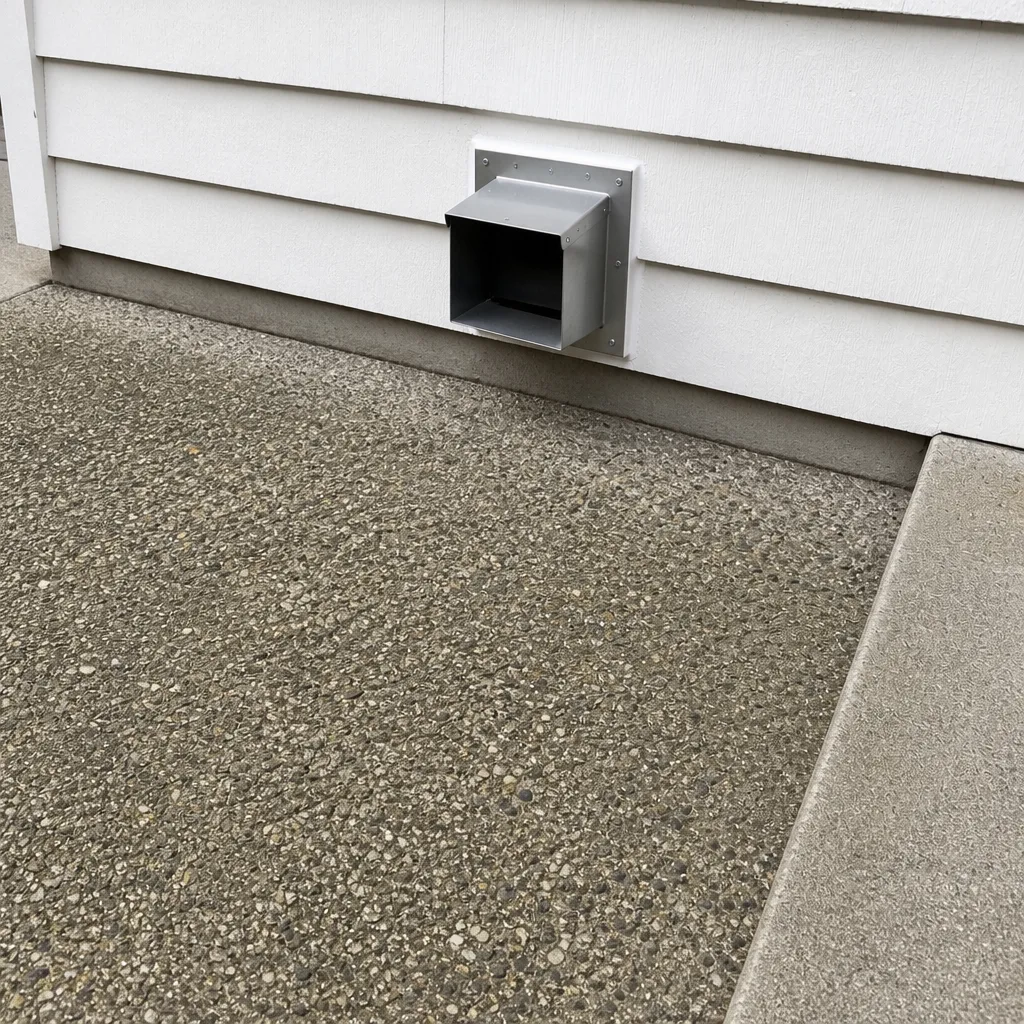 After
When to Call a Professional
Some checks you can run yourself. Others deserve a trained eye. Call a professional if your filter loading rate has clearly accelerated over two or three cycles, if a register has lost airflow and hasn’t recovered, if you smell mustiness that persists, if you see peeling tape or visible gaps at duct joints, if your dryer takes noticeably longer than it used to, or if it’s simply been a year since a full assessment. A professional assessment with equipment like the Rotobrush and Nikro systems can see inside the system and interpret the trends your notes have been building. Elmhurst Air Duct Cleaning offers free estimates in Elmhurst and the surrounding area. Call (855) 410-4866. We answer 24/7. Fast dispatch from 7am to 7pm, Sunday through Friday.
Frequently Asked Questions
A quick observation check of filters, registers, and airflow monthly, a deeper look at exposed duct joints and tape quarterly, and a full professional assessment once a year. The monthly and quarterly checks are about spotting change early. The annual assessment is about catching what you can’t see.
The deciding factors are visible dust accumulation inside the ductwork, persistent odors, accelerating filter loading, and any evidence of microbial growth. An inspection tells you which of those apply. If none are present, cleaning may not be needed yet. Call (855) 410-4866 for an exact quote, estimates are free.
Yes. The swing between humid summers and dry winter indoor air works seals and liner in a way a steadier climate wouldn’t. Tape softens and lifts in the humid months, then dries and shrinks in winter, which is why seals are worth inspecting in both seasons rather than once.
Because the rate tells you whether the system is changing. A filter that loads evenly at the same pace is a healthy system. One that loads faster each cycle points to a developing issue, such as a leak, a return-side problem, or ductwork shedding internally. The rate turns a snapshot into a trend.
Yes. It’s a separate system, but it shares the same airflow logic and carries a fire-safety concern. Longer drying times, excess heat, and lint at the exterior vent are all flags worth acting on. An annual professional dryer vent cleaning keeps it clear.
Ask for before-and-after photos of your own ducts, and compare the technician’s report against the notes you’ve been keeping. Since you’ve documented the system over months, you’ll be able to see whether the cleaning addressed the conditions you observed. Call (855) 410-4866 for an exact quote, estimates are free.
The Bottom Line
An air duct maintenance checklist for Elmhurst homes isn’t a cleaning schedule. It’s a monitoring system. The monthly check catches change early. The quarterly inspection catches material failure before it becomes a leak. The annual assessment catches what you can’t see. And documentation turns all of it into a trend line a professional can read. Filters, registers, seals, liner, dryer vent, and air quality devices are one connected system, and the checklist exists to keep you informed about all of it. When a trend points somewhere, that’s when a professional assessment earns its keep, with the tools and the range of services to act on what the record shows. A full-system specialist can assess, clean, repair, and sanitize, so you aren’t coordinating multiple contractors. Contact us today for a free estimate. Call (855) 410-4866. We answer 24/7. Fast dispatch from 7am to 7pm, Sunday through Friday.
Written by the team at Elmhurst Air Duct Cleaning.