
Abatement Technologies Air Duct Cleaning in Elmhurst: A Homeowner’s Guide
Most homeowners assume duct cleaning is duct cleaning. A shop-vac style crew pulls debris loose, some of it lands in the vacuum, and a good deal of it settles back into the system as fine dust that settles on your furniture within a day. Abatement Technologies equipment is built the other way around: it’s engineered to capture contamination, keep it contained, and leave verified results behind. That difference matters most in older Elmhurst homes and post-renovation ducts where mold spores, insulation particles, or drywall dust have moved through the system.
What does Abatement Technologies equipment actually do that a standard vacuum doesn’t?
Negative air machines pair high airflow with multi-stage HEPA filtration, so the machine isn’t just pulling air – it’s holding onto what that air carries. A standard shop-vac style setup passes fine particulate back out the exhaust. A true HEPA negative air machine traps particles at a rated efficiency rather than recirculating them into the room you’re trying to clean. That’s the whole point of “capture versus move.”
Three things separate an Abatement-grade setup from a generic cleaning rig:
- CFM rating paired to the system size. Airflow has to be matched to duct volume, not just cranked to maximum. Too little and debris never lifts; too much and negative pressure collapses in the working zone, letting dust escape into the home.
- Multi-stage HEPA filtration. Pre-filters catch bulk debris, and the HEPA stage catches the microscopic material – mold spores, fiberglass, drywall fines – that a single-stage vacuum can’t hold.
- Containment as a first-class function. The machine creates negative pressure inside the duct run so air flows toward the equipment, not out through gaps in the ceiling or register boots.
In Elmhurst, that containment matters. Many homes here were built mid-century and have had multiple renovations since. Every remodel pushed construction dust through the ducts, and not all of it got removed afterward.
When is Abatement-grade containment clinically necessary, and when is standard cleaning enough?
Standard professional cleaning with a Rotobrush or Nikro system handles the majority of ordinary household dust and debris fine. Abatement-grade containment isn’t the answer to every job – it’s the answer to specific jobs. Where water damage, mold, or post-remediation work has touched the system, the rules change.
Scenarios where Abatement-grade equipment is the appropriate choice:
- Ductwork that has been through mold treatment and needs the system cleared of spores before clearance testing.
- Post-renovation duct cleaning after drywall, insulation, or flooring work has sent fine particulate through the supply and return runs.
- Homes where the occupants have documented allergy or respiratory sensitivity and want HEPA-level capture rather than a cleaning pass.
- Duct systems that have sat sealed through a long vacancy, where microbial growth and musty odors are present.
- Post-asbestos-abatement duct cleaning where certification and documentation of the equipment used are required.
For a routine cleaning every few years in a home with no water events or recent construction, a professional-grade Rotobrush or Nikro system is sufficient and honest. We tell homeowners that, because selling Abatement-level containment on a job that doesn’t need it isn’t useful to anyone. The question is whether contamination is actually present, and what level of capture the situation calls for.
How does Abatement equipment integrate with the duct cleaning protocol?
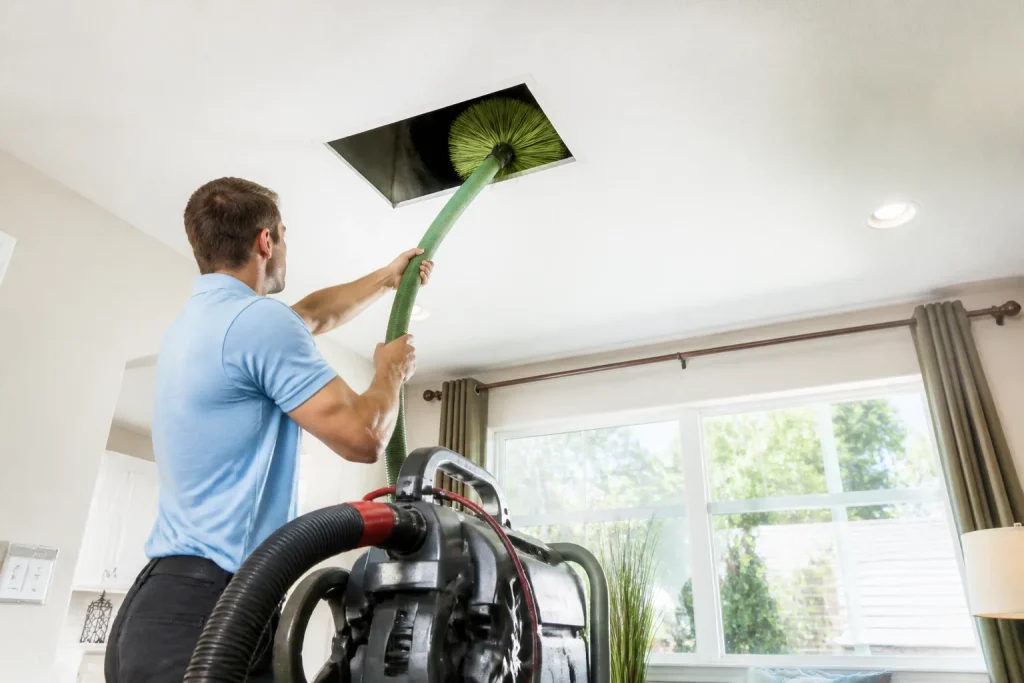
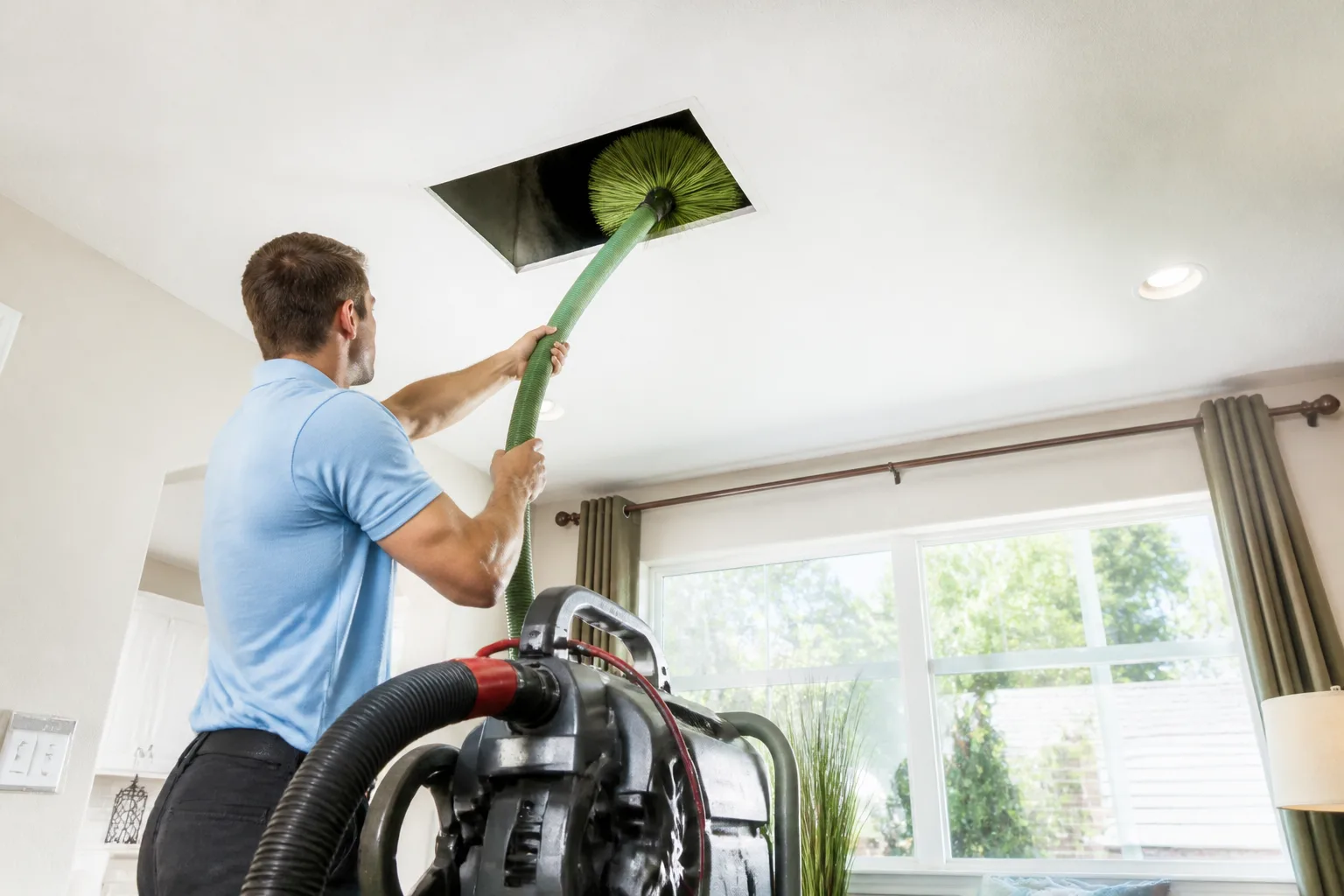
Equipment alone doesn’t clean a system. What a technician does with access points, pressure differentials, and sequencing is what actually delivers the result. An Abatement machine is a tool inside a protocol, and a good protocol looks roughly like this:
- System assessment and access planning. The technician maps supply and return runs and locates the appropriate access points so the machine can be positioned without cutting into finished surfaces unnecessarily.
- Negative pressure setup. The Abatement negative air machine connects to a designated access point and pulls the entire duct run into negative pressure, so contamination moves toward filtration.
- Register-by-register sequencing. The technician works each register individually, using agitation and airflow to lift debris while the run stays under containment. Cleaning registers out of sequence just redistributes dust.
- Verification. Airflow and visible cleanliness are checked at the register and at the return before the machine is broken down and access points are sealed.
This is where we partner with products from Honeywell and Aprilaire for filtration and air quality components alongside the cleaning itself – the system is one connected unit, and treating it as a set of separate parts tends to leave the weakest link failing. If you’re managing dust in an Elmhurst home and want to understand the underlying air duct cleaning process, that page walks through the mechanics a step further.
Why does post-remediation duct cleaning require certified equipment?
When a mold remediation or asbestos abatement contractor signs off on a job, the assumption is that contamination in the occupied space has been addressed. If the duct system then gets cleaned with a non-certified setup, the fine particulate that was supposed to leave can end up back in the return air. Clearance standards exist because the paperwork needs to prove the equipment could reliably contain what was pulled.
Abatement Technologies equipment shows up in post-remediation work specifically because the machines are engineered for contamination control, not just volume. That’s the certification logic:
- The equipment class is designed for HEPA-level filtration, so the containment claim holds up under scrutiny.
- The negative pressure setup can be documented, meaning the report can state what was captured and how.
- Insurance and compliance reviewers recognize the equipment class by name, which shortens questions during approvals.
If your remediation contractor specified post-cleaning of the duct system as a step in the project, that’s not a step to skip or hand off to a generic cleaning crew. Call us and we can talk through what the remediation left behind.
What documentation should you get after Abatement duct cleaning?
Abatement Technologies equipment in the wrong hands is still just equipment. The paperwork is what turns a cleaning visit into a verifiable record. A proper completion packet is typically short, but every item matters:
- Before-and-after photos of your actual ducts, not stock images – register interiors, main trunk, and return.
- Equipment used on the job, including the filtration class and the negative air machine model.
- Access points cut and sealed, described specifically so future work can find them and future buyers can see them accounted for.
- Findings from the inspection, including any damaged or leaking ductwork noted during cleaning.
- Recommendations, honestly labeled. If a sealant or filter upgrade is genuinely needed, that belongs in writing.
Why it matters beyond the day of the job: insurers sometimes ask for documentation when a claim touches indoor air quality, and buyers during a home sale occasionally want proof of system maintenance. Elmhurst is a city of long-held homes and file cabinets full of inspection reports – an Abatement-grade completion packet slots neatly into that stack. It also matters for us: we repair what we find, so if the review turned up joint failures, we’ll recommend HVAC cleaning follow-up and duct sealing rather than leaving a cleaned but leaking system behind.
When to call a pro
If you’re comfortable changing filters and keeping returns clear, most routine duct care is hands-off. Abatement-grade cleaning is not a homeowner project. Negative air machines, HEPA filtration, and pressure management involve equipment that can create real hazards when handled without training or proper containment, and the actual contamination being pulled out (mold spores, fine construction dust, insulation fiber) is not material you want to be releasing into your own living room. The same goes for any work inside the duct system itself – trained professionals only.
Related services in Elmhurst: if dryer lint is slowing laundry cycles, our dryer vent cleaning covers that separately, and full-system work from the Elmhurst Air Duct Cleaning team ties ducts, HVAC, and air quality together under one visit.
The Bottom Line
Abatement Technologies equipment is the right tool when the duct system needs containment, not just cleaning – after mold remediation, after construction, or when contamination in the system has to be provably captured. For a routine clean in an Elmhurst home with no water or construction history, a professional Rotobrush or Nikro pass is honest, sufficient work. What shouldn’t happen either way is a crew showing up with a shop-vac and a cheerful attitude. Ask what equipment they use, ask what documentation they hand over, and ask whether they can spot and fix the duct problems they find rather than just cleaning around them.
Our technicians have up to 13 years of experience, we use Rotobrush and Nikro for cleaning and Abatement Technologies equipment where the job demands it, and we build the job around what the system actually needs – ducts, HVAC, dryer vents, sealing, and air quality under one visit. If you’re in Elmhurst and need help, Elmhurst Air Duct Cleaning offers free estimates – call (855) 410-4866. We answer 24/7, with fast dispatch from 7am to 7pm, Sunday through Friday.
Frequently Asked Questions
No. Standard professional-grade cleaning handles ordinary household dust and debris well. Abatement-grade HEPA containment is the right call when there’s been mold, water damage, renovation dust, or post-remediation work in the duct system. Ask what equipment class the job needs before you book.
It creates negative pressure inside the duct run while pulling air through multi-stage HEPA filtration, so contamination flows toward the machine rather than back into the room. The combination of airflow, filtration, and containment is what separates it from a shop-vac style clean.
No. Post-remediation duct work involves microbial contamination and construction particulate that has to be contained, and it often needs documentation for clearance. That requires certified equipment and a trained technician. Call (855) 410-4866 if a remediation contractor has flagged your duct system.
Before-and-after photos of your own ducts, the equipment used, access points cut and sealed, findings from inspection, and honest recommendations. That documentation matters for insurance questions and for resale. Call (855) 410-4866 for a free estimate and we can walk you through what the job will cover.
Written by the team at Elmhurst Air Duct Cleaning.
Need Air Duct Cleaning Help?
Call Elmhurst Air Duct Cleaning - the local pro we connect you with is licensed and insured, with free written estimates in Elmhurst.
(855) 410-4866