
Last updated November 22, 2026
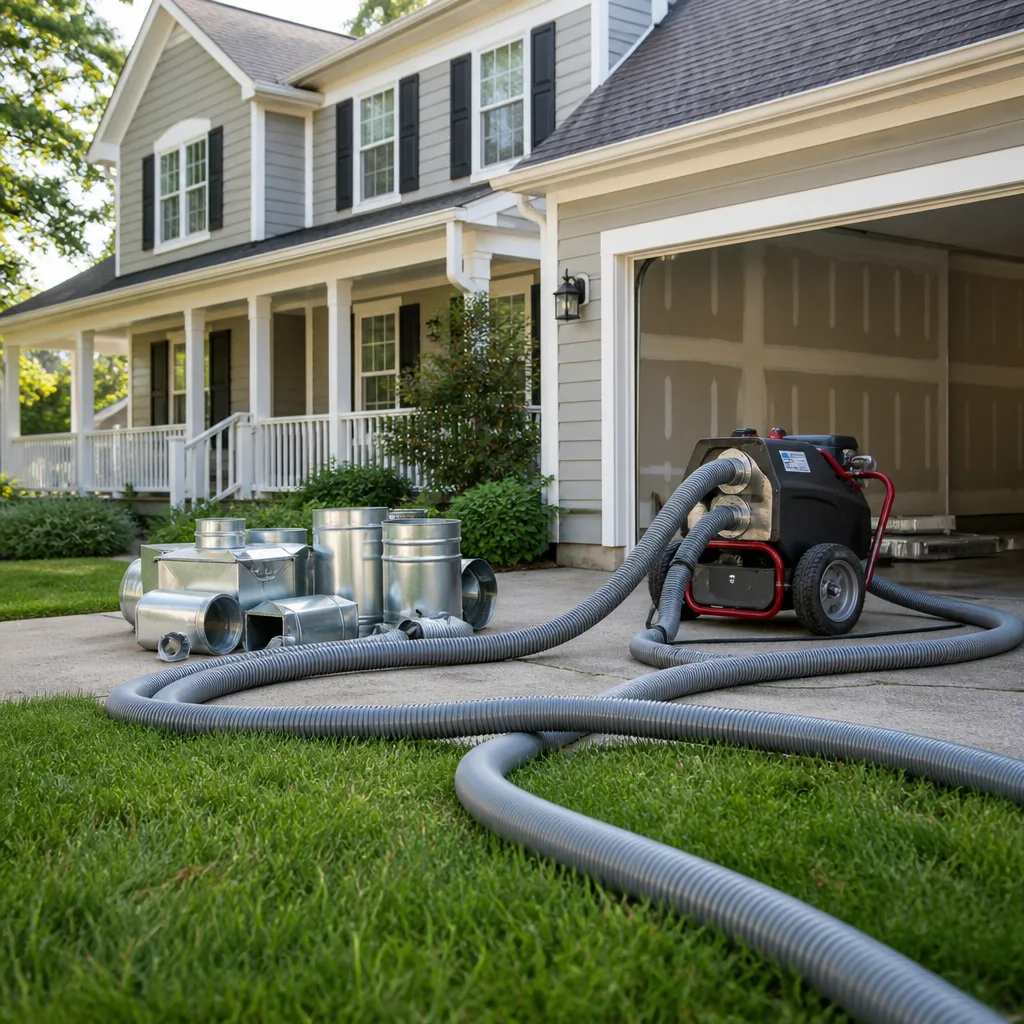 Whole-home duct cleaning
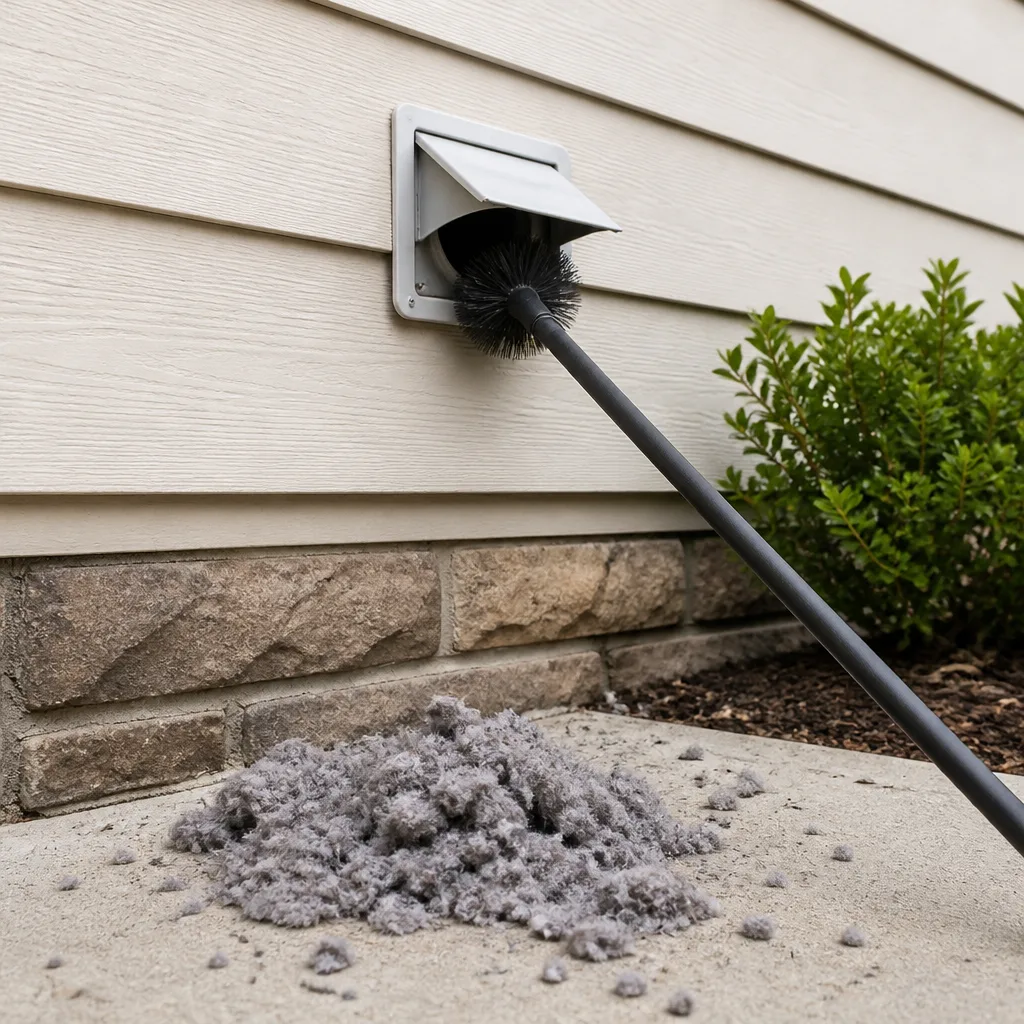 Dryer vent cleaning
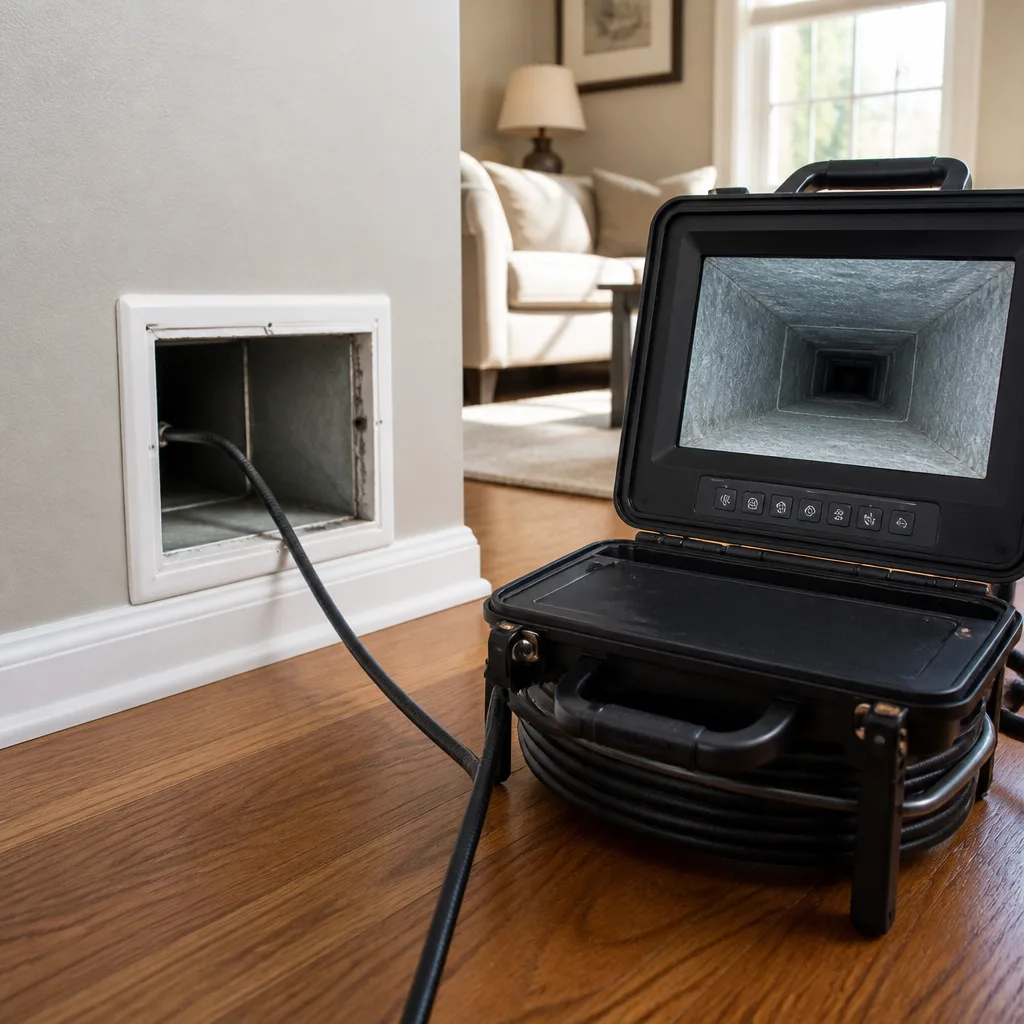 Camera inspection
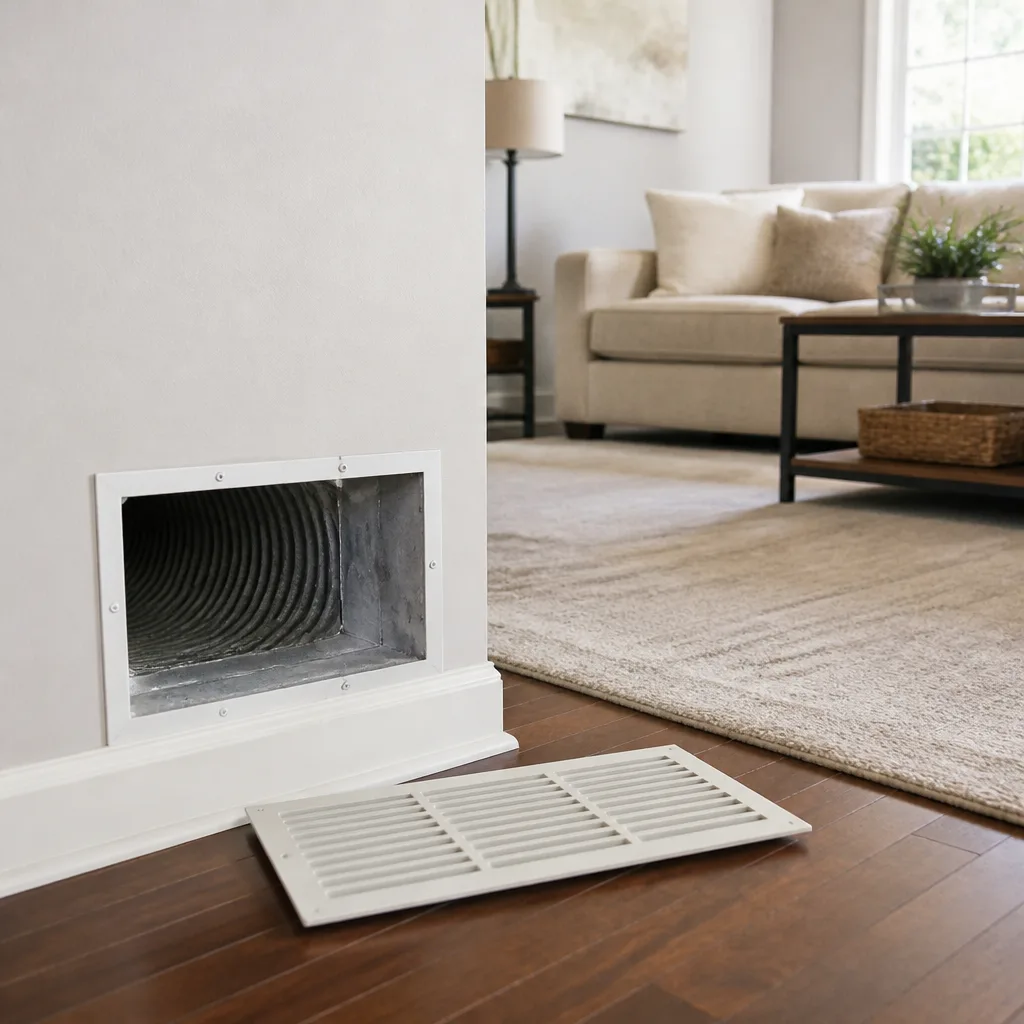 Sanitizing & deodorizing
Whole-system duct and dryer vent check with before-and-after photos - you see exactly what came out of your vents
That "$99 whole-house special" is a bait ad - the real number appears once they are in your hallway, or the "clean" is a shop-vac at the register. We photograph the inside of your ducts before and after instead.
Choosing the Right Air Duct Cleaning Brand: A Buyer’s Guide for Elmhurst
Two companies can stand in your hallway and both tell you they use “professional-grade equipment.” Then they unroll completely different machines. One is built to pull a full residential system into negative pressure and hold it there; the other is a shop vacuum with a longer hose. The brand name stenciled on the side tells you almost nothing on its own. What tells you something is the equipment platform under it – the CFM it moves, the filtration it runs, the standards its design was tested against. This guide teaches you to read that directly, so the company you hire in Elmhurst is judged on what actually predicts the result, not on a logo or a slogan.
Quick Answer
Choose an air duct cleaning company by its equipment platform and product lines, not its brand name. Ask what vacuum system it uses (truck-mounted or portable, HEPA-rated, with enough CFM to hold a full residential system in negative pressure), which air quality product brands it installs, and whether it handles ducts, coils, dryer vents, and sealing as one connected system. A company that can answer those questions specifically, with real brand names like Rotobrush, Nikro, Aprilaire, or Abatement Technologies, is a full-system operator. One that can’t is a commodity cleaner.
Styles & brands we work with
- Whole-home duct cleaning
- Dryer vent cleaning
- Camera inspection
- Sanitizing & deodorizing
Table of Contents
- Why Brand Names Alone Don’t Predict Results
- What to Look For in a Vacuum System
- Name-Brand Air Quality Technology: The Full-System Signal
- Evaluating a Company’s Scope of Service
- What Third-Party Credentials Actually Verify
- A Vetting Script: Questions That Expose the Wrong Tools
- What Makes Duct Work in Elmhurst Different
- Common Mistakes to Avoid
- When to Call a Professional
Why Brand Names Alone Don’t Predict Results
Walk into any home service conversation and you’ll hear the same words from every company: “professional-grade,” “industry-standard,” “certified technicians.” Those phrases are not regulated. Anyone can print them on a flyer. The brand name on the equipment is a slightly better signal, because a real machine from a recognized manufacturer costs real money and can’t be faked by a company that doesn’t own one. But even a brand name is only worth what the machine does.
The better filter is to understand what the equipment is built to meet. Duct cleaning equipment is designed around NADCA standards – the National Air Duct Cleaners Association source-removal guidelines that define how much dust a cleaning should actually pull from the system, and what a proper source-removal job looks like. That’s the standard a machine should be judged against. A brand name tells you someone spent money on the equipment. The NADCA standard tells you whether that equipment is designed to remove source contamination or just to stir it up.
Here’s what that means in practice. The heavy contaminant load in a home’s ductwork is compacted dust, debris, and in some cases microbial growth adhered to the inside walls of the ducts. It doesn’t come off with a general vacuum pass. It comes off with a spinning, air-driven brush or a compressed-air whip that agitates it loose while a vacuum holds the system under negative pressure and pulls it into a HEPA-rated container. Equipment built to do that is different equipment from what a handyman or a general contractor carries.
So when we look at who is arriving at an Elmhurst home, we’re asking: what exactly is that machine, what is it rated to do, and can the operator explain it? A technician who can name the platform, its filtration rating, and the negative-pressure method is a technician who has used it. A technician who rattles off the marketing tagline is a technician who was trained to close the sale, not to clean the system. Those are the two ends of the spectrum, and the questions in this guide are designed to tell them apart.
Once you’ve cleared that filter, the broader field of who does air duct cleaning in and around Elmhurst becomes much smaller.
What to Look For in a Vacuum System
The vacuum is the heart of the operation. Everything else – the brush, the whip, the agitation tool – needs a vacuum that can capture what the tool loosens before it drifts back into the living space. There are three things to evaluate in a vacuum system: whether it’s truck-mounted or portable, whether it’s HEPA-rated, and whether it moves enough cubic feet per minute (CFM) to hold a full residential system in negative pressure.
Truck-mounted vs. portable
A truck-mounted unit is parked outside with a large hose running in through a door or window. Its power supply comes from the truck, so it can be sized much larger than a portable unit without tripping a breaker. Portable units are useful where the truck can’t park, but they’re limited by household power. Neither is automatically better – what matters is the machine’s actual capacity, and whether the operator can explain their choice for your home. A truck-mounted system for a large multi-zone Elmhurst home is a sensible default; a portable unit can serve a small one-room add-on.
HEPA filtration
HEPA filtration is the standard for capturing what the vacuum pulls out, including fine particulate that a standard filter would let through. If a company can’t tell you whether its unit is HEPA-rated, or what its filter classification is, that’s a warning. The captured material should be contained in the machine, not vented back through a side outlet into the same room the technician is standing in. Rotobrush and Nikro are two of the recognized professional platforms built around HEPA-rated containment, which is why they show up on the equipment list of companies that treat duct work seriously.
CFM and negative pressure
Negative pressure is the concept to understand. The vacuum must pull more air out of the duct system than any leak can let in, so that during the cleaning process the inside of the ducts stays under lower pressure than the room. When that’s true, dust and debris stay inside the duct and travel toward the vacuum. When it isn’t, the dust drifts into the room. A full residential system, with its run lengths and its number of supply and return branches, needs meaningful air movement to stay under negative pressure. A small portable wet-dry vac struggles to maintain it. This is why the CFM rating matters more than the cabinet size of the machine.
Agitation tools
- Rotary brush heads that spin against the duct walls to break contamination loose.
- Air whips and skippers that use compressed air to agitate reach-end branches.
- Contact vacuum tools for plenum and coil-face cleaning where the brush can’t reach.
A complete cleaning uses more than one of these. A “cleaning” that uses only one is usually a partial job.
Name-Brand Air Quality Technology: The Full-System Signal
Brand names in the air quality aisle are useful, but not for the reason most homeowners assume. A company that installs Aprilaire filtration, Honeywell controls, Abatement Technologies air scrubbers, or Guardsman sealing and sanitizing products is signaling that it operates in a category beyond cleaning. It’s sourcing equipment from the manufacturers that professional HVAC and indoor air specialists actually use. A commodity duct cleaner doesn’t stock any of that. It owns a vacuum and a brush and calls it done.
Here’s how the product categories map to real household concerns:
Air scrubbers and filtration
Air scrubbers are inline or stand-alone units that filter air as it moves through the home’s system, capturing fine particulate on an ongoing basis. Standalone filter systems like Aprilaire units handle a higher load than a standard 1-inch furnace filter and are sized to the system’s airflow. Their house-wide value is to keep the particulate load down between cleanings.
UV systems
Ultraviolet systems are installed at the coil or in the airstream to address biological growth that can colonize a wet coil or drain pan. They aren’t a substitute for cleaning. They only help if the system has been cleaned first, and they work best installed at the source of the moisture problem, not in the middle of the duct run.
Sealing compounds and sanitizers
Duct sealing compounds close leaks that compromise negative pressure, system efficiency, and indoor air quality. A duct system that leaks loses the pressure differential that makes the whole cleaning work, and continually pulls attic, crawlspace, or garage air into the airstream. Sanitizers such as those from Guardsman or Abatement Technologies address microbial contamination on duct surfaces after source removal. A cleaning-only competitor can’t offer any of those services, because there’s no sealing tool or sanitizer platform in its van.
One caution on the brand names: “we use Honeywell” by itself is a slogan, not a verified claim. What matters is that the company can name the specific product category it uses Honeywell for, how it decides which product to specify for your home, and what it does to commission the installation. Ask about the model or line, not just the logo. The full-system indoor air specialist can answer that. The commodity cleaner will change the subject.
Evaluating a Company’s Scope of Service
A genuine indoor air specialist handles the whole system. A one-trick operator handles one piece and leaves the rest alone. The way to tell them apart is to ask, in order, whether the company handles each of these services:
- Air duct cleaning – source removal from supply and return branches, plenums, and boots.
- Dryer vent cleaning and inspection of the full dryer exhaust path from the dryer to the exterior vent.
- HVAC cleaning – evaporator coil, blower, and cabinet, which is where a lot of the household particulate and microbial growth lives.
- Duct Repair & Sealing – the root-cause work that closes leaks and restores pressure integrity.
- Air Quality & Sanitizing – scrubbing, sanitizing, and installing the air quality hardware that keeps the system cleaner between visits.
If a company can do step one but not step four, its work is incomplete by design. In a typical Elmhurst home, the duct system has been in place for decades, and the joints have loosened and the boots have separated from the floor more than once. A cleaning pass removes what’s in the ducts, but it can’t close a leak that pulls attic air back into the same ducts a month later. A duct repair and sealing step is what keeps the cleaning’s result from disappearing. If a company can’t offer that, you’re paying for a result that will degrade. We do this work ourselves, because “we repair what we find” is a longer-term promise than “we sweep and go.”
A second check on scope: ask whether the company can service a dryer vent and a coil on the same visit as the duct cleaning. A full-system operator schedules that with one visit and one account. A one-trick operator sub-contracts the other work out, which means the contractor is answerable to the sales funnel, not to you. We align with the principle that a full-system specialist is HVAC cleaning and duct cleaning under one roofline, but the principle matters more than the wording. If a company needs two contractors to do the job you booked, it’s not the full-system operator its site claims to be.
For a dryer that takes forever or a lint tray that fills up in a week, the practical sign is whether the company schedules dryer vent cleaning as its own job with its own inspection, or treats it as a throw-in.
What Third-Party Credentials Actually Verify
Credentials are only useful if you know what they certify. Here’s what the common ones actually mean, and how to spot the ones that mean nothing.
What’s worth checking
- NADCA (National Air Duct Cleaners Association) – the trade body whose standards guide source removal, negative pressure, and system cleaning practice. A company that references NADCA standards is telling you something specific about how it measures the cleaning’s success. A company that uses the phrase “NADCA-certified” without being able to say what it’s certified in is using the acronym as a sticker.
- EPA Indoor airPLUS – a program that recognizes homes and practices built to reduced indoor air contaminant standards. It’s a builder-focused credential, so for a service company it’s a useful sign that the principals understand the same standards, but it’s not a cleaning credential.
- Manufacturer certifications – for the air quality product lines, manufacturers train installers on their own equipment, and being a training-approved installer for the Aprilaire or Honeywell line you install is a small but real verification. Ask what specific training the technician has had on the product they’re recommending.
- Insurance and licensing as their state requires – for a job in a New York home, the local pro you work with should be able to provide their certificate of insurance on request. This is a low bar, which is exactly why it’s worth checking.
What’s marketing only
- “Professional-grade equipment” with no brand or model named.
- “Certified technicians” with no certifying body named.
- “Licensed and insured” without a certificate available on request.
- “Industry-standard” as a phrase by itself – there are many standards, and a serious operator knows which one it meets.
- Any claim of years of experience that the company can’t or won’t attach to specific work.
The simplest vetting move is to ask what the credentials are for. A company that can describe the training, the standard, and the specific equipment it’s trained on is credible. One that repeats marketing language about “certified professional” is using the phrase the way anyone could.
A Vetting Script: Questions That Expose the Wrong Tools
The questions below are the ones we’ve seen companies with the wrong equipment stumble on. They’re not trick questions – they’re the practical ones. A company that has the tools and uses them will answer in specifics. One that doesn’t will either not know what you’re asking or answer in the same general language it uses in every other sales call.
Equipment script
- What vacuum system do you use, and is it truck-mounted or portable?
- Is it HEPA-rated, and what’s its filter classification?
- What CFM does the unit move, and how do you confirm negative pressure in a system like mine?
- What agitation tools do you use – rotary brush, air whip, or something else – and how do you choose between them in a given duct run?
- What equipment do you use to clean the coil and cabinet, not just the ducts?
Scope and product script
- Do you inspect the dryer vent as part of the job? If not, who does?
- Do you repair and seal duct leaks, or clean only?
- Which air quality products do you install, and from which manufacturer?
- What would a sanitizing service involve in my home, and when would you recommend it and when wouldn’t you?
- After cleaning, what documentation do I get – before-and-after photos, a written summary, or both?
How to read the answers
A technician who has used the machine will talk about the tool. A technician who hasn’t will talk about the price. If the answer to “what CFM” is “a very powerful one,” you’ve learned everything you need. If they name the machine, the filtration rating, the agitation tools, and the sealing method, that’s a company worth a written estimate. And that’s the last thing to ask for: a flat, per-system written estimate that ties the price to the system, not to the vent count.
What Makes Duct Work in Elmhurst Different
Elmhurst is a Queens neighborhood of mostly pre-war and mid-century homes – attached houses, two-and-three-family brick buildings, and stand-alone houses on the southern edges toward the Long Island border. That housing stock shapes duct work in ways a company from outside the neighborhood may not recognize.
Older homes in Elmhurst frequently have duct systems that were retrofitted into building fabric that wasn’t designed for them. Runs that were added through closets and soffits, boots that sit on the floor joists rather than in a designed chase, and flexible duct used where rigid duct would have been better. Those retrofits leak. A house two doors from a neighbor on a dense Elmhurst block can also share attic or wall cavities, which means a leaking duct can pull air from a neighbor’s space as easily as from outside. That makes the sealing step matter more here than in newer single-family construction, because a leaking return is drawing from a shared cavity.
Weather is the other factor. Queens humidity and summer temperature swings put a heavy load on air conditioning, and a system that’s cooling a home’s full air volume has almost no tolerance for dirty coils. Duct condensation and coil moisture are common on long humid stretches, which is where sanitizing services earn their place – not as a routine add-on, but as a targeted response when there’s a smell, a visible microbial concern, or an allergy complaint in the house. Winter brings dry air and a heating season where dust gets recirculated through the same ducts. A company that lives in Elmhurst understands how the seasonal load changes what’s worth doing and when.
Dense blocks also mean equipment logistics matter. A truck-mounted vacuum needs parking near the home. A company that has scheduled work in Elmhurst knows the street parking pattern and plans the job accordingly. A company that hasn’t will improvise on arrival, which is a sign of a crew that doesn’t do this regularly in the neighborhood. None of that makes an outside company automatically wrong, but it’s a reason to prefer the local operation that can discuss the block.
If you’re looking for the full range of services discussed here, Elmhurst Air Duct Cleaning describes the full-system approach in more detail.
Common Mistakes to Avoid
- Hiring on the coupon price alone. A teaser price that gets larger once the technician is on site is the industry’s most common complaint. Ask for a flat, per-system written estimate before any work starts, and compare that number, not the coupon.
- Assuming a brand name on the truck is a guarantee. Two companies can carry the same machine and one will use it properly while the other uses it to make a video. Ask what the machine is rated to do, not just what it’s called.
- Skipping the sealing step. Cleaning a leaking duct system in an Elmhurst retrofit home is short-lived progress. If the company can clean but can’t seal, the ducts will be pulling in attic or cavity air again before long. Ask about repair and sealing specifically.
- Taking a vent count as a quote. A per-vent price is a per-piece price, and it rewards the company for counting vents and skips the plenum, coil, and cabinet. A whole-system estimate is the honest unit of comparison.
- Accepting “we’ll know when we get there.” A company that can’t give you a written estimate range before arrival is either not sure what it will find or plans to add work on site. A written estimate with a price range and a clear scope is standard.
- Overlooking the dryer vent. A dryer that takes two cycles to dry a load has a lint problem in the exhaust path. A company that only does ducts won’t look. A full-system operator inspects the dryer vent on schedule.
- Treating sanitizing as routine. Sanitizing has a purpose for odor, microbial growth, or allergy concerns. It isn’t a routine add-on for every job. A company that recommends it without inspecting for a reason is selling product, not solving a problem.
When to Call a Professional
Some signs mean you should get a professional assessment: visible dust blowing out of supply registers when the system starts, a musty or stale smell each time the air conditioner runs, allergy symptoms that worsen when the system is running, a coil that looks visibly dirty through the access panel, a dryer that takes more than one cycle to dry a load, or a room that never gets comfortable airflow compared to the rest of the house. If you’ve had a renovation or any ductwork modified in the house, a system check is worth doing too – the retrofit may have introduced leaks that didn’t exist before. Duct cleaning is also worth scheduling when you notice dust accumulating faster than before, which usually means the system is recirculating what it pulls in.
Elmhurst Air Duct Cleaning offers free estimates in Elmhurst. Call (855) 410-4866. We answer 24/7. Fast dispatch from 7am to 7pm, Sunday through Friday.
See the difference
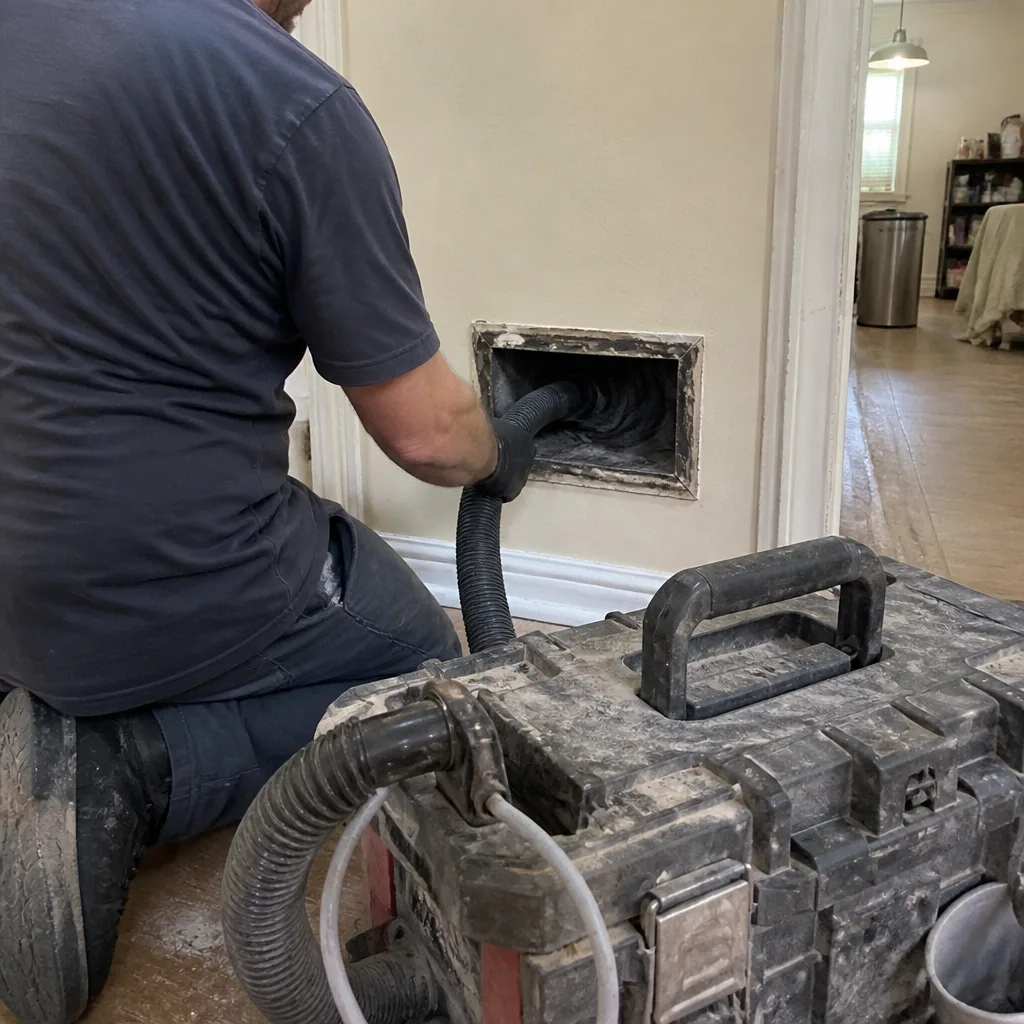 Before
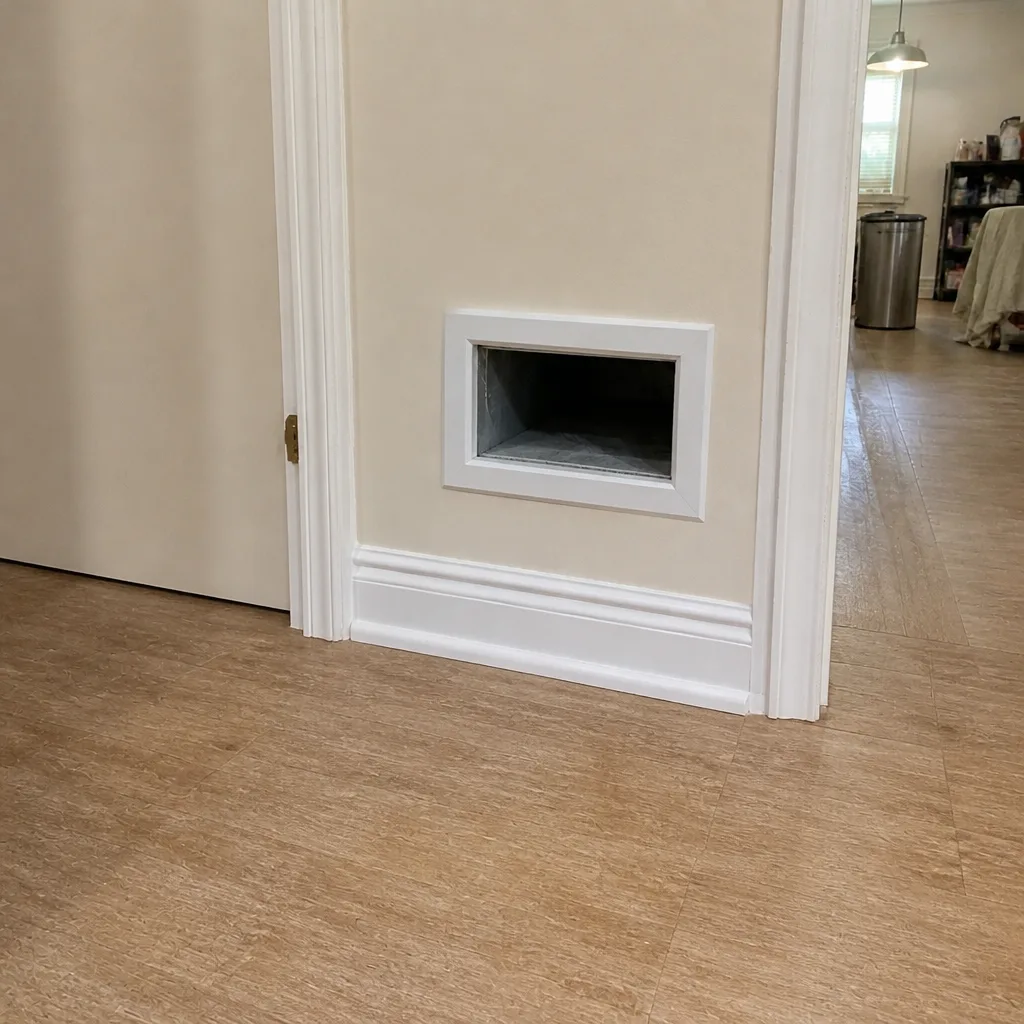 After
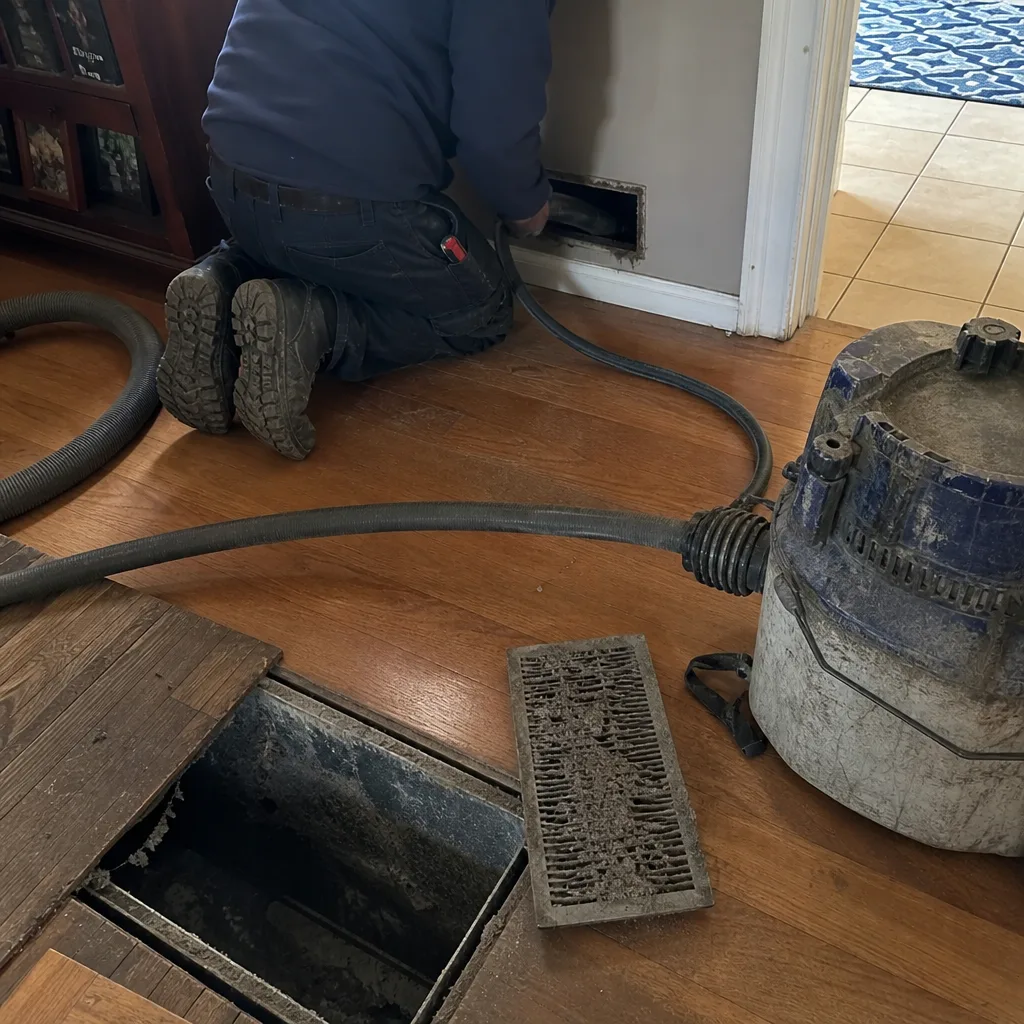 Before
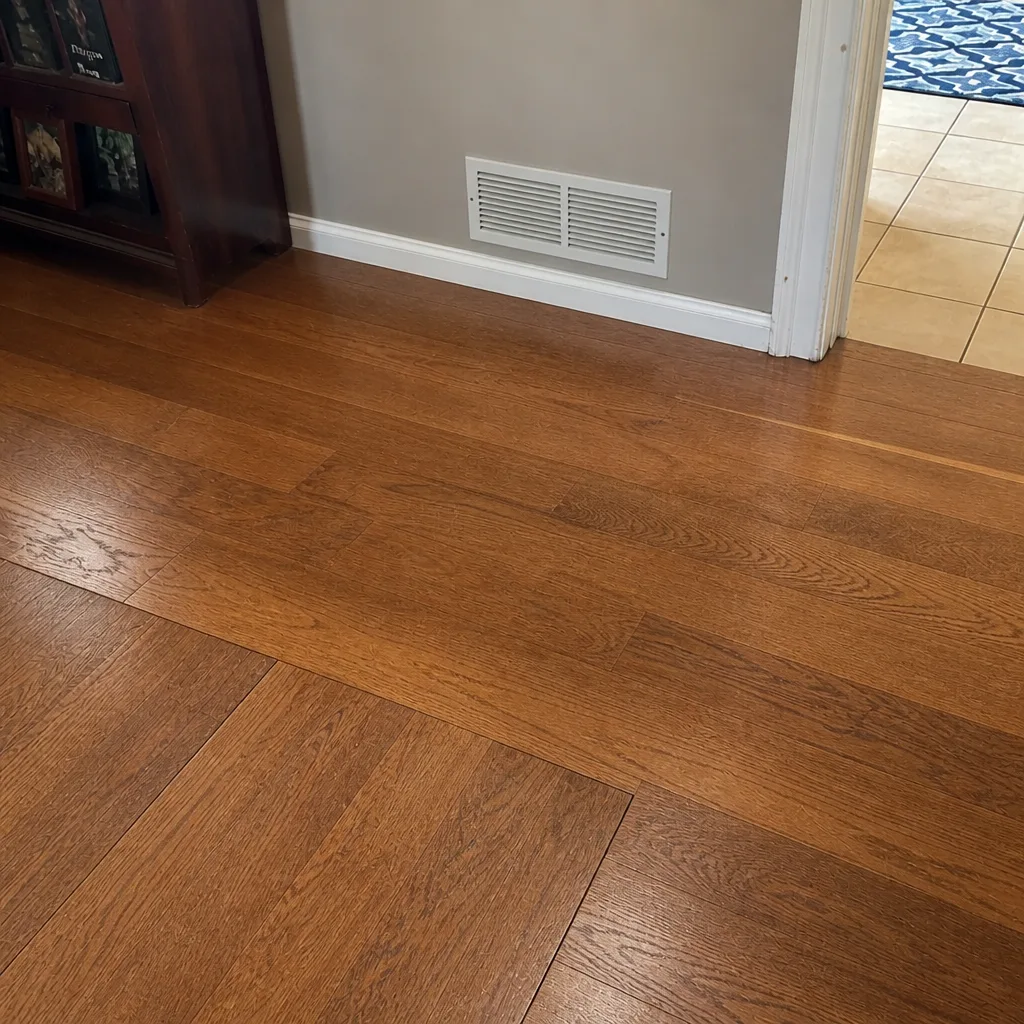 After
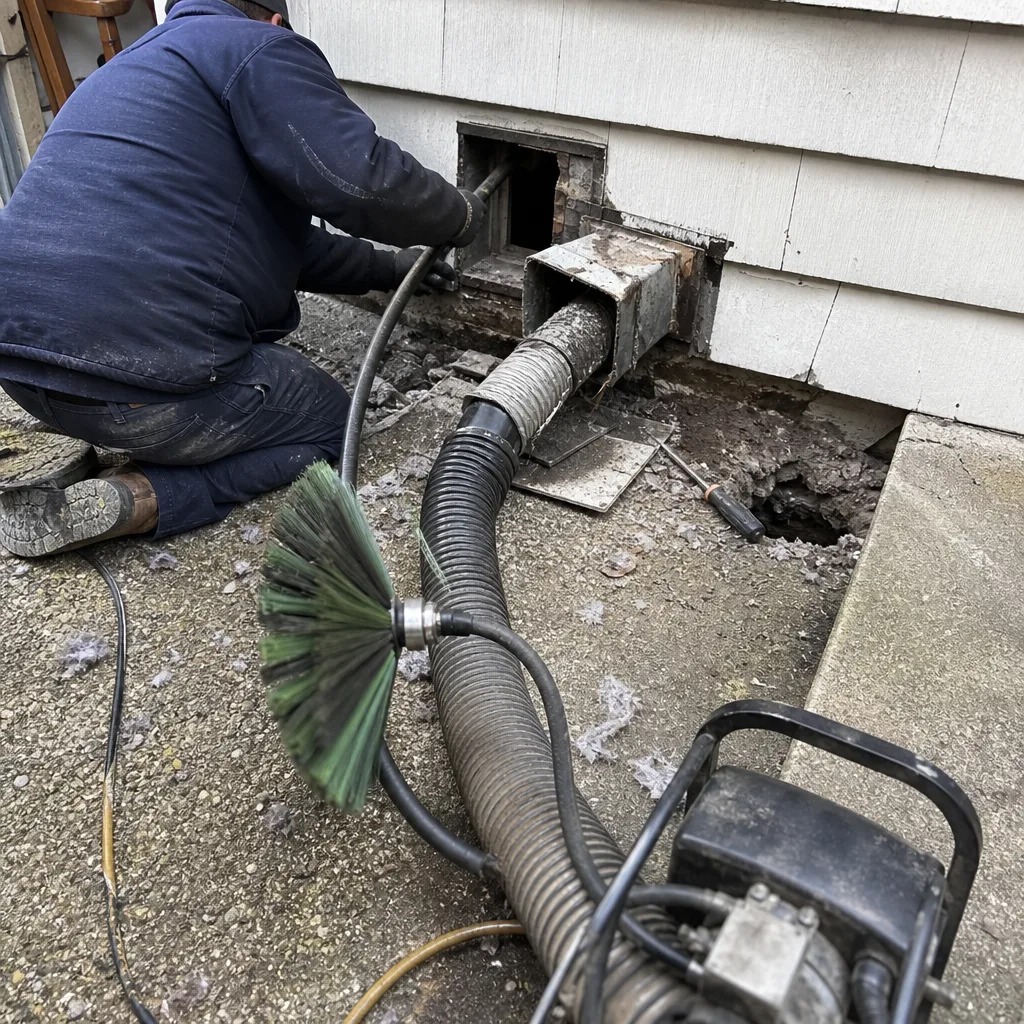 Before
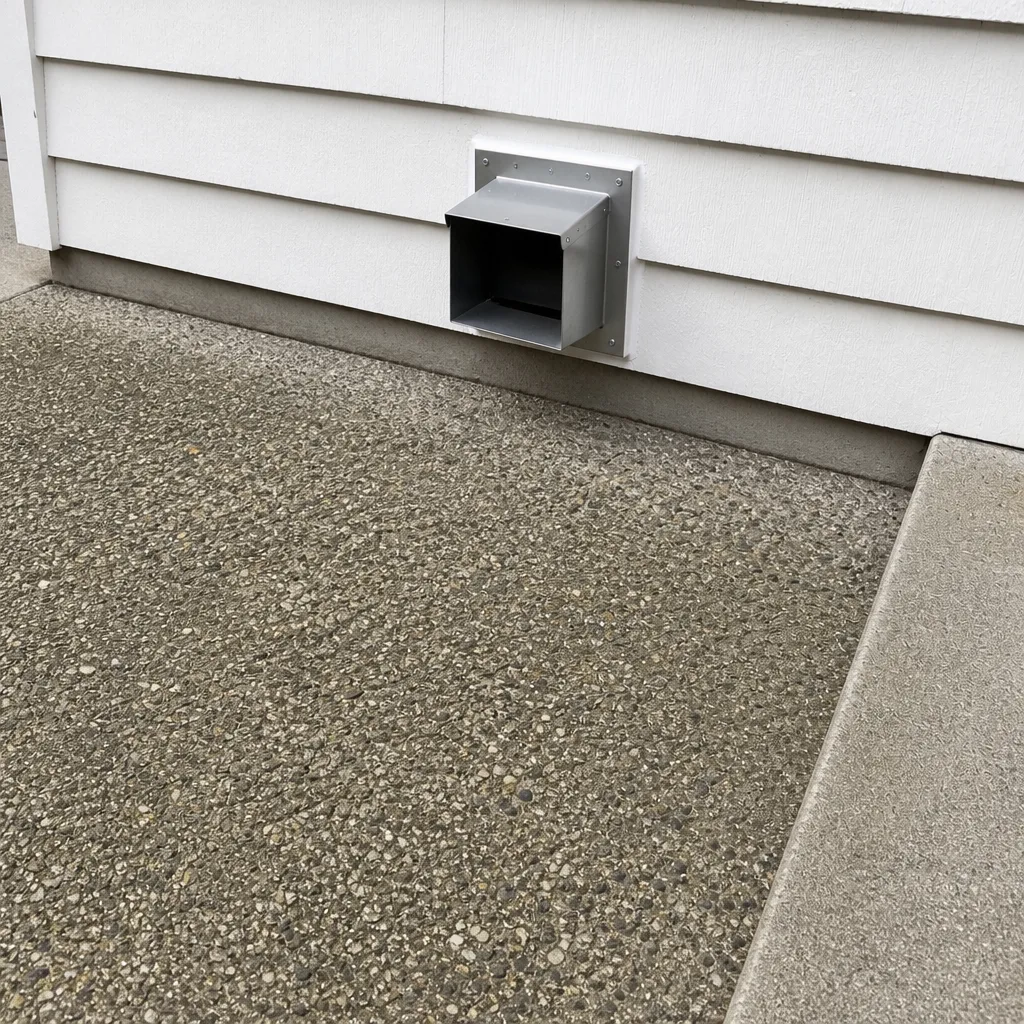 After
Frequently Asked Questions
Ask three specific questions: what vacuum system they use and its CFM and HEPA rating, which air quality product lines they install, and whether they handle duct repair and sealing in addition to cleaning. A company that answers all three in specifics is qualified. A company that deflects or answers in general marketing language is not. Certificates of insurance and written estimates should be available on request, and if they aren’t, you’ve learned enough to move on.
A truck-mounted vacuum is powered by the truck and can be sized larger than a portable unit, so it’s the usual choice for full residential systems. A portable unit is useful where the truck can’t park or the system is small, but its capacity is limited by household power. What matters most is the CFM and HEPA filtration, not the mounting. Ask about those two numbers before the sentence about vehicle type.
Not automatically. Ducts that look clean from a supply register can still have debris and microbial growth on the coil, in the plenum, or on the return side, so the inspection is more reliable than the register view. The practical trigger is symptoms: dust that accumulates too fast, a musty smell during cooling, or allergy symptoms that coincide with the system running. Without any of those, a cleaning isn’t urgent, and a company that pressures you into one without inspecting is selling a schedule, not a service.
NADCA is the trade association whose standards define source removal, negative pressure, and cleaning practice for the duct cleaning industry. Being a NADCA member or having a NADCA-trained operator verifies exposure to those standards. What it doesn’t do is guarantee a specific machine or a specific outcome on your home, which is why asking about the machine and the process is the more direct test.
Sanitizing is worth it when there’s a reason for it: persistent odor, visible microbial growth on the coil or duct surfaces, or allergy concerns that a cleaning alone hasn’t addressed. It’s not worth it as a routine add-on. A company that recommends sanitizing after inspecting for a specific reason is applying a tool; a company that recommends it before inspecting is applying a script. The difference is the inspection.
Yes, always. A written estimate should list the scope (ducts, coil, cabinet, dryer vent, sealing if needed) and a flat price for the system, not a per-vent count. That single document is the best defense against the coupon-price-to-larger-invoice surprise that buyers in this industry complain about most. Call (855) 410-4866 for a free estimate. We answer 24/7. Fast dispatch from 7am to 7pm, Sunday through Friday.
The Bottom Line
Judging an air duct cleaning company by its brand name is the wrong filter. The filter that works is the equipment platform: what vacuum it uses, what it’s rated to do, which air quality product lines it installs, and whether it can repair and seal the ducts it cleans. Elmhurst’s older retrofit duct systems make that sealing step especially important, because a leaking system undoes a good cleaning fast. Ask the equipment questions, ask for a written per-system estimate, and let the answers choose the company. The company that can name its tools is the one worth booking. Call (855) 410-4866 for a free estimate. We answer 24/7. Fast dispatch from 7am to 7pm, Sunday through Friday.
Written by the team at Elmhurst Air Duct Cleaning.